Here’s a stat that should make every course creator pause: Massive Open Online Courses (MOOCs) have a 90% dropout rate. Meanwhile, cohort-based courses regularly hit 90% completion rates.
Same content. Opposite results. The difference? Learning together vs learning alone.
If you’ve ever launched a course only to watch completion rates crater, you know the pain. Students sign up excited, then disappear by week two. The problem isn’t your content, it’s the isolated learning experience.
In 2025, the online learning model is fundamentally shifting. The era of passive content consumption is giving way to community-driven experiences where people learn together, push each other, and actually finish what they start.
This guide breaks down exactly what cohort-based courses are, why they work, and whether this model is right for you, whether you’re a creator considering launching one or a learner deciding where to invest your time and money.
Learn more about Massive Open Online Courses (MOOCs) in our Online Learning Platforms blog
What Is a Cohort Based Course?
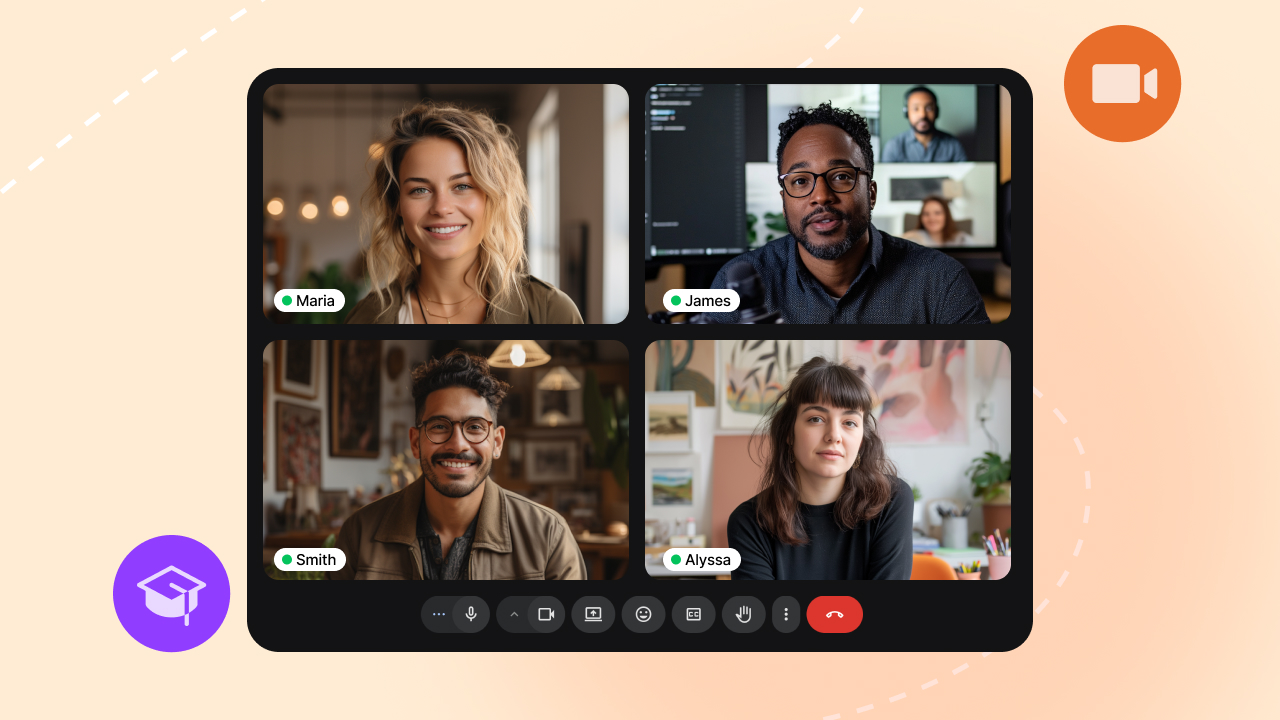
A cohort-based course (CBC) is a time-bound learning experience where a group of students start, progress, and finish together. Think of it as the online evolution of the traditional classroom, but without the geographic limitations.
The core elements that define a CBC:
- Fixed start and end dates. Everyone begins the journey at the same time and moves through the curriculum on a shared schedule.
- Live sessions. Real-time instruction, Q&A, and discussion, not just pre-recorded videos.
- Peer interaction. Students learn from each other through group projects, discussions, and feedback.
- Structured accountability. Deadlines, assignments, and social pressure keep everyone moving forward.
The “together” part of that definition matters more than anything else. Because students are going through the experience as a group, they’re able to learn from and support one another, form real connections, and hold each other accountable throughout the journey.
Cohort-Based vs Self-Paced: What’s the Difference?
The easiest way to understand cohort-based learning is to compare it against its predecessor: self-paced courses.
| Factor | Self-Paced Course | Cohort-Based Course |
| Schedule | Flexible, anytime access | Fixed start/end dates |
| Community | Isolated learning | Built-in peer cohort |
| Accountability | Self-driven only | Group + instructor accountability |
| Interaction | Pre-recorded content | Live sessions + discussions |
| Feedback | Limited or none | Real-time from peers & instructor |
| Completion Rate | 3-15% | 80-96% |
| Typical Pricing | $50-$500 | $500-$5,000+ |
The completion rate gap is the headline number, but it’s really a symptom of everything else on this list. When you combine structured schedules, built-in community, and real accountability, people actually finish what they start.
Why Cohort-Based Courses Work (The Psychology)
The magic of Cohort-Based Courses isn’t complicated. It’s rooted in how humans actually learn and stay motivated.
Social accountability creates commitment
Think back to those late-night study sessions in college, cramming for exams with your friends. That’s social accountability in action. When you know others are watching, waiting, and counting on you to show up, you show up. The collective momentum of moving forward as a group ensures everyone stays committed.
Learning sticks better with discussion
Research consistently shows that active learning, including discussions, debates, and applying concepts in real-time, beats passive consumption. It’s like the difference between reading about swimming and actually getting in the pool. When you have to explain an idea to a peer or defend your position in a group discussion, you understand it at a deeper level.
Community creates motivation
When you’re surrounded by peers all working toward the same goal, learning feels more motivating, fun, and achievable. You’re not just consuming content alone. You’re part of something. That sense of belonging is powerful fuel for pushing through the hard parts.
Structured deadlines prevent procrastination
Let’s be honest: “I’ll get to it later” easily becomes “never” when there’s no due date. Thoughtful deadlines add just the right amount of pressure to keep participants on track. The structure of a cohort removes the decision fatigue of deciding when to learn, so you can focus on actually learning.
Benefits of Cohort Based Learning
For learners
- Actually finishing. With completion rates hitting 80-96%, you’re far more likely to get the transformation you paid for.
- Valuable networking. Cohort-Based Courses connect you with motivated people who share your interests and goals. Alumni frequently mention meeting co-founders, collaborators, and clients through course communities.
- Real-time feedback. Direct access to instructors means you can ask questions and get personal insights that generic video content can’t provide.
- Deeper retention. Tackling problems alongside peers helps you retain information and exposes you to perspectives you’d never discover alone.
For creators
- Premium pricing. Cohort-Based Courses commonly range from $500 to $5,000+ because students are paying for a transformation, not just content. Some programs like altMBA or Write of Passage charge $4,000-$10,000 per student.
- Better student outcomes. When participants interact with peers and engage actively, they retain information better and complete the course at dramatically higher rates.
- Stronger testimonials. Happy students who feel connected become your best marketing. They spread the word without you needing to spend on advertising.
- Predictable revenue. With structured cohorts and scheduled enrollments, CBCs create consistent income. No more feast-or-famine launches.
- Rapid course improvement. Instant feedback from learners allows you to improve your course in real-time, making each cohort better than the last.
Examples of Successful Cohort-Based Courses
The cohort-based model has produced some remarkable success stories. Here are a few that have defined the space:
altMBA
Founded by Seth Godin in 2015, the altMBA is a 4-week intensive leadership workshop that reports a 96% completion rate. The program uses a 10:1 student-to-coach ratio and emphasizes learning-by-doing with 13 projects over four weeks. Students complete 3-5 hours of work daily on top of their regular jobs. Alumni have gone on to roles at Nike, Google, Kickstarter, and Coca-Cola.
Write of Passage
David Perell’s 5-week writing course teaches professionals how to build an audience by writing online. Priced at $4,000-$10,000 depending on the tier, the course has been described as the “Y Combinator for Writers.” Students have included people from Google, Twitter, and Intel. One participant noted that in five weeks, they published more than in the previous five years.
Building a Second Brain
Tiago Forte’s course on personal knowledge management has grown from a popular blog post to a comprehensive cohort program. With offerings ranging from $499 self-paced to $5,000 coaching editions, the program has evolved into a thriving ecosystem that includes in-person summits. Their community runs on Circle, providing continuous engagement beyond the course itself.
Part-Time YouTuber Academy
Ali Abdaal’s cohort-based course has scaled from $400K to $1.9M per cohort by leveraging community-powered learning. The program teaches people how to grow a YouTube channel while keeping their day jobs, proving that the CBC model works across creative disciplines.
Is a Cohort-Based Course Right for You?
If you’re a creator thinking about launching a CBC, ask yourself these questions:
Can you commit to a fixed schedule? CBCs require you to show up live at specific times. This isn’t passive income. It’s active teaching.
Do you have a transformation to deliver? The best CBCs promise a specific outcome: write better, build a business, develop leadership skills. If you’re just teaching information, self-paced might be simpler.
Is your topic enhanced by peer interaction? Writing, leadership, marketing, and creative skills all benefit from feedback and discussion. Purely technical skills might not need the cohort format.
Can you start small? The most successful CBCs started with 10-15 students and grew from there. You don’t need a huge audience to begin.
Are you ready for feedback? The tight feedback loop means you’ll hear what’s working and what isn’t. That’s a feature, not a bug.
If you checked most of these, you’re probably a good fit for the cohort model.
Build Your Own Cohort-Based Course Platform with BuddyBoss
If you’re serious about building a cohort-based course, build it on a platform you control.
BuddyBoss combines courses, private groups, live sessions, and community features, all under your brand, on your terms. Own your content. Own your community. Own your business.
Explore live groups, course integration, community features, and engagement tools that keep students showing up.
See BuddyBoss in Action (Live demo) →

-
 Article
 Article
- Building Your Online Community
- Planning Your Online Course