I still remember the frustration. Stuck on a concept at 11pm, course forum empty, no one to ask. I posted my question anyway.
Three days later, still no response. By then I'd moved on, left the course half-finished, and convinced myself the topic “wasn't for me.”
That moment had nothing to do with my ability to learn. It had everything to do with learning alone.
And I'm not unique. Self-paced online courses see completion rates as low as 3-15%. Thousands of students sign up, hit a wall, and quietly disappear. Not because the content fails them, but because no one's there when they need help.
Now flip the perspective and think about learning experiences that actually stuck. A classroom debate that rewired how you saw a problem.
A study group that pushed through confusion together.
A mentor who answered your question before you fully knew how to ask it.
The best learning has always been social.
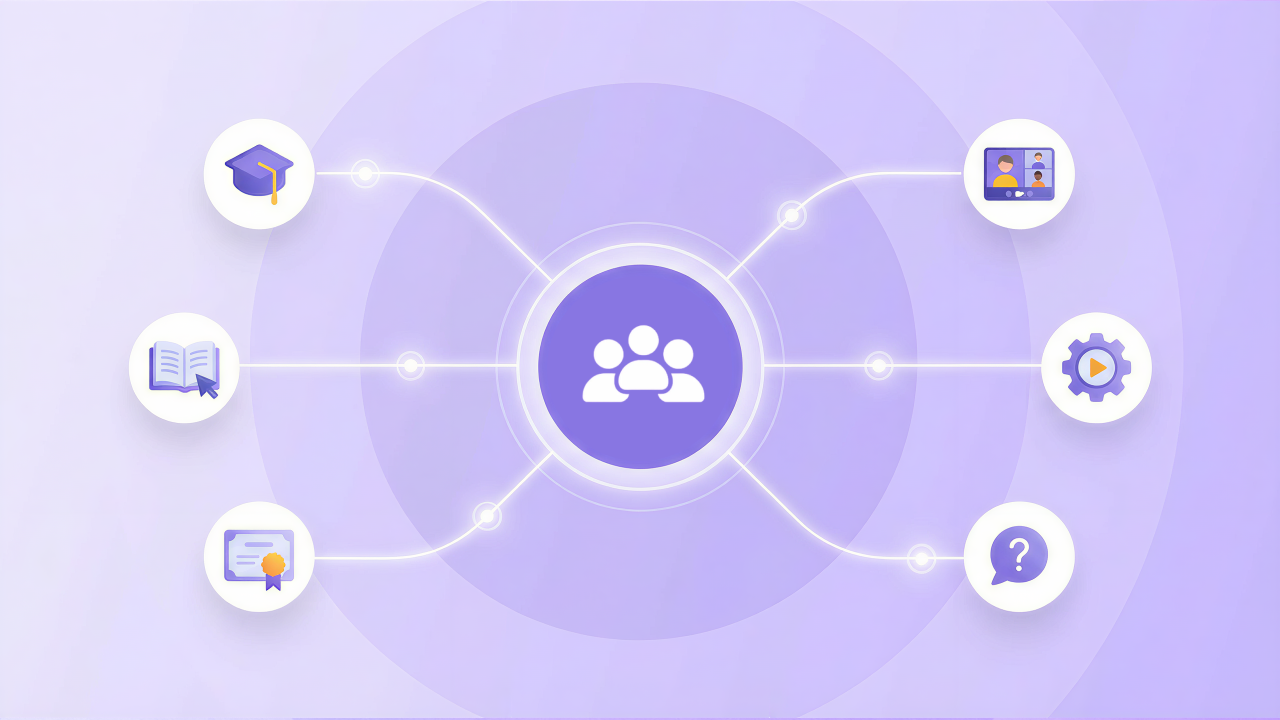
Community-based learning brings that dynamic into online courses and memberships. Instead of students consuming content in isolation, they learn alongside others, ask questions, share breakthroughs, and stay accountable to each other.
The result? Higher completion rates, stronger retention, and students who actually transform instead of drift away.
Let’s see what community-based learning really means, the research behind why it works, and practical ways to build it into your own courses or memberships.
What Is Community-Based Learning?
Community-based learning is simple in concept: learning that happens through interaction, relationships, and shared experiences rather than solo content consumption.
Traditional education treats learning as a transfer. The expert has knowledge, and the student receives it. But that model misses how people actually retain and apply information. We learn by discussing, debating, teaching others, and working through problems together.
Look at Ship 30 for 30, a writing course by Dickie Bush and Nicolas Cole. Students don't just watch tutorials about online writing. They commit to publishing 30 short essays in 30 days, get paired with accountability partners, and share work daily for peer feedback. Over 4,000 writers have gone through the program, many crediting the community pressure and support for finally building a consistent writing habit.

Or Pencil Kings, an illustration community with 8,000+ members. Aspiring artists learn directly from working professionals in game design, comics, and animation. But the real value comes from structured peer feedback, shared challenges, and watching others navigate the same career path. Members regularly land jobs in gaming and animation, not just from the curriculum, but from the connections and confidence built alongside peers.
Community-Based Learning vs Self-Paced Learning
Both approaches serve different needs and learner types. Understanding the distinction helps you choose the right platform for your content.
Self-paced learning offers flexibility and independence. Learners access content on their schedule, progress at their own speed, and control their learning experience completely. This works exceptionally well for highly motivated individuals, those with unpredictable schedules, or anyone learning technical skills that don't require discussion.
Community-based learning adds structure, accountability, and peer interaction. Learners progress alongside others, discuss concepts together, and benefit from scheduled milestones. This approach excels when content involves interpretation, when learners benefit from feedback, or when building relationships is part of the value.
| Aspect | Community-Based | Self-Paced |
| Structure | Learn with others | Learn alone |
| Accountability | Peer motivation | Self-discipline |
| Engagement | Discussion, feedback, collaboration | Content consumption |
| Completion rates | 40-60% in cohort programs | Often under 15% |
| Connection | Built-in networking | Isolated experience |
Benefits of Community-Based Learning
Community-based learning benefits everyone involved. Here's what's in it for learners and creators.
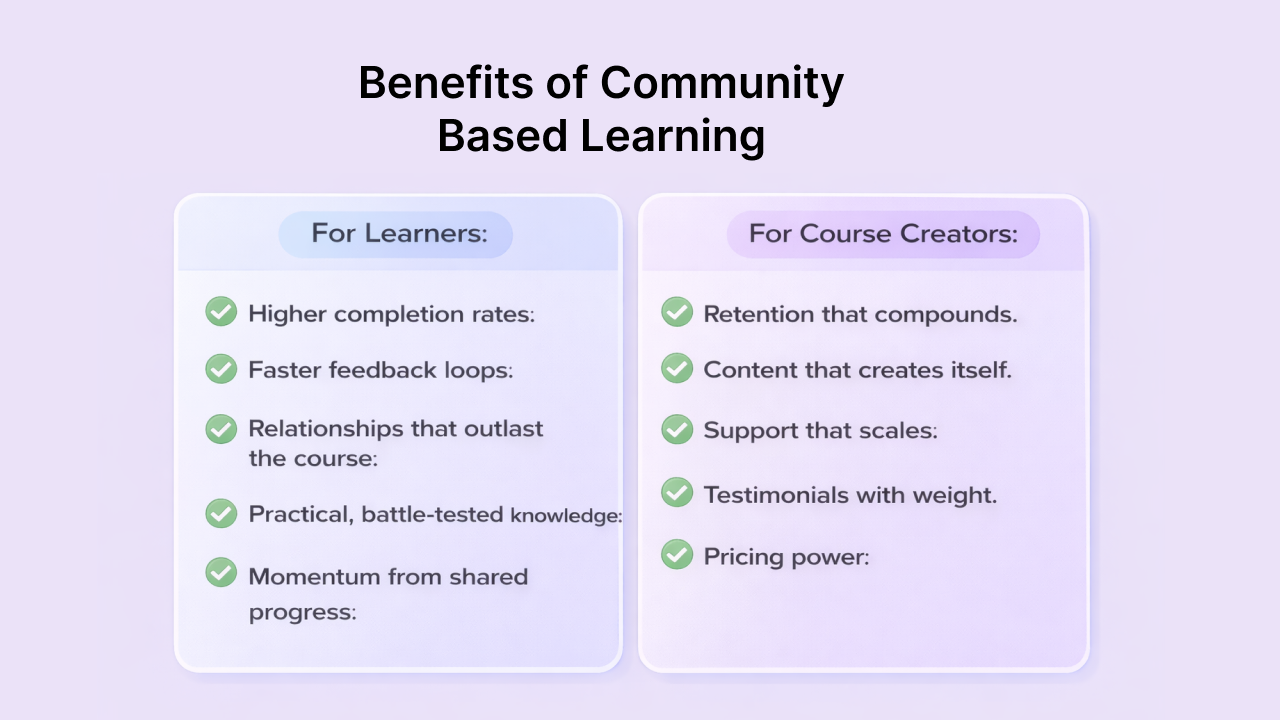
For Learners:
- Higher completion rates: When others expect you to show up, you show up. Peer accountability turns “I'll finish it later” into consistent progress.
- Faster feedback loops: Post a question at 11pm, get three helpful responses by morning. No waiting days for a support ticket.
- Relationships that outlast the course: Classmates become collaborators, referral partners, accountability buddies, even business partners.
- Practical, battle-tested knowledge: Learn from peers who solved the exact problem you're facing last month, not just theory from textbooks.
- Momentum from shared progress: Watching others hit milestones reminds you it's possible, and falling behind feels uncomfortable enough to keep you moving.
For Course Creators:
- Retention that compounds: Members stay for the people, not just the content. Community reduces churn in ways another video module never will.
- Content that creates itself: Peer discussions, wins, questions, and case studies add value without extra hours from you.
- Support that scales: When members help each other, your inbox shrinks and response quality often improves.
- Testimonials with weight: Students who felt supported tell better stories. Word-of-mouth from a tight community beats any ad campaign.
- Pricing power. A course is a commodity. A course with a thriving community is an experience worth paying premium for.
Key Elements to Build Community-Based Learning
Adding a forum to your course doesn't automatically create community. You need the right building blocks in place.
Discussion spaces: Topic-based forums where learners ask questions, share resources, and help each other. Structure matters. Too few spaces and conversations get buried. Too many and engagement scatters.
Member profiles: Let people share their background, skills, and goals. When learners can see who else is in the room, connections happen naturally.
Live sessions: Real-time Q&As, workshops, or office hours. These moments build trust in ways pre-recorded content never can.
Progress sharing: Give learners a place to post wins, milestones, and work-in-progress. Public commitment keeps people moving. Celebrating others reminds everyone that results are possible.
Recognition system: Reward members who show up and help others. Badges, shoutouts, leaderboards, or featured posts. Recognition turns lurkers into contributors.
Small groups: Cohorts, pods, or accountability circles. Large communities can feel overwhelming. Small groups give members a home base where they're known by name.
Build Your Own Learning Community on WordPress with BuddyBoss
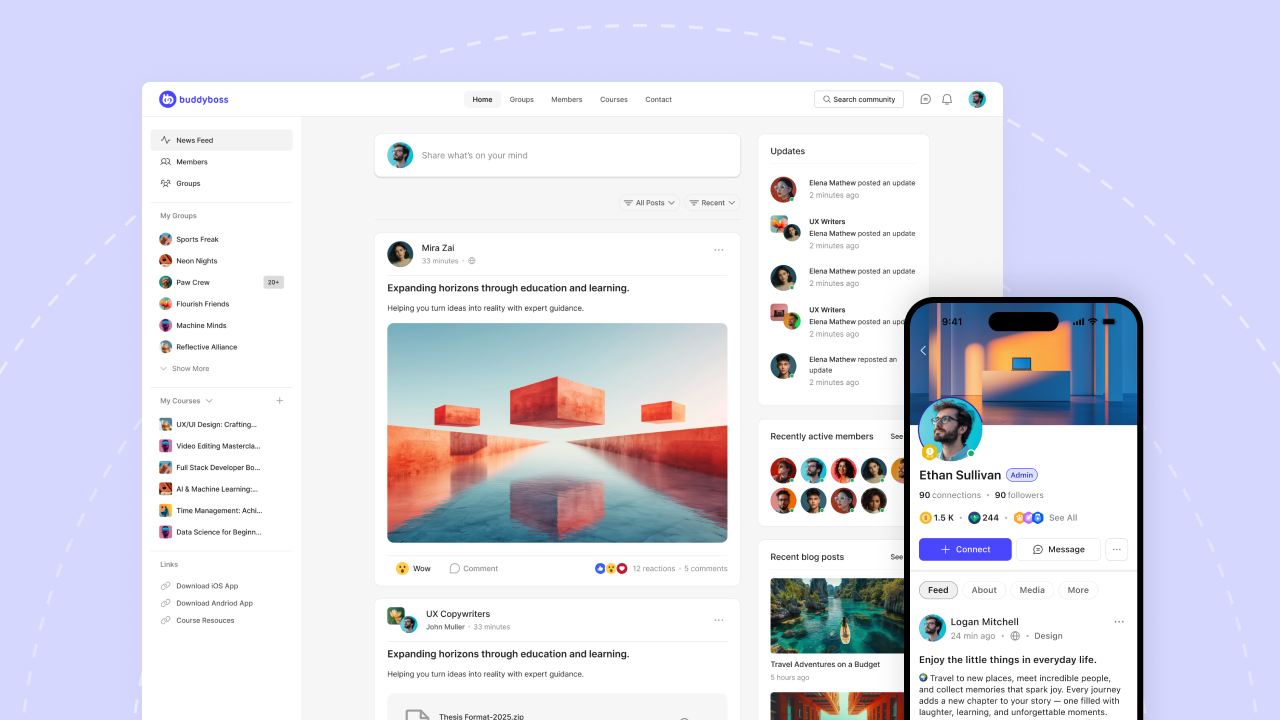
One of the best ways to learn anything is alongside others. If you want to create community-based learning that brings members together to master something meaningful, that's exactly what BuddyBoss is built for.
BuddyBoss gives you everything you need to build a learning community on WordPress: discussion forums, member profiles, groups, private messaging, live events, gamification, and a fully integrated course platform with LearnDash.
And the best part? You own it all. Your platform, your brand, your members, your data.
Whether you're launching your first cohort or scaling a membership with thousands of learners, BuddyBoss grows with you.
Ready to build your learning community? Get started with BuddyBoss →