









About Jacob’s Piano
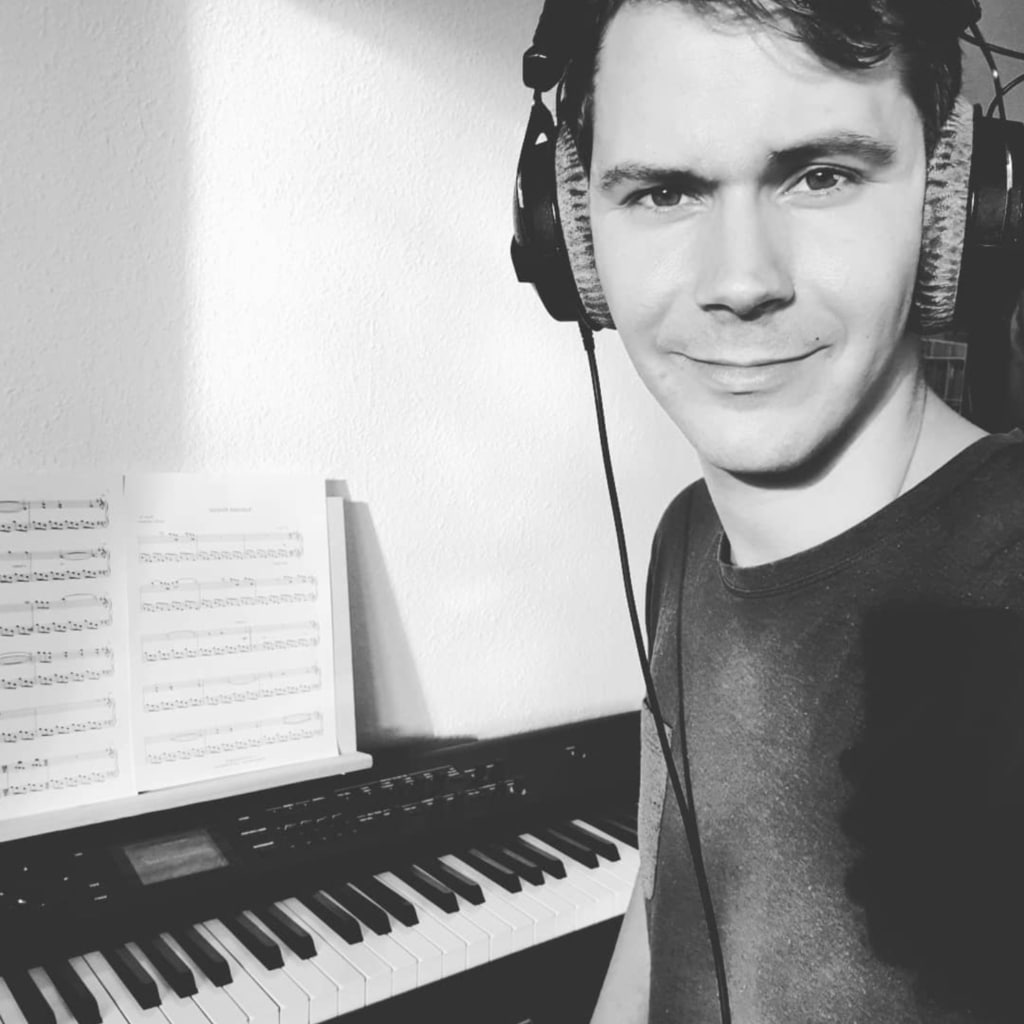
In 2018, Jacob Ladegaard sat in a lecture hall at the University of Copenhagen and defended his master’s thesis in economics. His classmates headed into finance and consulting. Jacob went home, opened his laptop, and uploaded another piano video to YouTube.
He’d been doing this for years. A “little side project,” he called it. Recording original compositions and covers in his Copenhagen studio, uploading them to a channel he started in 2011. No record label. No manager. No team. Just one person, a piano, and an audience that kept growing.
By 2026, that side project had become 2 million YouTube subscribers, 854 million total views, 349,000 Instagram followers, and 500,000 monthly listeners on Spotify. Jacob’s Piano is ranked the #10 YouTube channel in all of Denmark. His compositions, including “Autumn Breeze” (3 million Spotify streams), “Winter Melody” (2.5 million streams), and “Her” (1.5 million streams), have reached listeners in every corner of the world.
And he still runs the entire operation alone.
Jacob Ladegaard is a self-taught Danish pianist and composer born in Copenhagen in 1991. He started playing at age seven, took formal lessons for three to four years, then taught himself for the next two decades. At 15, a teacher introduced him to music theory and chord progressions, unlocking improvisation and original composition. That half-year of instruction changed the trajectory of his entire career.
His musical philosophy is deliberate and clear: “The most simple and minimalistic music is the most beautiful.” That minimalism defines everything he creates. Clean melodies. Space between the notes. Emotion over technical complexity.
Rather than attending a music conservatory, Jacob pursued economics. The master’s degree was not a detour. It was an education in how businesses actually work: revenue models, platform risk, audience economics. While most creators learn these lessons the hard way, Jacob studied them in a classroom first.
He started the YouTube channel in December 2011. His first public upload came in June 2013. For years, it was a side project alongside his studies. Then in 2016, two videos went viral: “4 Beautiful Soundtracks” and “Mariage d’Amour.” The subscriber count accelerated. By the time he graduated in 2018, the channel had critical mass. He worked part-time for another year and a half before going full-time on Jacob’s Piano in 2020.
No touring. No label deal. No record contract. No team. Jacob is a pure studio creator who composes, records, produces, teaches, and manages his business from one room in Copenhagen.
Challenges
The algorithm owns your audience
Jacob spent a decade building an audience on platforms he does not own. YouTube, Spotify, Instagram. Every subscriber, every listener, every follower exists on someone else’s server, subject to someone else’s algorithm.
“Of course, success on Youtube was crucial to me. And right now, Spotify is very important as listeners are very open to discovering new artists nowadays.”
He understood the value of these platforms. They were essential for getting his music in front of people. “This factor is extremely important for creatives because they need to get their art out there,” he told OKTAV in 2022. “Without Social Media, I’d probably not even play the piano anymore.”
But understanding the value of a platform and depending on it are two different things. YouTube algorithm changes could cut ad revenue overnight. Jacob experienced this volatility firsthand. A channel with 10 million views per month generates meaningful CPM income, but only as long as YouTube decides to serve those videos to viewers.
Streaming pays fractions of a cent
Spotify pays artists between $0.003 and $0.005 per stream. Even with 500,000 monthly listeners and tracks that have accumulated millions of plays, streaming alone does not sustain a full-time career for an independent artist. The math is brutal: a song needs hundreds of thousands of streams per month just to generate modest income.
No touring means no safety net
Most musicians offset platform dependency with live performance revenue. Jacob does not tour. He is a studio creator exclusively. That eliminates the revenue stream most independent musicians rely on to fill the gaps between album cycles and streaming payouts.
This left Jacob with a problem his economics degree made painfully clear: a business dependent on a single platform’s algorithm is not a business. It is a gamble. He had over a million subscribers, but he could not email them. He could not sell directly to them. He could not build a deeper relationship with them. YouTube owned that relationship.
He needed to bring them to a platform he controlled.
“Success, to me, is being able to concentrate on my music full-time. I spend my life creating and sharing my music with people that love it. It is not just about having lots of listeners. It is about touching people with my music and bringing them joy.”
Jacob Ladegaard, OKTAV interview, 2022
Solutions
An owned learning community on BuddyBoss
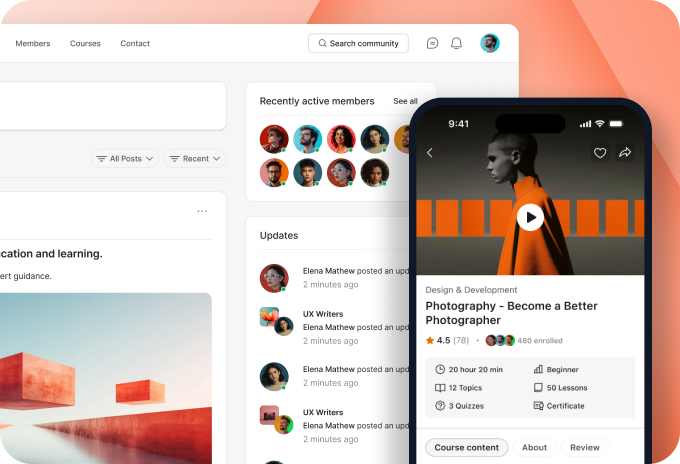
Jacob built courses.jacobspiano.com using BuddyBoss Platform Pro, BuddyBoss Theme, and LearnDash LMS. This is a separate installation from his main website. The main site (jacobspiano.com) handles commerce: sheet music sales, MIDI files, and merchandise through WooCommerce. The courses subdomain is the learning community, purpose-built for teaching and student interaction.
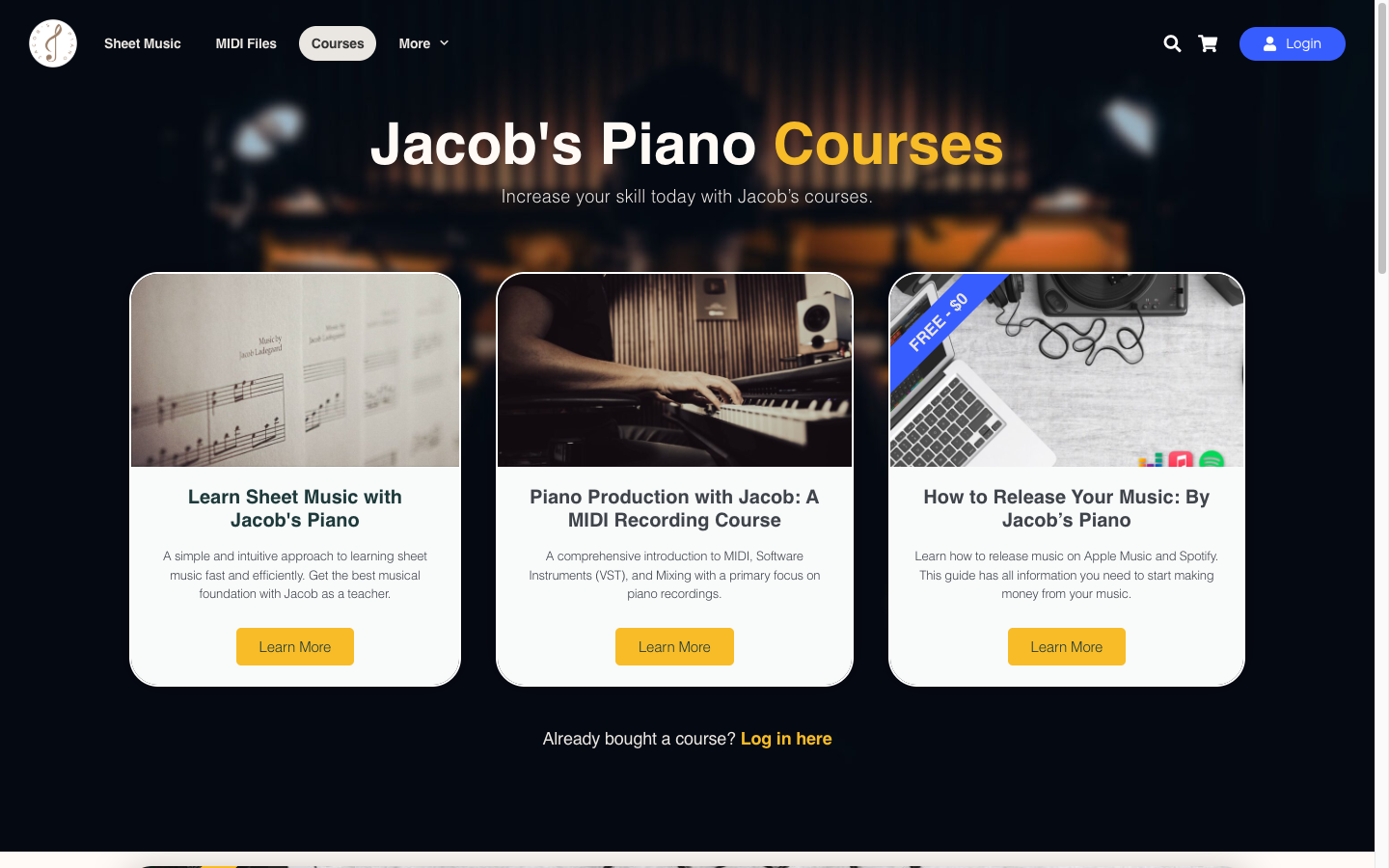
Three courses anchor the platform:
Sheet Music Reading ($99.95, 4+ hours of video, lifetime access). Available in English and Spanish. Covers music theory fundamentals: pitch names, tempos, scales, dynamics, and reading notation from scratch.
Piano Production and MIDI ($139.95, 8+ hours of video, lifetime access). Teaches recording, MIDI setup, and music production using Logic Pro X, Ableton Live, and Cubase.
Music Distribution (free). A complete guide to releasing music on streaming platforms.
That free course is not an afterthought. It is a lead magnet designed by someone who studied economics. A YouTube viewer clicks through to the courses platform for free, experiences the learning environment and the community, and then encounters the paid courses. The friction is gone. They are already inside the platform.
Every course includes access to the Student Forum, powered by BuddyBoss Groups. Students interact with each other, share progress, and ask questions. Member profiles and activity streams turn a course catalog into an active community.
Revenue diversification that no single platform change can break
The economics degree was not wasted. Jacob built a multi-stream revenue model where no single platform’s decisions can break the business:
Direct course revenue through the owned BuddyBoss platform. Two paid courses with lifetime access, priced at $99.95 and $139.95. No subscription dependency. No revenue share with a marketplace.
Sheet music and MIDI file sales through WooCommerce on the main site. Digital products with near-zero marginal cost.
YouTube memberships with exclusive perks: sheet music discounts, early access to new compositions, and members-only content.
Streaming income across Spotify, Apple Music, Tidal, Deezer, Qobuz, and SoundCloud. Global distribution on every major platform.
YouTube ad revenue from 10.4 million monthly views across 322 videos.
If YouTube changes its algorithm tomorrow, Jacob still has course revenue, memberships, streaming, and direct digital sales. If Spotify adjusts its payout structure, the impact is absorbed by five other revenue streams. The owned BuddyBoss platform sits at the strategic centre of the model because it generates the highest-margin revenue and is the only channel where Jacob has a direct relationship with his customers.
This is not a YouTuber who bolted on a course as an afterthought. This is a deliberately diversified creator business where the platform Jacob controls is the foundation everything else feeds into.
Solo creator scale: one person, global reach
Jacob runs the entire operation alone. He composes. He records. He produces. He teaches. He manages the platform. He runs the business. One person serving a global audience in multiple languages from a studio in Copenhagen.
BuddyBoss Platform Pro, LearnDash, and WooCommerce are the infrastructure that makes this possible without hiring. The tech stack is split intelligently across two installations: the main site handles commerce, and the courses subdomain handles learning and community. Each does one job well. Together, they give a solo creator the same capabilities a funded education startup would need a team to deliver.
That patience is the throughline of the entire story. Eleven years from first upload to 2 million subscribers. Seven years from starting the channel to going full-time. A decade of free content before building the paid platform. Jacob did not rush the conversion. He waited until the audience was large enough and the platform was ready.
Conclusion
Jacob Ladegaard’s journey from economics student to full-time pianist is a case study in patience, platform ownership, and the power of building on infrastructure you control.
He spent a decade creating free content on YouTube. He earned a master’s degree that taught him how businesses survive and fail. He went full-time only when the economics made sense. And then he built an owned learning community on BuddyBoss to convert a fraction of 2 million subscribers into paying students and community members.
The numbers tell the story: 2 million YouTube subscribers. 854 million views. 500,000 Spotify monthly listeners. 349,000 Instagram followers. Three courses. A Student Forum. A multi-stream revenue model. Zero employees.
No label. No team. No touring. No record deal. One person, one studio, one platform he owns.
The economics degree was not a detour. It was the competitive advantage. While other creators build their businesses on rented land, hoping the algorithm keeps working in their favour, Jacob built on his own. The BuddyBoss platform at courses.jacobspiano.com is his insurance policy against algorithm changes, platform shutdowns, and revenue share shifts. He owns his students, his community, his content, and his revenue.
“Keep practicing! Just play hard pieces very slowly, and increase the tempo as you get better.”
That is the advice Jacob gives aspiring pianists. It turns out it is also the playbook for building a creator business.
Tech Stack
- BuddyBoss Theme
- BuddyBoss Platform
- LearnDash LMS
- WooCommerce