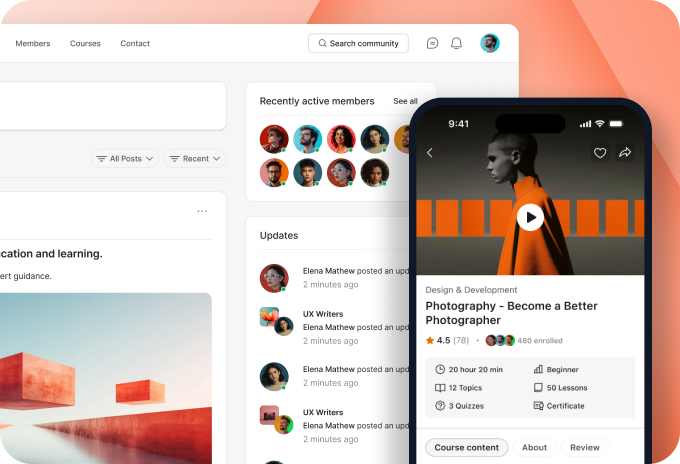
Thinking of launching your website with BuddyBoss but not sure whether to go Done-For-You (DFY) Web Service or Do-It-Yourself (DIY)?

You’re not alone.

Both options offer the same powerful platform but the journey to get there looks different. DFY gives you a ready-to-launch site built by professionals, while DIY lets you build it yourself with full creative control.

The question is: What works best for your timeline, budget, and tech confidence?

In this blog, we’ll break down everything you need for BuddyBoss DFY Web and DIY to help you make the smartest decision for your business or personal brand.

What Is BuddyBoss DFY Web?

BuddyBoss DFY Web (Done-For-You Web) is a professional, all-in-one website setup service for creators who want to launch their online platform without the hassle of doing it themselves. Instead of configuring themes, setting up integrations, and troubleshooting plugins, the BuddyBoss team takes care of everything so you can focus on your content and community.

BuddyBoss dfy web

What’s Included:

Who It’s Ideal For:

 Turnaround Time & Ongoing Support:

DFY Web typically delivers a fully functional, custom-branded website in a matter of a few weeks. After launch, you also get one year of premium support, ensuring you have a team on standby for troubleshooting, updates, or adjustments.

Summary:- Opting for the DFY Web service means handing off the technical setup to the experts while still maintaining full ownership of your platform.

The BuddyBoss team handles everything—from design and integrations to deployment—based on your input, so you get a professionally built site that aligns with your goals.

Once delivered, the platform is entirely yours to manage, scale, and customize further. It’s the perfect blend of expert execution and long-term control.

“I chose BuddyBoss DFY because it offered a clean setup—no extra materials, no theme swapping. It was faster and more affordable than doing it myself or hiring a team. Everything was delivered as promised, on time, with a smooth onboarding. Overall, very satisfied.”

Peter Wheeler, Chief Consultant of Snappy

Watch what Peter has to say about BuddyBoss DFY Web Service:-

What Does DIY with BuddyBoss Involve?

The DIY path gives you full control and customization. You install, configure, and design your platform from scratch using the BuddyBoss Platform and Theme. It is perfect for creators who like getting hands-on or want to save on setup costs.

What You’ll Be Doing:

Skills Required:

Support & Resources: BuddyBoss offers step-by-step documentation, tutorial videos, and an active community forum, making DIY approachable—even if you’re not a developer.

Summary:- Choosing the DIY route with BuddyBoss gives you complete flexibility and control over your platform. You decide how everything looks, functions, and evolves—from the layout and branding to the plugins and features you use. This hands-on approach is ideal for creators who want full ownership of the process and prefer to build, test, and customize their platform at their own pace. It’s your vision, your timeline, your way.

Utilize BuddyBoss Knowledge Base to Setup your website – Way to Knowledge Base


DFY vs DIY- A Quick Comparison

Features BuddyBoss DFY WebDIY (self-build)
Setup TimeLaunch in 3–4 weeks with expert configuration.Timeline varies based on your pace and experience.
Required skillsNo technical skills needed; professionals manage setup.Requires knowledge of WordPress, themes, and plugins.
Design customizationCustomized by professionals to match your brand.Control over design; customization depends on your skills.
Launch supportIncludes comprehensive support during and after launch.Self-guided; support depends on community forums or hired professionals.
CostHigher upfront cost; includes premium tools worth $1,200+.Lower upfront cost; expenses depend on chosen themes, plugins. Can surpass DFY costs when using third-party services.
Flexibility Post-LaunchFull ownership with the ability to make changes; additional agency support available.Complete flexibility from the start; ongoing maintenance is your responsibility.
Included ToolsComes with premium plugins like LearnDash, Elementor Pro, and more.You need to select, purchase, and configure plugins individually.
Ongoing SupportAccess to BuddyBoss support team for assistance.Support depends on your resources; may require hiring experts or relying on forums.

How The BuddyBoss DFY Web Service Works

BuddyBoss DFY work scope

The BuddyBoss Done For You (DFY) Web service is a structured, multi-phase process designed to launch your website professionally with minimal effort from your end. Here’s how it works:

✅ Phase 1: Branding & Rebranding

✅ Phase 2: Website Setup & Feature Implementation

✅ Phase 3: Pre-Launch Configuration

✅ Final Handover

🛠️ Post-Launch Support

This behind-the-scenes process ensures you get a fully functional, beautifully designed, and technically sound site — without the technical jargon.

Get Started Today!

Let BuddyBoss DFY handle it for you—faster, cleaner, and more affordable.

The Ultimate Self-Check Before You Launch with BuddyBoss

  1. How Comfortable Are You With WordPress Or Tech Tools?

you're already familiar with WordPress, plugins, and navigating a dashboard, you'll have a head start with DIY. But if words like “FTP,” “theme files,” or “caching” sound intimidating, the learning curve can slow you down. WordPress isn’t rocket science, but it does take time to get used to, especially if you’ve never handled a website before. If you'd rather not worry about updates, plugins, or integrations, a DFY (Done-For-You) option can give you a huge sense of relief.

  1. Is It Better To Build Your Own Website Or Hire Someone?

It depends on your goals and resources. Building it yourself can be fulfilling and cost-effective, but it demands patience, time, and technical confidence. Hiring someone—or going with a DFY service like BuddyBoss—means you're paying for experience, speed, and peace of mind. If you're launching a serious brand, course, or membership site, it's often better to let professionals handle the heavy lifting while you focus on your content or business.

  1. How Much Will It Cost You To Diy My Web?

A DIY WordPress site can be surprisingly affordable. Expect to pay around $1,000–$1,500 per year for a domain and $3,000–$6,000 annually for hosting. Add a premium theme or a few paid plugins, and you’re still likely under $10,000 in your first year. That said, if you run into technical issues, you might also end up paying for support or hiring freelancers to fix things later—which can add up.

  1. Do You Have The Time To Build And Troubleshoot?

Be honest with yourself here. Because even with easy-to-use tools, building a website takes time. Between setting up WordPress, choosing the right theme, customizing pages, and troubleshooting bugs, you’re likely looking at a few full days (if not weeks) of work. If you have a packed schedule, or if tech issues tend to frustrate you, outsourcing the work could save your sanity.

  1. Is Your Launch Time-Sensitive?

If you're racing toward a specific launch date or event, DIY might be too risky. Delays are common when you're figuring things out on your own. A DFY service can offer a faster turnaround with fewer surprises. On the other hand, if you have the flexibility to work on your website gradually and experiment along the way, a DIY route could work just fine.

  1. Do You Want A Fully Custom Look And Feel, Or Are You Okay Using Templates?

Templates are quicker, more affordable, and easier to manage—perfect for most people who just want a clean, functional site. But if your brand demands a unique design and layout, or if you want your site to feel totally original, you’ll need either advanced design skills or a professional team.

  1. Are You Planning To Scale Quickly?

If you expect your website to grow fast—with more members, more traffic, or more courses—your setup needs to be ready from day one. DIY sites can scale, but only if you choose the right tools and hosting from the start. If scalability and performance are key to your business plan, a DFY option can ensure your site is built on a solid, professional foundation that won’t crash under pressure.

Conclusion: Launch Your Way

At the end of the day, whether you go with BuddyBoss DFY (Done For You) or take the DIY (Do It Yourself) route, you’re stepping into the same powerful ecosystem—built to support your growth, your community, and your business goals.

The real decision isn’t about what platform you’re using but about how you want to bring your vision to life.

If you're someone who enjoys rolling up your sleeves and crafting things your way, DIY gives you the freedom to experiment, learn, and launch at your own pace.

But if time is tight, design isn't your thing, or you'd rather focus on growing your business than building it—DFY hands you a fully set-up, beautifully branded site without the stress.

Still deciding? No worries. Take time to explore both options—or better yet, connect with the BuddyBoss team. They’ll help you find the launch approach that feels right… and gets results.

Launching a mobile app for your community makes members more active and more likely to stick around. It gives them easy access to content, events, and discussions right from their phones.

The BuddyBoss app lets you create a thriving lively space that feels personal, engaging and easy to use. And the best part? You can customize it just the way you like to keep your members engaged and coming back for more.

Whether you’ve just purchased the BuddyBoss App or are considering it, this guide below will walk you through some essential steps to set up and customize the BuddyBoss App.

Who This Guide Is For

What You'll Get:

By the end of this guide, you’ll have a clear, step-by-step path to set up and personalize your BuddyBoss App so it keeps your members coming back. We’ve kept it simple, straightforward, and beginner-friendly, even if you’re not a tech expert.

Let’s get started on building an app your members will love—and keep using!

A 7-Step BuddyBoss Blueprint: From Set Up To Customization

Step 1: Start With The Foundation

Step 2: Prepare for iOS

Step 3: Set Up Android Access

Step 4: Power Notifications

Step 5: Polish the Experience

Step 6: Amplify with Integrations

Step 7: Test, Launch & Onboard

Step 1: Start With The Foundation

– Connect Your WordPress Site to the BuddyBoss App

BuddyBoss app set up

Before your community can go mobile, you need to lay the groundwork. The first step is to connect your WordPress site to the BuddyBoss App. Think of this as linking your website and your mobile app so they can talk to each other.

Tutorial: Connect Your App

Step 2: Prepare for iOS

– Apple Developer Setup & Configuration

Buddyboss app

Once your WordPress site is connected to the BuddyBoss App, it’s time to gear up for iOS. This step helps you get your app ready to launch on the Apple App Store, making it easily accessible for iPhone and iPad users.

Here’s how to do it:

a. Create an Apple Developer Account

To publish your app on the App Store, you’ll need an Apple Developer Account. This is Apple’s official way of letting developers submit apps, manage updates, and access important tools.

b. Connect Your Apple Account to BuddyBoss

Once your account is live, you’ll generate an API key in Apple’s App Store Connect. Then, hop into your WordPress dashboard, go to BuddyBoss App > Configure > iOS, and securely connect your Apple Developer Account by uploading that key. This lets BuddyBoss automatically sync app settings and prepare your iOS builds for submission.

📘 Tutorial: Connect Apple Developer Account

c. Configure Your iOS App Settings

Next, you’ll define key details like your app name, bundle ID (a unique app identifier), and build settings. This includes choosing how your app handles in-app purchases, notifications, and permissions.

🎥 Watch the full setup: Configure Your iOS App (Video)

d. Set Up Apple Universal Links

Buddyboss app

When a user taps on a link—whether it’s from an email, social post, push notification, or even a web page—Universal Links ensure they’re taken directly into the right screen inside your app, instead of just opening the mobile browser.

For example, if you send a push notification linking to a new course module, Universal Links will open that module inside your BuddyBoss App (if installed), not Safari. This deep linking keeps users engaged within your app ecosystem and reduces friction, making it easier for them to take action.

Setting them up involves a quick one-time configuration that tells Apple which links your app should handle. You’ll generate a special apple-app-site-association file and upload it to your domain’s root.

Tutorial: Configure Apple Universal Links

Community App is one of the simplest ways to improve retention—because your members will get where they need to go faster, with fewer taps and less confusion.

Step 3: Set Up Android Access

– Google Play Developer & App Configuration

With your iOS setup ready, it’s time to prepare your BuddyBoss App for Android users. Android powers over 70% of smartphones globally—so getting your app on the Google Play Store is essential for reaching a wider audience and boosting engagement.

Here’s how to do it, step by step:

1. Create a Google Play Developer Account

To launch your app on Android, you need a Google Play Developer Account. This gives you access to the Google Play Console where your app will be published.

Tutorial: Create Google Play Developer Account

2. Connect Your Google Account to BuddyBoss

Buddyboss app

Next, you’ll generate a Service Account from Google Cloud Console to securely connect your Google Play Console to BuddyBoss. This step allows BuddyBoss to automate key publishing tasks like app submissions and syncing in-app purchases.

In your WordPress dashboard, head to BuddyBoss App > Configure > Android and upload the generated JSON key file. Once connected, you’re all set to start building and managing your Android app directly from BuddyBoss.

📘 Tutorial: Connect Google Play Developer Account

3. Configure Your Android App Settings

Now it's time to define your app’s core settings—like the app name, icon, versioning, and package name (similar to iOS's bundle ID). These details ensure your app is properly identified and ready for publishing.

🎥 Watch the tutorial: Configure Your Android App (Video)

4. Set Up Android App Links

Just like Universal Links in iOS, Android App Links let users jump straight into your app from a browser, email, or social media link. It makes the app experience smoother, keeping users inside your platform instead of on mobile web.

Set them up easily: Configure Android App Links

Focus On Building Your Business. We’ll Handle The Tech

BuddyBoss App

If this setup process feels overwhelming, you’re not alone. App setups—whether for BuddyBoss or any platform—can be time-consuming.

That’s why we offer a DFY (Done For You) service. Don’t want to spend hours on setup or just short on time? Simply reach out and say, “Hey, can you do it for me?” Our expert team will take care of everything—from setup to full customization—so your app looks, feels, and functions exactly like your brand.

– Invest Right And Go DFY

Step 4: Power Notifications

– Set Up Firebase for Push Engagement

One of the biggest reasons users return to an app is push notifications. They’re simple reminders that keep your community updated, engaged, and coming back for more; whether it’s a new post, a message, or an event.

To make this work on both iOS and Android, you need to integrate Google Firebase, a free platform by Google that powers real-time notifications.

Here’s how to get started:

1. Create a Firebase Project

BuddyBoss app

Go to Firebase Console and create a new project. This will act as the central hub for managing push notifications across both iOS and Android apps.

2. Link Firebase V1 to BuddyBoss App

Once your Firebase project is ready, you need to connect it with your BuddyBoss App.

Tutorial: Google Firebase Setup

3. Test Push Notification Delivery

Before you go live, test it out! Send a test notification to your own device and make sure the notification appears correctly on both iOS and Android. If it works — you’re good to go!

This is a small step with a huge impact — push notifications help boost daily engagement and bring members back in just a tap.

CTA- Hosting Recommendations for the BuddyBoss App

Step 5: Polish the Experience

– Customize Branding, Menus & Navigation

Now that your app is functional, it’s time to make it feel like yours. This step is all about branding and user experience—two things that play a major role in making members feel connected and want to come back.

With the BuddyBoss App, you can easily style your app to match your brand and highlight the most important areas of your community.

Buddyboss app

1. Upload Logo, App Icon & Splash Screen

Start with the basics:

2. Set Color Scheme, Fonts & Theme

Choose colors and fonts that reflect your brand personality. Whether you’re going for bold, minimal, or vibrant—it’s your call. WIth BuddyBoss you can customize: Background and button colors, text and heading fonts, and overall theme (light or dark). This small detail makes a huge impact on user experience.

3. Customize Tab Bar and Drawer Menu

Buddyboss app

Guide your members where you want them to go. Add or remove icons in the bottom tab bar (e.g., Home, Messages, Courses). Organize the side drawer menu to showcase more options, make sure the journey inside the app is simple and intuitive.

4. Add Key Sections Like Feed, Courses, Messages

Highlight the parts of your platform that keep members coming back:

This helps boost engagement by putting the most-used features front and center.

5. Add Dynamic Content with App Pages & Directory Block

Want to go even further? Use App Pages to display unique content like announcements, support, or member guides. And with the BuddyBoss App Directory Block, you can showcase: Member directories, Groups, Courses, Events so much more.

👉 Tutorial: How to Configure BuddyBoss App Directory Block

Step 6: Amplify with Integrations

– Add LearnDash, Zoom, and GamiPress

Once your app is branded and ready to go, it’s time to take things to the next level. Adding powerful integrations like LearnDash, Zoom, and GamiPress can boost engagement and keep your members coming back again and again.

These tools bring value, interaction, and a sense of achievement which are all essential for long-term member retention.

LearnDash: Mobile Learning That Sticks

Want to offer online courses? LearnDash is your go-to LMS (Learning Management System).

Learning on the go is a big win—and when members keep learning, they keep returning.

Zoom: Live Sessions Inside the App

With the Zoom integration, you can host:

Members don’t need to leave your app to join—they just click and connect. Live sessions build real-time interaction and a stronger community bond.

GamiPress: Make Engagement Fun

Turn your app into a game with GamiPress!

Gamification makes your app more fun and keeps members motivated to participate regularly.

Step 7: Test, Launch & Onboard

– Go Live with Retention in Mind

You’re almost there! With everything set up and customized, it’s time to test your app, submit it to the app stores, and launch it with a strategy that keeps members coming back from day one. Here’s how to do it the right way:

1. Test Your App on Real Devices

Before publishing, test your app on both iOS and Android.

2. Submit to App Store and Google Play

Once your app is ready, follow the submission steps in the BuddyBoss App plugin to publish your iOS and Android versions. Make sure to:

If you're using BuddyBoss’ publishing service, they’ll guide you through it.

3. Launch with a Thoughtful Onboarding Experience

First impressions matter. Prepare a warm welcome flow for new members:

4. Track Engagement with Firebase Analytics

Activate Firebase Analytics to measure how your members use the app.
Track key events like logins, page views, course starts, and group participation. These insights help you optimize onboarding and engagement strategies over time.

5. Promote with Launch Assets

Make it easy and exciting for members to download your app:

Why Mobile Apps Drive Higher Member Retention

Have you noticed how people keep going back to the apps on their phones? Whether it's Instagram, WhatsApp, or YouTube? That’s not by accident.

Mobile apps are designed to keep users coming back. And when it comes to online communities, learning platforms, or member-based businesses, mobile apps can play a big role in making sure your members stay active and engaged.

buddyboss app

1. Your Community, Just a Tap Away

Unlike websites that require login and load time, a mobile app sits right on your member’s home screen. It’s always accessible. That means people can open your app in seconds, even when they’re commuting, relaxing at home, or waiting in line.

2. Push Notifications Bring Members Back

With an app, you can send instant updates to your members through push notifications. It can be a new course, a live session, or a community event, a quick alert reminds members to jump back in.

3. Faster, Smoother, Better Experience

Mobile apps are designed for speed and ease. Everything loads faster. Navigation is smooth. It feels personal and that keeps people coming back more often.

4. Built for Personalized Engagement

Apps like BuddyBoss lets you personalize the experience for every user. From customized menus to personalized content feeds, members feel like the app is made just for them—and that builds loyalty.

5. Stay Connected, Even Offline

Some mobile apps let users access content even without the internet. For example, your members can download courses or lessons in advance and learn anytime, anywhere. This keeps them connected to your platform more consistently.

Build Your Buddyboss App In Just 60 Minutes- Video Tutorial

This video tutorial will help you build your own branded app in less than an hour. It covers all the set up and customization knowledge guide we mentioned above and some extra tweaks.

Learn How To Build A BuddyBoss Mobile App In Less Than 1 Hour | BuddyBoss App | No-Code App Builder 2021

Launch Your App & Grow Your Community

You’ve done the hard work—now it’s time to share your app with the world. Launch with intention, onboard with care, and keep improving based on real user data.

With the BuddyBoss App, you’re not just launching an app—you’re building a lasting community experience.

Ready To Launch Your Branded App

It’s never too late to scale your online business but it is important to know when and how to scale it.

As your business grows, so do the responsibilities. You might find yourself juggling more tasks, managing rising expectations, and wondering how to take things to the next level—without burning out. That’s where smart scaling comes in.

In this blog, we’ll explore practical, proven ways to scale your online business, backed by real-life examples that show what’s possible when strategy meets action.

What Is The Meaning Of A Scalable Business?

A scalable business is one that can grow and handle increased demand without a serious increase in costs.

To put it simply, it means you can serve more customers, make more sales, or expand your reach without needing to work double the hours or hire a huge team.

Key traits of a scalable business:

Efficient systems and automation (like online tools, apps, CRMs)

Example: Let’s say you run a community-based online course. If 10 people enroll or 100 people enroll, you don’t need to teach it live every time—you just give access to the same content. That’s scalability.

How Do You Know That Your Business Is Ready To Be Scaled?

1. Consistent Revenue & Profitability

One of the clearest signs that you’re ready to scale is financial stability. If your revenue is steady and your profit margins are healthy, it shows that your business model works. This stability gives you the cash flow cushion needed to invest in larger operations, more inventory, or a bigger team.

Example: AYM Studio, a London-based sustainable apparel brand, grew its revenue from £373,749 in 2021 to over £3.2 million in 2023 after winning the King's Award for international trade—demonstrating reliable year‑over‑year growth before opening new markets

If your income is steady and growing, it’s a green light.

2. Strong Demand for Your Product or Service

If people are not only buying from you but coming back, referring others, or even joining waitlists, that’s a strong indicator of product-market fit. Scaling online business makes sense when your product isn’t just selling—it’s being sought after.

Example: Dollar Shave Club’s subscription model turned single‑purchase razor buyers into loyal customers ordering monthly boxes, thanks to the convenience and storytelling in its viral launch video.

Dollar Shave Club

3. Your Operations Are Running Smoothly

Scaling chaos doesn’t work. Before you grow, your current operations should already be optimized and systemized. Are your fulfillment, customer service, and inventory processes streamlined? If yes, you’re set to take on more without the wheels falling off.

Example: Amarra, a New Jersey gown distributor, integrated AI tools to write product descriptions 60% faster and cut overstock by 40%, freeing the team to focus on growth initiatives rather than manual tasks.

4. You’re Hitting Capacity Limits

When sold‑out sessions, backlogged orders, or waitlists become the norm, it signals you’ve maxed out your current setup. Scaling online business then becomes less about creating demand and more about serving the demand you already have.

Example: The Coterie, a Charlotte yoga studio, expanded from one location to adding six new instructors and facilities after sliding‑scale memberships led to packed classes and long waitlists—proof that they’d outgrown their original space.

scaling your online business

5. Your Business Model Is Built for Scale

A business that’s ready to scale typically doesn’t rely on manual effort for every new customer. Instead, it runs on a model that can serve 10 people—or 10,000—without needing to triple the team. Subscription models, licensing, and digital products are especially well-suited for this.

Example: Dollar Shave Club positioned itself not just as razors, but as a men’s lifestyle club—its subscription approach meant each new customer automatically generated recurring revenue without proportional effort.

6. Customers Love What You Offer

One of the best signs you’re ready to scale? Your customers are raving about you. Positive reviews, high NPS scores, and glowing testimonials mean you’re doing something right—and that word-of-mouth momentum can be a powerful fuel for growth.

Buffer achieved an NPS of 62 among customers using its social‑media tools for 2–5 years, fueling referrals and community trust that supported its multi‑million‑dollar expansion.

What Is A Scalable Business Model?

A scalable business model is one that can handle increased workloads, customers, or transactions without sacrificing efficiency or performance. In other words, as your sales or user base grows, your operational costs grow at a slower rate—or even remain flat—enabling higher profitability.

Unlike traditional models where doubling production often doubles expenses, scalable models decouple revenue from cost through upfront investments in systems and processes.

Scalable Business Model or Not? Here’s How to Tell

1. Front-Loaded Investments

The Innovation: One of the biggest concepts behind scalability is the ability to invest heavily upfront in something that pays off in the long-run. In the past, traditional businesses would invest in inventory or infrastructure. But these days, the investment is often in product development, branding, or high-quality digital assets like apps or software.

Platforms like Mailchimp are a perfect example of how smart, front-loaded investments like building a flexible email marketing platform can give long-term revenue. Once built, their tool required very little ongoing input to serve millions of users. Their model allows users to self-onboard, customize campaigns, and get analytics without the company manually guiding each step.

Scalability Insight: When the cost of serving one customer vs. ten thousand doesn’t scale linearly, you know you’ve hit gold. Front-loading your efforts means you can scale your business without scaling your costs at the same pace.

2. Automation & Technology

Automation started with the industrial revolution with factories and conveyor belts.

But today automation is much more than just conveyor belts, automation has taken a leap forward. It now includes CRM tools, chatbots, sales funnels, payment systems, and even AI-powered tools that analyze data in real time.

Amazon uses automation on a very different scale. Its use of automation—like predictive analytics, smart warehouses, and automated supply chains can handle millions of orders with minimal human touch.

Similarly, businesses like Zapier have enabled small businesses to connect apps and automate entire workflows without writing a line of code.

Scalability Insight: Automation removes manual bottlenecks. It helps a business to run 24/7, process thousands of transactions, and engage customers—all without significantly expanding the workforce. It’s how modern companies scale globally while staying lean.

3. Recurring Revenue Streams

Originally seen in magazine subscriptions and utility services, recurring revenue models have made a strong comeback. SaaS platforms, membership sites, online tools, and digital course platforms have all embraced the model.

A very popular example of recurring revenue is Netflix. We all use Netflix to binge watch shows and movies but never put a second thought that we pay them monthly and yearly just so we could continue our watch. That’s a recurring revenue model called subscription!

Scalability Insight: Recurring revenue offers two key benefits: stability and compounding growth. As you add more subscribers, your income grows steadily. Plus, it provides capital that can be reinvested into improving your product or marketing to scale further.

4. Network Effects

Network effects refer to platforms that become more valuable as more users join. First seen in telecommunications (the more people with phones, the more useful they became), this model is the foundation of many digital giants today!

Facebook, LinkedIn thrive on this. With each new member, the network grows in value and creates a natural flywheel for growth. Users bring more users, reducing customer acquisition costs and making the business inherently scalable.

Scalability Insight: Network effects are a dream for any entrepreneur. Once you hit a tipping point, growth becomes organic and exponential. Your community becomes your best marketing tool.

5. Digital Distribution

Gone are the days of warehouses and shipping delays. With digital products, your delivery mechanism is instant and global. All you need is the internet.

Platforms like Udemy and Gumroad are best for creators to sell courses, templates, and tools to a global audience without worrying about delivery logistics.

Let’s take Netflix as an example again. It delivers shows and movies to millions of screens in real time—without printing DVDs.

Scalability Insight: Digital products can be replicated endlessly without any production cost. That’s why they’re one of the most scalable forms of business out there.

6. Data-Driven Optimization

Businesses now have the power to track, measure, and optimize every click, view, and purchase in real time. This feedback loop allows them to iterate quickly and efficiently.

Think of Spotify, which personalizes music recommendations based on listening habits.

Spotify

Scalability Insight: Data ensures that you're scaling your online business in the right direction. It helps fine-tune strategies, avoid wasteful spending, and deliver exactly what customers want—fueling further growth and retention.

7. Low Customer Acquisition Cost (CAC)

Low cost acquisition cost is an important part of a scalable business model. While traditional advertising relied on large budgets and broad targeting, digital tools have made it easier to acquire users affordably through SEO, social media, referrals, and influencer marketing.

Slack grew rapidly using a freemium model and internal team invites—spreading organically from company to company. Similarly, Dropbox offered free storage for every referral, effectively using its users to fuel growth.

Scalability Insight: The less you spend to get a new customer, the faster and more easily you can grow your business. If people naturally talk about your product or share it with others, your growth becomes easier and more sustainable.

8. Modular & Repeatable Processes

Systematizing tasks into repeatable processes has always been key to scaling online businesses—think of the McDonald’s model of duplicating exact workflows in every franchise.

Online businesses now replicate marketing funnels, onboarding sequences, or client delivery methods through templates and tools. For example, ClickFunnels helps businesses launch campaigns without reinventing the wheel.

Scalability Insight: With clear and modular systems, you can onboard new clients, hire new team members, or launch new offers without confusion or slowdowns. It turns scaling online business from chaos into controlled growth.

9. Freemium to Premium Upsell

Letting people use a limited version of your product for free builds trust, increases reach, and warms up leads before you pitch the paid version.

This model exploded with SaaS tools. Canva, Trello, Grammarly, and Zoom all use this method effectively—hooking users with useful free features and converting them with irresistible premium tools.

Scalability Insight: It reduces friction in customer acquisition while giving you room to upsell. As your free user base grows, so does your opportunity to convert and monetize without significant marketing push.

10. Platform Ecosystems

Letting others build within your business ecosystem opens up a whole new way to grow. Instead of relying only on your own team and ideas, you give others the tools and freedom to create. This expands what your business can offer and helps it grow faster, without you having to do everything yourself.

Apple’s App Store, Shopify’s Plugin Marketplace are excellent examples. By opening up the platform, these companies allowed others to expand their value offerings.

scaling online business

Scalability Insight: You get to grow while your users or partners do the building. It adds more value for your customers without much extra effort on your part—a win-win that keeps scaling.

6 Examples Of Scaling Online Business

Netflix

Unlike purely UGC platforms, Netflix creates and licenses its own content, then offers it behind a subscription paywall. This subscription model led Netflix to invest heavily in shows and movies—driving subscribers to sign up and stay—with minimal marginal cost per additional viewer. As of early 2025, Netflix’s market valuation sits below $500 billion, with ambitions to hit $1 trillion by 2030.

Amazon

Once started as an online bookstore, Amazon has quickly scaled into a global ecommerce marketplace where third-party sellers list products and Amazon takes a transaction fee. Its investment in automation like robotic warehouses, predictive analytics for inventory and sophisticated logistics makes it able to handle massive order volume with relatively flat staffing growth. In the first quarter of 2025, Amazon reported $155.7 billion in net sales, up 9% year-over-year.

Uber

Uber is a two-sided marketplace connecting riders and drivers. Thanks to network effects—more drivers attract more riders, and vice versa—Uber scaled rapidly in mobility and delivery. In 2024, Uber’s revenue reached $44 billion, a 212% increase from 2019, which shows that it can grow through expanded trip volume and geographic reach.

Airbnb

Airbnb’s platform scales by letting hosts list properties and travelers book them worldwide. Network effects ensure that as more listings join, the platform becomes more attractive to guests, who in turn draw in more hosts. Despite economic headwinds, Morningstar projects Airbnb’s revenue growth to average 11% annually over the next decade, highlighting its sustained scalability.

Zoom

Zoom turned video conferencing into a scalable, Universal service by offering a freemium model with unlimited meeting hosting and simple client-side software. Daily meeting participants surged from 10 million in late 2019 to over 300 million in 2024, all supported by cloud infrastructure that scales seamlessly with user demand.

Shopify

Shopify is an extensible e-commerce platform that businesses of all sizes can use without hosting their own infrastructure. Its apps ecosystem, multichannel selling features, and built-in scalability let merchants handle spikes in traffic and transactions without manual intervention. Analysts note Shopify’s architecture supports rapid growth in orders, data volume, and storefront users alike

Top 5 Ways To Scale Your Online Business

1. Automate Repetitive Tasks to Save Time and Cut Costs

Automation is one of the best way when it comes to scaling online business. By doing so you can automate your business and focus on growing your business.

When you take boring, repetitive tasks off your team’s plate, they can focus on work that really makes a difference.

For example, a small company boosted productivity by 50% just by using simple tools—Calendly to schedule client calls, Zapier to connect their CRM and billing apps, and Mailchimp to send automated emails. They didn’t even need to hire more people.

Today, many small businesses use automation to avoid manual mistakes and maintain high-quality work as they grow. Tools like AI chatbots for customer support and scripts to manage inventory help companies handle more orders and customer requests without needing extra staff.

In short, using the right automation tools can turn your day-to-day operations from a slowdown into a big business advantage.

2. Offer Scalable Digital Products and Subscriptions

scaling online business

Not all of the businesses but online businesses have more options to grow and be scalable than a physical store. And that too at a lesser cost.

If you switch from one-time services to digital products—like online courses, eBooks, or membership plans– then you can sell the same thing to 10 or even 10,000 people without much extra work.

For example, a coach created an on-demand course platform and started earning regular subscription income instead of charging by the hour. In just six months, her income doubled.

Platforms like BuddyBoss make it easy to create courses sites, manage members, and handle payments, so you can focus on creating content instead of tech stuff.

Studies show that subscription models not only increase how much each customer spends over time but also keep them more engaged month after month.

3. Cultivate a Loyal Online Community

Scaling Online Business

An active community can become your brand’s best promoter. They help spread the word, give useful feedback, and even share new ideas.

For example, a small bookstore created a Facebook group where members recommended books and joined virtual author talks. This helped increase both online and in-store sales by 30% in just a few months.

The secret is to make your community feel heard. Ask for their opinions, highlight their posts, and reward your top fans with special perks or early access to new products.

Some brands, like Percival, even created private WhatsApp groups for loyal customers. This helped them raise over £1 million through crowdfunding, showing how powerful community support can be.

By using platforms like social media groups, BuddyBoss, forums, or custom apps, you can turn casual buyers into loyal fans who help grow your brand naturally.

4. Delegate and Build a Trustworthy Team

No founder can—or should—do everything. Delegating tasks allows you to focus on big-picture ideas and lets your team step up with their own creativity.

For example, the owner of a creative agency trained an assistant to handle client communications and a contractor to manage social media. This freed her up to focus on partnerships and new services, helping her double revenue in a year without burning out.

Effective delegation isn't just about handing off tasks but it's about trusting your team to make decisions, providing clear processes, and giving them the space to improve their skills. Studies show that businesses with a strong delegation culture adapt faster, avoid burnout, and perform better in terms of productivity.

By assigning roles based on strengths and clearly documenting workflows, you can build a self-sustaining organization that can continue to grow even when you’re not there.

5. Leverage Data-Driven Decision Making

scaling online business

Trying to scale without using data is like driving without a map. To grow smartly, track key numbers like where your website traffic comes from, how many visitors turn into customers, how often people leave your service (churn), and your average order value.

For example, one online store found that 80% of its revenue came from just 5 products. By focusing their marketing on those bestsellers, they tripled their profits in a year.

Use tools like Google Analytics, Shopify reports, or custom dashboards to see your data in real time. This helps you act fast when something isn’t working.

Making data part of your company culture not only boosts your marketing and operations but also helps you spot new ways to grow—so you scale with confidence, not guesswork.

Thinking About Scaling Your eLearning Platform?

scaling online business

Thinking about scaling your eLearning platform? Start by moving beyond just courses, integrate your platform with powerful tools like LearnDash, Zoom, or WooCommerce to enhance functionality.

Platforms like BuddyBoss make scaling online business easier by allowing you to launch a branded mobile app, connect learners through social networking features, and create a seamless, interactive learning environment. With the right integrations and community-driven design, you can scale your elearning platform without spending a ton.

Are You Ready To Scale Your Business?

Scaling online business doesn't mean doing more work—it means doing the right work smarter. And that’s exactly what platforms like BuddyBoss help you do. Whether you're planning to build an online course, start a paid community, or launch a membership site, BuddyBoss gives you the tools to grow fast without needing a big team or budget.

You can create your own app, build a learning platform, or even start your own version of Facebook for your niche—right from your laptop. The online learning, creator economy, and social network markets are worth billions of dollars, and BuddyBoss helps you join them with ease.

The best part? Once it’s set up, it works for you—even when you're not working. That's the power of a scalable business!

According to recent data, the average adult spends over 4 hours daily on mobile devices, with nearly 90% of that time spent inside apps rather than browsers.

At the same time, online communities have become more focused and purpose-driven. It can be a support group for new moms, a forum for indie game developers, or a mastermind for digital entrepreneurs.

People are gravitating towards smaller, more niche digital spaces where their voices are heard and their interests are shared. These communities thrive on engagement, trust, and consistent interaction—three pillars that mobile apps are uniquely positioned to support.

From boosting retention through push notifications to enabling on-the-go content consumption and seamless communication, Online community apps provide the infrastructure needed to keep members engaged, informed, and loyal.

In this blog, we’ll explore why community-driven brands and creators must embrace mobile platforms to stay relevant, scalable, and deeply connected in the years ahead.

Why Mobile Apps Are Must To Have For Online Communities

Online community apps

From real-time connection to higher retention, below I have described the benefits of mobiles apps for online communities:

1. Drive Engagement & Retention

Mobile apps send push notifications straight to members’ phones, encouraging instant replies, real-time interaction, and re-engagement. As a result, community apps experience longer session durations and better return rates than web platforms—thanks to their always-on accessibility.

Examples:-

2. Enable Seamless Support & Knowledge Sharing

In‑app forums let members ask questions and offer peer‑to‑peer support around the clock. These conversations organically build a searchable knowledge base, reduce support tickets, and help new members find answers fast—boosting satisfaction and reducing friction.

Examples:-

Apps for online community

3. Spark Real-Time Interaction & Stronger Connections

Features like live chat, group messaging, and audio rooms fuel spontaneous conversations and real-time collaboration. These interactions strengthen member bonds, speed up decision-making, and keep your community energetic and responsive.

Examples:-

4. Unlock Monetization & Build Brand Loyalty

Use in‑app purchases, subscriptions, and ad integrations to create revenue streams within your community. With global in‑app spending hitting $52.4 billion in 2024, mobile apps give you the tools to grow income while strengthening brand loyalty.

Examples:-

online community app

5. Protect Privacy & Strengthen Trust

Apps offer built-in security features like biometric login and end‑to‑end encryption that protect member data. By staying compliant with GDPR and CCPA and offering granular privacy controls, you show users they can trust your platform.

Examples:-

6. Deliver Personalized Experiences

Use data-driven community features to recommend relevant content, customize notifications, and create user-specific feeds. When members feel seen and valued, they naturally engage more and stay loyal to your brand.

Examples:-

7. Support Offline Access & Flexible Use

Unlike web platforms, mobile apps let members access saved content or discussions even without the internet. Whether in transit, offline, or in a low-network zone, your users stay connected and involved—anytime, anywhere.

Examples:-

Launch Your App

Don’t miss out on the power of mobile apps for online communities. Let’s get your app up and running today!

Not Introducing The App For Your Community Yet?… Check Comments by 7 Top Industry Leaders

This is not just us saying but many leaders and business person believes that mobile app is a way to be more social and interact with other. Below you can find their thoughts:-

Tiffany “TZ” Zhong (Founder & VC, Nospace)

“People crave connection more than ever. All the social‑media platforms are more so media than they are social. That’s why people hang out in the comment sections of TikTok.”

Zhong highlights the shift from broadcasting to genuine back‑and‑forth. A mobile app built around community rather than content empowers real, lasting connections.

Jack Conte (Co‑founder & CEO, Patreon)

“We’re expanding beyond membership and we’re thinking of ourselves more now, not as a membership company, but as a fandom company, as a company that helps creators and their fandoms build energized communities and be successful.”

Conte stresses that mobile apps let creators move past one‑way content delivery to interactive hubs—group chats, in‑app profiles, live audio—where fans actively participate.

Teri Yu (Head of Product & Communities, Kajabi)

“Being able to go to a community to find real recommendations from real people about your skincare products, or how to actually learn the five steps to creating a book… those are all things that make communities stand out today.”

“In Silicon Valley, founders and investors all recognize there’s a loneliness problem.”

Yu points to mobile apps as the remedy for information overload and isolation—delivering trustworthy peer support right in your pocket.

Sarah Friar (CEO, Nextdoor)

“At Nextdoor, we’ve always known that the neighborhood is central to our lives. Making it easy for neighbors to receive trusted information, give and get help, and build real‑world connections with those nearby has been our guiding principle since day one.”

Friar underscores that a purpose‑built mobile app fosters local engagement—urgent alerts, neighbor recommendations, safety updates—far beyond what a website can deliver.

Jason Citron (Co‑founder & CEO, Discord)

“Now, I think Discord is a place where people talk and hang out with their friends online.”

Citron reminds us that mobile apps turn static forums into living, synchronous hangouts—voice, chat, and embedded apps—mirroring real‑world social spaces.

Stewart Butterfield (Co‑founder & CEO, Slack)

“One advantage that I think Slack has for most people who use it is, you pull out your phone, you look at the home screen, there’s the Slack icon. You know when you tap this one, it’s all the people you work with, and it’s only the people you work with. And that’s a big advantage.”

Butterfield highlights the simplicity and focus of a dedicated app icon—eliminating noise and making community touchpoints instantly accessible.

Mark Zuckerberg (CEO, Meta)

“Facebook is a mobile company. There is no argument.”
“Integrating online apps more strongly into Facebook is also a major goal.”

Even Meta’s chief admits the demand for purpose‑built apps—Groups, Messenger, Threads—outpaces desktop and drives higher engagement.

Meet BuddyBoss App: A Top Pick For Online Communities

If you're building an online community app in 2025, chances are you're looking for a mobile app that feels like home to your members—one that’s private, personalized, and easy to manage. That’s where the BuddyBoss App stands out.

BuddyBoss is a white label mobile app and is purpose-built for communities, educators, and creators who want full control over their brand and member experience.

Here’s why it’s one of the best choices out there:

1. Built For Community First, Not Just Content Delivery

While most platforms are built around content or commerce, BuddyBoss is designed around people—their interactions, discussions, and journeys. With features like member directories, activity feeds, groups, messaging, and forums baked in, it recreates the experience of a tight-knit digital space right inside your app.

2. Seamless WordPress Integration

Already have a WordPress-based site or LMS (like LearnDash, LifterLMS, or MemberPress)? BuddyBoss connects natively with your existing WordPress setup, allowing you to sync your content, courses, memberships, and users straight into the app. No extra plugins, no confusing workarounds.

3. Fully Branded & Customizable

From your logo to your app icon, splash screens, and color palette—you have control over the look and feel. Your app won’t look like a copy-paste template; it will feel like your community’s mobile space, reinforcing your brand at every tap.

4. Powerful Push Notifications

Unlike social media platforms that control when and how your content is shown, BuddyBoss gives you full control over notifications. Want to announce a live event, welcome a new member, or re-engage inactive users? Push notifications make sure your message gets seen, not buried in an algorithm.

5. Built-in Monetization Features

Monetize your app through subscriptions, memberships, or one-time purchases—all integrated directly within Apple and Google’s in-app purchase systems. Whether you’re offering premium content, courses, or exclusive community perks, BuddyBoss helps turn engagement into income.

6. Reliable, Scalable, and Secure

With 100% native iOS and Android builds, your app is fast, responsive, and scalable—whether you have 100 members or 100,000. Plus, you get regular updates, advanced security features, and support from a team that understands both WordPress and mobile development.

7. Community & Support That’s Actually There

Their documentation, onboarding resources, and support team are community-focused and responsive. You're not just buying an app; you're joining a movement of creators, coaches, educators, and entrepreneurs building human-first digital spaces.

Here’s a quick overview of features of different community apps with BuddyBoss:-

Feature BuddyBossMighty NetworksCircle.so
Branded Mobile AppFully white labeled appWhite Labeled app (on higher plans)Uses Circle’’s shared app
Customization and Branding Full control (colors, Icons, Splash, screens)Moderate–limited to theme presents Minimal–fixed designs
WordPress IntegrationNative and SeamlessNot compatible Not compatible
Ownership of DataFull ownership – self-hostedData stored on Mighty serversCircle owns the infrastructure

Discover How

Discover how mobile apps are revolutionizing online communities. See what BuddyBoss can do for you.

Still Confused About Investing In An App Community? Let’s Clear The Air

Thinking of launching a mobile app for your community, but feeling unsure about the commitment it requires? You're not alone. Many creators and community leaders hesitate assuming it's expensive, overly technical, or too difficult to manage. Let’s clear the air.

1. Is Building An App A Heavy Investment?

Not always. Traditional custom app development can cost anywhere from $20,000 to $100,000+, depending on features and platforms. However, no-code community app builders like BuddyBoss and Mighty Networks offer scalable plans starting from as low as $49/month, significantly reducing upfront costs. These platforms also eliminate the need for a full-time development team.

“I’m Not A Tech Expert—Can I Really Manage An App?”

Absolutely. Most community app platforms are designed with simplicity in mind. They come with intuitive dashboards, easy drag-and-drop tools, and in-app guidance. You don’t need to be a coder to keep your app running smoothly—or to add new content, host live sessions, or engage with your members.

“But What About Returns? Is It Even Worth It?”

Community apps boost engagement, retention, and monetization. From in-app purchases and membership tiers to personalized notifications and event reminders, mobile apps provide more touchpoints to connect with your audience and convert value into revenue. In fact, many community-led brands have reported up to a 30% increase in member retention and significant jumps in monthly recurring revenue after going mobile.

Does It Take A Lot Of Time To Maintain?

Not necessarily. Once set up, the app can automate much of the engagement—push notifications, content delivery, member onboarding, and analytics can all be streamlined. Compared to managing fragmented tools (emails, forums, social media groups), a central app actually saves time while providing a unified experience.

Launch Your Online Community App In 2025

As we step into 2025, one thing is clear—community is going mobile, and so should you. The best part? You don’t need to be a tech wizard to make it happen.

With platforms like BuddyBoss, launching your own branded online community app is not only possible but it’s surprisingly simple. It doesn’t matter if you’re a coach, educator, entrepreneur, or niche creator, you can now build and manage your entire community. From anywhere, right from your phone.

No coding, no complex tools; just a powerful, user-friendly experience that lets you connect, engage, and grow on the go.

So if you're ready to future-proof your online community, a mobile app isn’t just a nice-to-have—it’s your next smart move.

The tools are here. The time is now. Go mobile, and take your community with you.

As per Subscription Economy Index report the subscription economy has grown by 435% in the last decade.

While Netflix controls streaming and Amazon Prime reshapes shopping, creators and influencers are quietly cashing in too, charging monthly fees for everything from fitness plans to mastermind groups.

The recurring revenue model has shifted from a “nice-to-have” to a non-negotiable strategy for sustainable growth. Why?

Because while one-time sales fade, subscriptions keep revenue flowing like clockwork.

But here’s the catch: 63% of consumers now prefer subscriptions over one-time purchases. If you’re still relying on erratic paydays or scattered sales, you’re leaving money and loyal fans—on the table.

In the next paragraphs, you will learn more about the recurring revenue model, how to build it with memberships and subscriptions and turn followers into paying members and stress into predictable income.

What Is A Recurring Revenue Model?

recurring revenue models

A recurring revenue model is a business strategy where customers pay regularly, by regularly means they pay monthly, quarterly or annually for ongoing products, services or communities. Unlike traditional one-time purchases like buying an online course or a software license, this model prioritizes long-term relationships, ensuring predictable income and stronger customer loyalty.

Why Creators & Entrepreneurs Love the Recurring Revenue Model

If you’re tired of chasing one-off sales or inconsistent paychecks, a recurring revenue model could be your game-changer. Whether you’re a course creator, coach, or influencer—this model helps you turn your skills into steady, scalable income.

1. Predictable Income = Peace of Mind

Say goodbye to the feast-or-famine cycle. 72% of creators using subscriptions report steady monthly cash flow—making it easier to plan, invest, and grow without stressing over sudden drops in income.

🚀 2. Scale Without Burnout

You put in the work once—then get paid on repeat. A $19/month course or community, once launched, can keep earning while you sleep. Automations handle content delivery, renewals, and upsells so you can focus on what you do best: creating.

💡 Stat: Businesses with recurring models grow 3x faster than traditional ones.

🤝 3. Build Stronger Relationships

Your members aren’t just customers—they’re part of your tribe. Through forums, live Q&As, challenges, and group chats, you create daily interactions that boost retention 5x higher than one-time buyers.

💸 4. Unlock More Revenue Per Member

Tiered membership models (Free → Premium → VIP) let you serve more people at different price points—without extra marketing. It’s easier to turn a $19/month subscriber into a $49/month VIP than to find a brand-new customer.

Types of Recurring Revenue Models (With Examples)

Businesses today use a variety of models to ensure predictable income streams, each one serving different audiences, industries, and goals. Let’s explore the most effective recurring revenue models, along with examples of people actually using them.

Membership Model

Some websites charge users a recurring fee—monthly or yearly—to become members and unlock exclusive access to content, services, or private communities.

Here’s a brilliant example of a site built on a membership revenue model.

recurring revenue models

The SCHOOL OF SWEETGEORGIA is a paid membership community and course platform built with BuddyBoss Web and BuddyBoss App.

It is a community space for textile artists to learn, apply their learning and grow altogether. They offer monthly and yearly membership plans that range from $24 to $247 to let members access video courses, workshops, community forums, feedback from instructors and much more.

Sites That Sell Content Subscriptions

Other websites focus on selling subscription-based content. This means users pay regularly to access digital resources like online courses, downloadable templates, videos, and more; often delivered in a time-released format.

recurring revenue models

Powered by BuddyBoss Web & App, The TalkBox is a great example of subscription content. It helps you teach your kids and even family a foreign language in just 7 minutes. Their subscription content includes language guides, language practice planner, language travel guide, etc from as little as $10 to $37.

Hybrid Models

The hybrid model combines one-time purchases with ongoing subscriptions. It’s perfect for creators and businesses who want both upfront cash and steady monthly income.

You might sell a course, a product, or a membership—and then offer extra value through a recurring service or community access.

Real-World Example: Peloton

recurring revenue models

Peloton nails the hybrid model. They sell high-end fitness equipment (like bikes and treadmills), but their real magic lies in the monthly subscription for live and on-demand fitness classes.

This combo lets them earn once from the product—and again and again from users who stay for the experience.

In fact, Peloton now earns a huge chunk of its profits from subscriptions alone, proving how powerful the hybrid model can be. Members stick around for personalized classes, expert coaching, and a connected community—all for a monthly fee.

How BuddyBoss Helps You Build A Recurring Revenue Model

BuddyBoss acts as your command center for memberships, courses, and community interaction, eliminating the need to juggle separate plugins and dashboards

Membership Tiers Made Easy

Sell Courses Seamlessly

Automated Billing & Payments

Social Features: Turn Members into Superfans

BuddyBoss’s community features keep users hooked, reducing churn and boosting loyalty.

Forums & Activity Feeds

Daily Engagement: Members post wins, ask questions, and share resources.

Private Groups

Exclusive Spaces: Charge $49/month for VIP masterminds or niche topic groups.

Gamification to Fight Churn

Start My Membership Site

Turn your knowledge into monthly income with BuddyBoss. Build a membership site that pays—literally.

Step-by-Step: Building a Recurring Revenue Model with BuddyBoss

Step 1: Define Your Membership Tiers

The foundation of any recurring revenue model lies in creating distinct membership levels that offer surge value. As BuddyBoss integrates with plugins like MemberPress and Paid Membership Pro, it allows you to spin up unlimited Free, Premium, and VIP tiers without touching code.

For instance, your Free Tier might unlock basic forums and three sample course modules, giving members a taste of your platform.

Next, a $19/month Premium Tier could grant exclusive access to monthly webinars, downloadable templates, and live Q&A sessions.

Finally, your $49/month VIP Tier can include personalized 1:1 coaching, early registration to events, and entry into an exclusive mastermind group.

If you prefer even more flexibility, hybrid membership approaches—combining freemium access with à‑la‑carte add‑ons—help capture both casual users and power members.

Step 2: Monetize Content & Community

Now that you have tiers in place, it is time to convert your expertise and community into revenue. To do that, integrate your BuddyBoss platform with LearnDash and empower yourself with launch drip‑fed courses.

You could launch a $299/year “Digital Marketing Mastery” program that unlocks each module only after completion of the last—keeping learners engaged over months, not minutes

For live events, BuddyBoss’s Zoom integration lets you host $49 one‑off or recurring webinars (e.g., “AI for Creators”) with automated registration syncing and reminders

Hey but don’t overlook private groups: charging $15/month for a niche “Content Creators Mastermind” cultivates peer support and accountability, driving high retention in a focused cohort.

Step 3: Automate Payments & Retention

Forget about chasing payments every month, once you connect BuddyBoss with WooCommerce Subscriptions it handles everything for you. Also, thanks to Uncanny Automator, you can set up automatic billing monthly, yearly and even offer free trials.

Retention Tactics:

To keep members hooked, layer on gamification: award badges like “Top Contributor” for forum participation, and display leaderboards that reward streaks and milestones.

Pair this with the BuddyBoss mobile app’s push notifications, nudges like “Your new lesson is live!”—to bring inactive members back and slash churn rates.

Here’s a bonus you’ll love—BuddyBoss gives you a fully branded mobile app along with your website. That means your members can stay connected, even when they’re on the go.

You can send push notifications like:
📲 “Your new lesson is live!”
🏅 “You just earned a badge!”

These simple reminders help bring members back, boost engagement, and reduce cancellations.

Plus, having your own app makes your brand look more professional and trustworthy, which keeps members coming back for more.

When you combine automation with the mobile app, your membership site runs smoothly—and keeps growing 24/7.

Essential Tools For BuddyBoss‑Powered Revenue

Here’s a richer, more engaging take on the three must‑have add‑ons that will turbocharge your BuddyBoss revenue engine:

MemberPress: Lock, Drip & Delight

recurring revenue models

By pairing BuddyBoss’s social hooks with MemberPress’s content gating and drip campaigns you can:

WooCommerce Memberships: More Than Just Digital Access

recurring revenue models

Why stop at online content when you can bundle in branded swag, hardcopy workbooks, or event tickets? WooCommerce Memberships extends your subscription model into the physical world:

Google Analytics: Data‑Driven Growth on Autopilot

recurring revenue models

No growth strategy is complete without numbers to guide it. By using Google Analytics (GA4) to track the performance of your BuddyBoss site, you gain crystal‑clear visibility into how your members behave:

Monetize My Knowledge

Create a paid community that empowers your members and pays you back every month.

Best Practices To Avoid Pitfalls While Building A Recurring Revenue Model 

Stay Compliant Without the Headache

As your membership site grows, so do your responsibilities. Tools like Termly help you stay on the right side of privacy laws by auto-generating GDPR and CCPA-compliant privacy policies, cookie consent banners, and data request workflows—no legal team required.

Deliver Value, Don’t Overwhelm

Avoid the content dump. Instead, drip your content over time—like releasing a new course module every week. This keeps members engaged, prevents burnout, and increases the perceived value of ongoing subscriptions.

Create Feedback Loops That Fuel Retention

Turn your community into your co-creators. Use BuddyBoss forums and polls to ask, “What would you love to see next?” Not only does this spark engagement, but it also gives you direct insights into what will keep your audience sticking around month after month.

Challenges For Creators & Influencers

Creators and influencers face real challenges—algorithm shifts, limited control, and revenue uncertainty to name a few. Let’s understand these challenges one by one so we can discuss its solution later.

#1 Problem: Churn

5–7% of members leave monthly; often due to boredom, lack of value, or forgotten subscriptions.

Real Impact: Losing 7% of a 500-member community means 35 fewer paying users every month.

#2 Problem: Content Fatigue

Members lose interest if content feels stale or overwhelming. Example: Dumping 50 course modules at once.

#3 Problem: Payment Compliance

68% of users abandon sites with unclear data practices. GDPR/CCPA fines can hit €20M or $7,500 per violation.

Takeaways

A successful recurring revenue model comes down to three things—automation, community, and delivering real value. And with BuddyBoss, you get everything you need to make that happen in one powerful platform.

Whether you’re selling courses, memberships, or coaching programs, BuddyBoss helps you save time, grow your income, and keep your members coming back for more.

Ready to build your own steady income stream?

👉 Explore BuddyBoss today with confidence—backed by a 14-day money-back guarantee.

💼 Join 25,000+ creators turning their content into full-time businesses.

Picture this: You’re sipping coffee on a Tuesday morning when your phone buzzes. It’s a notification from your favourite online community. “Hey Keeva, the live workshop starts in 15 minutes. Grab your spot!” You click, join and walk away with actionable tips.

This is the power of push notifications and now. With 63% of consumers checking alerts within one minute of receiving them, these tools have now become a part of your daily life.

The similar goes for SMS, SMS has a *crazy-high 98% open rate*, making them not just a tool but they are your secret weapon to cut through clutter and grab attention quickly.

But there’s a catch.

Spammy messages drive users away, while strategic, personalized ones turn casual members into loyal advocates.

In this article, you’ll learn how to use push notification and SMS to boost engagement, reduce churn, and grow your community; without annoying your audience.

Grasping the Basics of Push Notifications And SMS For Community Engagement

FactorsPush NotificationSMS
DefinitionPush notifications are mighty, automated messages sent by apps or websites to users’ devices (smartphones, tablets, desktops) via the internet. SMS short for Short Message Service is a text based communication protocol for sending short messages between mobile devices via cellular networks.
Appearance Appear as pop-ups, banners, or badges, even when the app isn’t open.Appearing as a plain message, they are up to 160 characters.
CostSometimes free, varied price $0.0025 to $0.0035/message
History and Evolution2009- Apple introduced APNS (Apple Push Notification Service) for iOS.
2010- Google launched FCM (Firebase Cloud Messaging) for Android.
2015- Rich push notifications (images, buttons, videos) became mainstream.
2023- AI-driven personalization and geotargeting refined delivery.
2025- Spatial push notifications (AR/VR integrations) and voice-activated alerts.
1992- First SMS sent: “Merry Christmas.”
2000s- MMS (Multimedia Messaging Service) allowed images/videos.
2010s- Bulk SMS marketing tools emerged.
2020s- RCS (Rich Communication Services) introduced chatbots, payments, and read receipts.
2025- AI-generated personalized SMS and RCS dominance.
Current FeaturesInteractive buttons (e.g., “RSVP,” “Shop Now”), Personalization using user behavior data, Scheduled delivery and A/B testing.RCS: Rich media, group chats, and transactional buttons (e.g., “Track Order”), Two-way messaging for customer support, Global reach (no internet required).
Benefits High Open Rates- 50%+ (vs. 20% for emails).
Cost-Effective- Free to send (no carrier fees).
Rich Media- Images, GIFs, deep links.
Instant Delivery- Real-time updates.
Universal Access- 98% open rate (works on all mobile devices).
Urgency- Ideal for time-sensitive alerts (e.g., security codes).
High Trust- Perceived as more official than email.
Limitations Requires app/website opt-in, limited reach (only users with the app installed), risk of overuse leading to notification fatigue.Cost is 0.01–0.10 per message (scales with volume).
Regulatory Hurdles- TCPA (US), GDPR (EU) compliance required.
Character Limits- Even with concatenated SMS, brevity is key.
Best for App-based communities (e.g., fitness apps, social platforms), time-sensitive alerts (live events, breaking news), personalized updates (e.g., “Your friend just commented”).Older demographics (45+ age group), transactional alerts (e.g., order confirmations, OTPs), communities with limited internet access.

Explore the BuddyBoss App

Creators, your community doesn’t have to wait—reach them instantly through push notifications and SMS with BuddyBoss.

Different Types of Push notifications and SMS

Push Notifications

Push Notifications Based on Delivery Method

  1. Web Push Notification: Browser-based alerts sent to users who opt in via websites (no app required). Supported by Chrome, Firefox, and Edge.

Example:- “Your cart is expiring! Complete checkout now 🛒.”

  1. Mobile App Push Notification: Alerts sent via installed mobile apps (iOS, Android).

Example:- “@Jane tagged you in a photo.”

  1. Desktop Push Notification: Alerts from desktop apps (Slack, Zoom) or web browsers (via Progressive Web Apps).

Example:- “System update available.”

  1. Notifications on Wearable Devices: Alerts sent to smartwatches (Apple Watch, Fitbit) or fitness trackers.

Example:- “You’ve hit 10k steps today!”

Push Notifications Based on Content and Purpose

  1. Transactional

Purpose- Confirm user actions (e.g., “Order #1234 shipped”).

Example- “Your event registration is confirmed!”

  1. Promotional

Purpose- Drive sales or engagement (e.g., “Flash Sale: 50% off ends tonight!”).

Example- “Your exclusive discount expires in 2 hours.”

  1. Informational

Purpose- Share updates (e.g., “New blog post: 2025 Trends”).

Example- “Server maintenance at 3 AM. Downtime: 10 mins.”

  1. Rich Push

Purpose- Engage with media (images, videos, CTAs).

Example- “Swipe to see today’s workout [Image].”

5. Geotargeted

Purpose- Location-based alerts

Example- “Store nearby has your Wishlist item!”.

5 Popular Types of SMS

  1. Promotional

Purpose- Marketing campaigns (e.g., “Black Friday Sale: Up to 70% off!”).

Example- “Hi [Name], enjoy 20% off with code SPRING20.”

  1. Transactional

Purpose- Confirm user activity (e.g., “Appointment booked for May 5, 3 PM”).

Example- “Your password was changed. Reply STOP if unauthorized.”

  1. Conversational

Purpose- Two-way chats (e.g., customer support).

Example- “Need help? Reply YES to chat with our team.”

  1. Alerts

Purpose- Critical updates

Example- “Fraud alert: $500 charged to your card”.

  1. RCS (Rich Communication Services)

Purpose- Enhanced SMS with buttons, images, and chatbots.

Example- “Track your order [Map] | [Chat Now].”

Hybrid Strategy: To Utilize Push Notification and SMS for Growth and Engagement

The Hybrid Strategy is the combination of push notifications and SMS to their ultimatum. Putting together these two gives a multi-channel experience that meets users where they are. There are some ultimate ways to take advantage of this strategy.

Why A Hybrid Approach Works

A hybrid push notification and strategy maximizes engagement by leveraging the unique strengths of both channels. First, it doubles visibility. SMS cuts through the noise with its 98% open rate, ensuring urgent messages are seen instantly, while push notification reinforce the alert with richer context—like clickable links, images, or location-based details.

Second, it respects user preferences. Older demographics often favor SMS for its simplicity and universal accessibility, whereas Gen Z and app-centric audiences engage more with dynamic push notifications.

Finally, it supercharges conversions. Studies reveal that multi-channel campaigns drive 3x higher conversion rates compared to single-channel efforts. By meeting users on their preferred platforms and reinforcing key messages across touchpoints, a hybrid approach ensures no opportunity for connection is missed.

Let’s understand this with an example:-

A hybrid campaign might blast an SMS like “Your event starts in 1 hour!” to guarantee immediacy, then follow up with a push notification (“Tap here for live-stream directions 📍”) to guide app users seamlessly into action. This synergy creates a frictionless experience that caters to diverse audiences and amplifies results.

Explore the BuddyBoss App

Stay in sync with your audience, boost engagement, and keep conversations flowing—all through the BuddyBoss App.

How To Execute A Hybrid Campaign

Step 1: Lead with SMS for Urgency

Use Case: Critical alerts, limited-time offers, or event reminders.

Example: SMS: “Hi [Name], your VIP ticket to tonight’s webinar expires in 2 hours! Secure your spot ➔ [Link].”

Step 2: Follow Up with Push for Action

Use Case: Provide next steps, rich media, or interactive elements.

Example: Push: “Your seat is reserved! Tap to access the webinar room + download the workbook.”

Step 3: Personalize Based on Behavior

Did they click the SMS link? Send a push with a thank-you note.

Did they ignore both? Retarget with a new offer via SMS.

Hybrid Campaign Ideas For 2025

  1. Flash Sales Idea
  1. Event Engagement Idea
  1. Re-Engagement Idea

High-Impact Campaigns to Steal

1. Re-Engagement Campaigns

Goal: Win back inactive members.

Template:

Case Study: Reddit revived 12% of dormant users with push notifications highlighting popular threads.

Push Notifications

2. Flash Offers

Goal: Drive urgency.

Template:

3. Event Reminders

Goal: Boost attendance.

Template:

4. Milestone Celebrations

Goal: Foster loyalty.

Template: Push: “Congrats, Mike! You’ve earned the ‘Community Champion’ badge.”

Example: Discord awards push notification badges for active participation.

Push Notifications

5. Feedback Requests

Goal: Improve your community.

Template:

Tools For Push Notifications To Automate Your Strategy

If you’ve built your community on BuddyBoss, you’re already ahead of the game! BuddyBoss offers native push notifications for both web and mobile apps (learn more about BuddyBoss Push Notification functionality in next sections), eliminating the need for third-party tools for most users.

Key Features:

Tip: Use BuddyBoss’s automated drip campaigns to schedule course reminders or re-engagement nudges.

Other Push Notification Tools

While BuddyBoss handles the essentials, these are some tools you must know for further need:

OneSignal- A/B testing, advanced segmentation, and cross-platform analytics.

PushEngage- E-commerce communities needing cart recovery alerts.

Airship- Rich media pushes (videos, GIFs) and AI-driven send times.

Firebase Cloud Messaging (FCM)- Developers wanting full control over push delivery.

Some Compliance Tools

Key Metrics That Actually Matter With Push Notifications

To turn your push notification and SMS campaigns into engagement goldmines, track these metrics religiously. Here’s how to know if you’re winning and what to fix if you’re not:

Track the Trio With Push Notifications

  1. Open Rate: Aim for 50%+ (industry average). If yours is lower, tweak timing or messaging.
  1. Example: “New post in ‘Digital Marketing Hacks’ → 65% opens!”
  1. Click-Through Rate (CTR): Measure how many users act. 10%+ is solid.
  1. Boost CTR: Add emojis or urgency (“24 hours left!”).
  1. Conversion Rate: Did they sign up, buy, or RSVP? Track it!

Pro Tip: Use UTM parameters to trace conversions in Google Analytics.

ROI: Prove Your Campaigns Pay Off

Formula: (Revenue from Campaign – Cost) / Cost x 100 = ROI%

Example:-

Translation: For every 1 spent, you earned back.

Buddyboss Push Notification Functionality To Keep The Community In The Loop (In Detail)

BuddyBoss empowers online communities with built-in push notification functionality to keep members connected and engaged in real time.

Push Notifications

Designed for WordPress-based communities, its push notification system delivers instant alerts directly to users’ browsers or mobile devices that ensures they never miss critical updates. Some of the best features include:

Benefits of BuddyBoss Push Notifications:

While BuddyBoss doesn’t offer native SMS functionality, its open architecture supports plugins like WP Fusion, which integrates with SMS tools (e.g., Twilio, Drip) to bridge the gap. For example, pair BuddyBoss push notifications with SMS alerts via WP Fusion to:

  1. Send urgent reminders (e.g., “Live workshop starts in 30 mins!”).
  2. Notify members without internet access.

Push Notifications For BuddyBoss App

Forum updates, course deadlines, or event reminders, BuddyBoss sends instant alerts straight to your members devices with push notification functionality. Here’s how you can do the same in your BuddyBoss app.

Watch this step-by-step video tutorial:-

Explore App Lite Edition

Launch your course app and put your content where your learners are—on their phones. Only With App Lite!

Conclusion: Your 2025 Community Game Plan

Now that you know what, when and how to use push notification and sms to drive engagement in your community, let’s take a step ahead and actually apply these in your community. Here’s how you can get started with a small step:

Start Small, Win Big: Test one campaign this week. A re-engagement push? A flash sale SMS? Keep it simple.

Segment Like a Pro: Treat your community like VIPs, not a crowd. Newbies get welcome offers. Lurkers get FOMO alerts.

Value > Volume: Nobody wants 10 “Hey, look at us!” texts. Send 1 message that solves a problem or sparks joy.

Building a thriving online community can be both rewarding and profitable.

With membership subscriptions on the rise, community-driven businesses are seeing impressive returns. In fact, the average online community generates about $665K per year . Even better, nearly half of established membership sites earn six figures annually

Nevertheless, the opportunities are huge.

This article will walk you through how BuddyBoss – a powerful WordPress-based platform – makes it easy to monetize a community through memberships, courses, events, and more.

Note: All statistics and data shared in this article are collected from reputable sources. We’ve listed these sources at the end of the article for your reference—no third-party redirects in the middle of your read.

Why Monetize Your Community?

Every dollar you bring in can be reinvested to improve content, support members, and reach new audiences.

Communities often enjoy incredibly high retention and lifetime value: for example, 99% of membership sites report that customers stay for more than 3 months, and the average subscriber lasts over a year. 

Practically, this means that once members join and see value, they tend to stick around, giving you a steady, predictable income stream.

Here are some reasons to why Monetize a Community:-

Real-World Numbers Showing The Benefits Of Monetizing A Community

  1. One analysis estimates online communities have a $1.2 billion market size and earn on average hundreds of thousands per year
  2. About 45% of established membership sites bring in six-figure annual revenues (and roughly 7% even hit seven figures). 
  3. Sites with dedicated community areas see lower churn (about 6% vs. 10% for those without) (40+ Membership Site Statistics To Know in 2025), showing how community features boost retention.

These stats are proof that with the right approach – quality content and the right tools – You can monetize a community and build something truly sustainable. 

BuddyBoss: Your Platform For Online Community Monetization

BuddyBoss is built on WordPress, giving you the freedom to customize and scale your site without the constraints of closed SaaS platforms.

It’s purpose-built for online communities, Courses and membership sites, so you get all the social features (profiles, activity feeds, groups, messaging) and a design framework that seamlessly integrates with monetization tools.

Here’s how BuddyBoss empowers every aspect of your plan to monetize a community:

Tiered Memberships

Monetize a community

BuddyBoss works hand-in-hand with top WordPress membership plugins – MemberPress, Paid Memberships Pro, WooCommerce Memberships/Subscriptions, Wishlist Member and more.

You can use these tools to monetize a community by creating membership tiers (e.g. Free, Standard, Premium) with different access levels.

Example of Tiered Memberships

Imagine you're running an online fitness community. Here's how you could structure your membership tiers:

In this model:

BuddyBoss makes it super easy to set up these different levels, control who sees what content, and manage payments through integrations like MemberPress or WooCommerce Memberships.

Built-In WooCommerce Store

Sell products, merchandise, and digital downloads directly in your community. BuddyBoss integrates seamlessly with WooCommerce – the leading e-commerce solution on WordPress.

This lets you add an online store to your site without any problem. You can offer branded t-shirts or hoodies, ebooks, coaching packages, or any other products to your members. WooCommerce also handles one-time payments and even subscription boxes if that fits your brand.

Example of an online photography community

BuddyBoss + WooCommerce, you can create your own shop inside the community platform, like this:

Explanation:- a community member could browse your forum, get inspired by a photo challenge, and then directly buy your premium editing presets from your WooCommerce store; all without ever leaving your platform.

Start Selling Today

Built-in store. Built-in trust. Sell anything, anywhere with BuddyBoss + WooCommerce.

Online Courses with LearnDash

monetize a community

Another powerful way to monetize a community is through online courses. BuddyBoss integrates with LearnDash and other LMS platforms to help you deliver structured, high-value learning experiences.

It works natively with LMS platforms such as LearnDash (and LifterLMS and some other LMS plugins), so you can build and sell online courses to your community.

From video lessons and quizzes to assignments and certificates, you get a full-featured course platform. Many successful community educators (like Stefan James of Project Life Mastery University) use BuddyBoss + LearnDash to offer paid learning programs.

In fact, Stefan chose BuddyBoss because it “provided a user-friendly, centralized course platform” with built-in profiles and LearnDash styling for a smooth student experience. You can do the same – create premium courses and charge for enrollment (recurring or one-time).

Build Courses with LearnDash

Create binge-worthy courses, not boring modules. BuddyBoss + LearnDash makes it seamless.

Event Ticketing

monetize a community

Plan workshops, webinars, or even live meetups? BuddyBoss supports event-based monetization too.

You can use The Events Calendar plugin (which BuddyBoss can integrate with) to list events on your site, and then sell tickets via WooCommerce.

Example of Event Ticketing

For running an online business coaching community with BuddyBoss (and integrations like The Events Calendar or WooCommerce Tickets), you can easily sell tickets for:

Explanation: A member browsing your community sees a banner for your upcoming “Scaling Your Business” workshop, clicks through, buys a ticket right on your site — and immediately gets access to a private event discussion group to start networking before the event even happens!

BuddyBoss + Event Ticketing gives you complete control:

All without sending your members away to other platforms!

Exclusive Paid Groups

Foster premium communities within your community by creating private or paid groups. Using BuddyBoss’s robust Groups feature alongside a membership plugin, you can set up mastermind groups, VIP circles, or coaching cohorts that only paying members can join. 

Example of Exclusive Paid Groups

Imagine you run a thriving online community for freelance writers.
With BuddyBoss, you can create special paid groups where members pay a subscription fee to join.

Here's how you could structure it:

Example in action: A free member who's been learning and growing in your community for a few months decides they want serious career growth. They see the exclusive benefits offered in your paid group and happily subscribe to gain deeper support and faster results.

BuddyBoss makes it easy to:

Create Paid Groups

Your most engaged members deserve a private space—and you deserve to get paid for it.

Mobile App & In-App Purchases

Maximize convenience (and revenue) with the BuddyBoss App. This add-on service turns your site into a fully branded iOS/Android app. 

Beyond just engaging mobile access, the app supports in-app purchases – letting users subscribe or buy courses directly inside the app (via Apple Pay and Google Pay). Imagine a member browsing your courses on their phone and seamlessly upgrading to a premium plan with one tap.

Mobile access and push notifications also skyrocket engagement, which naturally leads to more renewals and sales. (If you haven’t launched a mobile app for your community, this is a powerful next step.)

You can monetize a community by selling:

With BuddyBoss App (their mobile app solution), you can give members the power to access everything right from their phone — and introduce smart monetization with in-app purchases!

Here’s how it could look:

Example in action: A user scrolling through your app during their commute finds an exclusive “Summer Shred Challenge” program. They're excited, click “Buy Now,” complete the purchase in seconds—and immediately start Day 1 from their mobile! 🚀

BuddyBoss App allows you to:

Mobile apps often lead to higher engagement rates — because your community is literally in their pocket!
More engagement = more loyalty = more sales over time. 

Some More Monetization Strategies

  1. Merchandise and Swag: If your community has a strong brand or insider lingo, consider branded merchandise (t-shirts, mugs, notebooks). Physical products can be fun for members and profitable for you. With BuddyBoss + WooCommerce, you can list and sell these items just like any other product, adding another revenue stream.
  2. Upsells and One-Offs: Don’t limit yourself to just recurring fees. Offer occasional add-ons like one-on-one coaching sessions, portfolio reviews, or certified training for an extra price. You can promote these inside your community to warm leads, making it easy for members to say yes.
  3. Affiliate Partnerships or Sponsorships: Once your community grows, partner with companies that align with your niche. For example, if you run a photography community, partner with a camera gear brand for affiliate deals. Or offer sponsored content (like an exclusive member discount) to advertisers interested in your engaged audience. (Always keep your members’ trust – only promote products you genuinely endorse.)
  4. Focus on Retention and Value: The best hack to monetize a community is keeping members subscribed. A strong, active community pays for itself with word-of-mouth referrals and consistent renewal revenue. Keep engagement high through forums, leaderboards, events, and exclusive Q&As. Remember, “memberships that offer a dedicated community area see much lower churn”. The more valuable and fun your community is, the less you’ll need to constantly sell to your audience.

How They Did It: Real Results from Real Communities

Seeing how others have succeeded can be incredibly motivating. Here are some real communities (some built with BuddyBoss) that turned engagement into income:

Project Life Mastery (Stefan James)

Stefan’s education business consolidated multiple course websites onto one BuddyBoss platform. He uses BuddyBoss + LearnDash to sell personal-development courses and coaching. The result?

A unified, branded experience where students log in once for everything. As his team explains, “BuddyBoss [with LearnDash] provided a cohesive, personalized learning environment”

monetize a community

By offering premium courses and a vibrant community under one roof, Stefan’s team has created a high-value membership ecosystem.

Learn more about Stefan’s journey and consider how consolidating platforms can cut costs and boost sales.- Stefan’s Journey

Soccer Mindset Academy

This team targeted a niche – mental performance training for young soccer players. They needed a mobile-friendly solution, so they built a BuddyBoss-based app (powered by WordPress + LearnDash) for training programs.

monetize a community

As the founders put it, BuddyBoss enabled mobile learning through a custom app solution. The app includes short video lessons, audio tracks, and daily exercises, which keep kids engaged on the go.

By selling structured programs in their app, Soccer Mindset turned valuable coaching content into a steady revenue stream.

Forever Families

A nonprofit focused on marriage and parenting, Forever Families wanted to connect couples globally. They built a BuddyBoss membership site (with a special SamCart checkout for “couple accounts”) to offer courses and a community for engaged parents.

The BuddyBoss Agency notes that “BuddyBoss’s Theme with our LearnDash solution was the perfect foundation” for this community site. Couples can join at different membership levels, join private groups, and access premium content together. This setup not only furthers their mission but also generates funding through membership fees.

COO Alliance

monetize a community

Although not on BuddyBoss, this is a great example of a high-end community. The COO Alliance is an exclusive membership for Chief Operating Officers.

Prospective members must lead companies with at least $2M in revenue to join. This means they can charge premium fees for a highly specialized peer group. (A lesson here: by serving a niche market willing to pay for deep value, they’ve built a thriving community business.)

Each of these examples shows different ways to monetize (courses, subscriptions, apps, coaching, events). The common thread is community engagement: every successful group offers something that keeps members coming back and paying for more. You can too!

Next Steps

Sign up or log into BuddyBoss, choose a membership plugin or LMS to create your first plan, and start building a killer course or group. Think about whether a mobile app could amplify your vision – the BuddyBoss App makes it surprisingly affordable to go native.

You’ve built a community – now let it build you a business. With dedication and the right strategy, you can be part of that 45% earning six figures. Your members value what you do, so go ahead and offer them premium ways to engage and learn. The world is ready for your community.

Top Sources:-

https://www.starterstory.com/ideas/online-community/profitability

https://www.uscreen.tv/blog/membership-site-statistics

Online learning has come a long way since it first started. Back then, only a few platforms like Udemy were popular.

But in 2025, the e-learning world has grown and now offers something for everyone. Whether you're learning a new skill, growing your career, or looking for personalized, AI-powered learning.

Udemy is still well-known for its huge collection of courses, but it has some downsides.

The quality of courses can vary,

It doesn’t offer official certificates from universities,

and it doesn’t provide much support for course creators or businesses.

That’s why many learners and professionals are now looking for better Udemy alternatives that fit today’s learning requirements.

What Is Udemy For?

Udemy Alternatives

Udemy is a leading online learning marketplace founded in 2010 by Eren Bali, Gagan Biyani, and Oktay Çağlar, Udemy is headquartered in San Francisco and serves learners and instructors worldwide. It offers over 213,000 courses across thousands of topics, from programming and business to personal development and hobbies. Unlike $20/month for 6 devices; 1-device plan at $10/month
Why It’s Better: Classes taught by celebrities and industry legends (e.g., Gordon Ramsay, Neil Gaiman) with cinematic production quality
Unique Features: Exclusive interviews, downloadable workbooks, and community hubs.

Udemy Alternatives

Pricing & Value:

Why It’s Better in 2025?

Unmatched Star Power: Learn screenwriting from Shonda Rhimes or photography from Annie Leibovitz – unavailable on any other platform.

Cinematic Learning: 4K production with close-up demonstrations (watch Gordon Ramsay’s knife skills in ultra-HD).

Beyond Lectures: Get downloadable workbooks, community challenges, and live office hours with instructors (new in 2025).

AI-Powered Insights: New “Coach Mode” analyzes your creative work (e.g., writing samples) against class principles.

MasterClass Strong Suit:

The MasterClass Effect: 92% of users report renewed creative motivation (MasterClass 2024 survey).

Workbooks & Resources: 50+ page PDFs with exercises, reading lists, and career roadmaps.

Community Hubs: Discuss lessons with peers in moderated forums (e.g., Malala’s Activism Hub).

Audio Lessons: New “MasterClass Mobile” lets you learn on-the-go via podcast-style content.

Live Sessions: Annual “MasterFest” virtual summit with Q&A sessions (2025 speakers include Timbaland and RuPaul).

MasterClass vs. Udemy

FactorMasterClassUdemy
InstructorsA-list celebrities & legendsUnknown professionals
Production ValueHollywood-quality visuals & storytellingAmateur recordings
Learning StyleInspiration + big-picture thinkingStep-by-step technical skills
CommunityGlobal network of passionate learnersIsolated experience

Success Stories:

Lena K.: Went from hobbyist to published author after taking Malcolm Gladwell’s writing class.

Chef Miguel: Opened a pop-up restaurant using techniques from Massimo Bottura’s course.

Final Verdict: MasterClass is the ultimate inspiration engine in 2025. While Udemy teaches skills, MasterClass transforms how you think – whether you’re writing a novel, launching a startup, or reinventing your career.

Final Tip

Test platforms with free trials or audits. For learners, prioritize outcomes (career vs. hobby). For creators, weigh convenience against long-term brand growth. The right platform aligns with your goals—not trends.

Concluding Thoughts On Udemy Alternatives

While Udemy is still popular, more and more professionals, coaches, and experts are looking for platforms that give them more control, flexibility, and better earning potential. Whether you decide to explore platforms like Skillshare or Teachable, or take the plunge and create your own course site and app, there are plenty of options to help you succeed.

Why settle for just teaching on someone else’s platform when you can build your own? You’ll have full control over your content, your students, and your income. Now is the perfect time to turn your knowledge into a digital business.

Ready to start? The tools and platforms are waiting to help you create, teach, and grow!

Education has undergone a dramatic digital transformation, accelerated by global disruptions and the need for flexible, scalable learning solutions. As institutions, businesses, and individuals seek more engaging, efficient, and personalized ways to acquire skills, ten key trends are defining the future of elearning in 2025.

Top 7 Trends of elearning in 2025 and Beyond

  1. Mobile-First E-Learning
  2. Microlearning
  3. Immersive Tech (AR/VR)
  4. Gamification
  5. AI-Powered Learning
  6. Cloud-Based Learning Management Systems (LMS)
  7. Social Learning & Peer Collaboration

1. Mobile-First E-Learning: Learning in the Palm of Your Hand

future of elearning

Mobile-first design prioritizes seamless, intuitive learning experiences on smartphones and tablets.

It ensures courses adapt to smaller screens, touch interactions, and on-the-go accessibility, perfect for today’s learners who rely on their devices for everything from micro-lessons to full certifications.

Why Does It Matters?

  • Engagement Boost: 72% of mobile users report higher engagement with e-learning on smartphones due to convenience and flexibility (Terra Translations).
  • Critical for Remote Workers: Frontline employees, field workers, and global teams depend on mobile access for training without being tied to a desk.
  • Competitive Edge: Brands without mobile-optimized learning risk losing learners to competitors with sleeker, app-driven experiences.

Real-World Impact of Mobile-First E-Learning

  • Walmart uses the app to train cashiers 50% faster with offline modules.
  • Platforms like Scoolinary and Extreme Ownership Academy saw 2.5x more logins/week after launching their apps.

Bottom Line

Mobile-first e-learning meets learners where they are—literally. With higher engagement, faster training, and on-the-go access, it’s not just a convenience, it’s a competitive necessity.

BuddyBoss App

Your brand. Your content. Your app. No coding required.

2. Microlearning: Learn Faster, Remember Longer (Even If You’re Busy!)

Think of microlearning as the “TikTok of education”—short, punchy lessons (like 5-minute videos, quick quizzes, or snackable infographics) designed for today’s distracted world. Instead of sitting through hour-long lectures, you learn in bite-sized chunks that fit into your commute, coffee breaks, or even waiting in line.

How Does It Work?

Example 1: A nurse watches a 3-minute video on hand hygiene between shifts.

Example 2: A sales rep takes a 2-quiz daily on negotiation tactics.

Example 3: A cooking app teaches knife skills through 60-second Instagram Reels.

What Makes It a Big Deal

Science Backs It Up: Research shows microlearning boosts focus and memory by 80% compared to old-school marathon study sessions (Dresden University).

Works for Everyone-

Real-World Wins with Microlearning Success Stories

But It’s Not Magic

Microlearning has its perks, but it’s not a perfect solution. Too much content in small doses can lead to “snacking overload”—endlessly scrolling through micro-courses can quickly become overwhelming.

Thankfully, apps like Blinkist help by curating only the most important takeaways. And while microlearning is great for quick lessons, it’s not ideal for deep dives.

You can’t exactly learn heart surgery from five-minute clips. For complex skills, it’s best to pair microlearning with hands-on practice or in-depth training.

The Future AI will personalize microlearning even further, like a fitness app that suggests a 2-minute “negotiation workout” before your big meeting.

Bottom Line

Microlearning isn’t about dumbing things down—it’s about working with your brain, not against it. Small steps + consistency = big results.

3. Immersive Tech (AR/VR): Learning by Doing—No Matter Where You Are

Imagine practicing heart surgery, exploring ancient Rome, or fixing a jet engine; all from your living room.

Augmented Reality (AR) adds digital layers to the real world (like Pokémon Go), while Virtual Reality (VR) drops you into a fully digital environment (like a video game). Together, they turn screens into hands-on classrooms.

Why It’s Perfect for Online Education

No Labs? No Problem

Field Trips for Everyone

Safe Mistakes: Burn a virtual cake in a cooking class? No stress—just reset and try again.

future of elearning

Why Does It Matters?

Exploding Growth: The AR/VR education market will jump from 3.8B (2023) to 14.2B by 2028—because it works (MarketsandMarkets).

Science Says It Sticks: Learners retain 90% of information through immersive experiences vs. 10% from reading (peace.edu).

Solves Online Learning’s Big Problem: Traditional e-learning can feel lonely and passive. AR/VR makes it interactive and social (e.g., VR classrooms where avatars collaborate).

Real-World Wins with Online Courses Success Stories

  • Coursera partners with VR labs to let coding students build apps in virtual workspaces.
  • Duolingo VR tests language skills by “ordering coffee” in a Parisian café simulation.
  • Corporate Training Walmart uses VR to train employees for Black Friday chaos—no real crowds needed.

Challenges

While VR in education is exciting, it comes with its share of hurdles. Cost is a major factor—high-quality VR headsets can still be expensive, though prices are slowly dropping (the Meta Quest 3, for example, starts at $499).

The Future of eLearning is AR Glasses. Imagine glasses that overlay chemistry formulas onto your notebook as you study. Another thing is Metaverse Campuses. Universities like Stanford are building VR campuses where students attend lectures, chat, and work in groups—all virtually.

And there is AI + VR. Tutors like Meta’s Codecademy VR watch your coding mistakes and give real-time hints.

Bottom Line

AR/VR isn’t just for gamers, it’s revolutionizing online education. It turns abstract ideas into experiences you can see, touch, and remember. For schools and businesses, it’s the ultimate way to bridge the gap between “theory” and “real life”—no plane ticket required.

4. Gamification: Turning Learning into a Game (Where Everyone Wins)

Gamification means adding game-like fun to learning—think points, badges, levels, and leaderboards.

It’s like turning a math quiz into a treasure hunt or a training module into a Mario Kart race. The goal? Make learning feel playful instead of painful.

Why It’s Perfect for Online Courses

Fights Boredom: 83% of learners say gamification keeps them motivated, especially in self-paced online courses where distractions are everywhere (TalentLMS).

Instant Rewards: Completing a lesson? Earn a badge. Topping the leaderboard? Unlock a bonus module. It’s like getting a “high score” in real life.

Social Learning: Compete with classmates (even virtually) or team up to solve challenges—great for Zoom-fatigued students.

future of elearning

Real-World Wins With Gamification Success Stories

Schools

Corporate Training

Online Platforms

How Does It Work?

Challenges

Gamification can make learning fun, but it’s not without its downsides. Overdoing it with too many badges or rewards can feel childish or even distract from real learning goals.

There’s also the issue of cheating—some learners may rush through content just to “win,” missing the actual value of the lesson.

And while competition can be motivating, it’s not for everyone. Accessibility matters—offering flexible options like solo quests or team-based challenges can help ensure all learners stay engaged in a way that suits their style.

The Future of Online Learning

Bottom Line

Gamification isn’t about turning education into Candy Crush—it’s about using fun to fuel focus. For online learners, it’s a lifeline against distractions, loneliness, and burnout. The secret? Balance rewards with real learning, so everyone feels like a winner.

Learn About Gamification

Make learning addictive with points, badges, and rewards.

5. AI-Powered Learning: Your Personal Teacher in a Digital World

Imagine a smart tutor that knows exactly how you learn, what you’re good at, where you struggle, and even when you get bored. AI does this by analyzing your learning habits, like how fast you progress, which topics you avoid, and what format (videos, quizzes, etc.) you prefer. It then creates a tailor-made learning path just for you.

For example:

future of elearning

Why Does It Work?

No more one-size-fits-all:71% of companies now use AI in training because it’s like having a personal coach for every employee—even with 10,000+ learners.

Better results: Students using AI tutors (like Khan Academy’s “Khanmigo”) improve test scores by 30% compared to traditional methods.

Saves time: Coursera’s AI suggests the exact courses you need to reach your goals, cutting endless scrolling.

Real-World Wins with E-Learning Success Stories

But It’s Not Perfect

While AI-powered learning has its perks, it’s not without challenges. Privacy concerns remain a major issue—who exactly owns and controls your learning data?

And then there’s the risk of over-reliance on technology. No matter how advanced AI gets, it still can’t replace the emotional support, empathy, or creative thinking that only human mentors can provide.

The Future of elearning? Soon, AI could predict career paths based on your skills and passions—like a GPS for your professional growth.

Bottom Line

AI-powered learning isn’t about robots replacing teachers but it’s about giving everyone a fair shot to learn faster, smarter, and on their own terms.

6. Cloud-Based Learning Management Systems (LMS): The Future of Scalable Education

Cloud-hosted LMS platforms are Netflix for education—web-based tools that let anyone create, manage, and scale courses without physical servers. They auto-update, work on any device, and grow with your audience.

Cloud-Based Learning Management Systems (LMS)

Why Is It a Big Deal?

Massive Growth: The LMS market will hit $47.47B by 2030, as schools and businesses ditch clunky, outdated systems (GlobeNewswire).

Cost Savings: No server maintenance or IT teams—pay as you grow.

Global Access: Teach students in Tokyo or Toronto with zero latency.

Top Cloud-Based LMS platforms for WordPress

Below are some popular LMS Platforms. Each of these platforms are online course specific with features to provide best of the bestest in Online education:-

1. LearnDash (Powering 100K+ Courses)

Best For: WordPress users who want full control.

Key Features:

  • Drip content, quizzes, certificates.
  • Integrates with BuddyBoss App Lite for mobile course delivery.

Pricing: Starts at $199/year (hosting not included; pair with cloud hosts like Kinsta or WP Engine).

2. TutorLMS (Beginner-Friendly)

Best For: Creators who want drag-and-drop simplicity.

Key Features:

Pricing: Free core plugin; Pro plans from $199/year.

3. LifterLMS (Membership Focused)

Buddyboss for LifterLMS

Best For: Selling subscriptions (e.g., fitness or business courses).

Key Features:

Pricing: Free core plugin; Builder Bundle $299/year.

Challenges

Internet Reliance: Cloud LMS needs stable Wi-Fi (offline modes help).

Feature Overload: Some tools like Canvas overwhelm new users.

Data Privacy: GDPR compliance is a must for EU learners.

The Future of AI will auto-translate courses into 100+ languages on cloud LMS platforms. Startups like Kajabi already blend LMS + website + marketing tools into one cloud hub.

Bottom Line:

Cloud-based LMS platforms + mobile apps like BuddyBoss are the 1-2 punch for modern education. Whether you’re a teacher, CEO, or influencer, they turn your expertise into a global classroom with no tech headaches.

7. Social Learning & Peer Collaboration: Where Learning Becomes a Team Sport

Social learning turns education into a group activity, using forums, live chats, and peer reviews to let learners share ideas, ask questions, and grow together. Think of it as “social media for education”—but with fewer cat videos and more “aha!” moments.

Social Learning & Peer Collaboration

Why Is It Essential?

Better Results: Learners in collaborative environments retain 6x more information than solo studiers (Harvard Study).

Real-World Stats:

Remote Revolution: Hybrid workforces and online courses need tools to fight isolation—social learning builds connections.

Bonus Point-

BuddyBoss App: Powering Mobile Learning Like Never Before

The BuddyBoss App is transforming how educators, coaches, and entrepreneurs connect with their communities. With this white-label mobile app solution, you can deliver your courses, content, and community experiences straight to learners’ fingertips—fully branded and hassle-free.

To make your journey more seamless BuddyBoss now offer two different apps:- BuddyBoss App Full Edition and BuddyBoss App Lite Edition. The full edition is the same usual app with community and course features but the newly launched Lite Edition is specifically made for courses.

buddyboss app

🔑 Key Features of the BuddyBoss App

🎨 Fully Branded Experience

⚙️ No-Code, Stress-Free Setup

💰 Built-In Monetization

📶 Offline Learning Capabilities: Allow users to download lessons and access content on-the-go—no internet needed. (Currently supported with LearnDash)

📲 Engagement That Works

Why Educators and Creators Love the BuddyBoss App

Flexible Pricing: Starting at just $179 for App Full Edition and $99 for App Lite Edition , an affordable way to scale your learning business.

Get Started With BuddyBoss Apps

BuddyBoss: The Ultimate Platform for Building Thriving Learning Communities

While tools like Slack and Microsoft Teams work for basic chats, BuddyBoss is designed specifically for educators and brands to create all-in-one learning communities—combining courses, forums, member profiles, and live events.

Key Features for Social Learning:

Engagement Boosters

Seamless Integrations

Monetization: Sell memberships, offer premium forums, or charge for exclusive live events.

Mobile App: BuddyBoss App Full Edition keeps your community connected 24/7 via iOS/Android.

Pricing: BuddyBoss Platform: Free core plugin; Pro themes + plugins from $299/year.

BuddyBoss App Lite: $99/month (includes branded mobile app).

Challenges Solved by BuddyBoss

Fragmented Tools: No more juggling Slack + Teachable + Zoom. BuddyBoss unites everything.

Low Engagement: Push notifications and streaks keep learners coming back daily.

Brand Control: White-label design ensures your community looks and feels uniquely yours.

Ready to Build Your Dream Learning Community?

Stop settling for disconnected tools. With BuddyBoss, you can:

✅ Launch a branded community in days (no coding).

✅ Turn passive learners into active collaborators.

✅ Monetize expertise with memberships, courses, and events—all in one place.

Learn More

Visit BuddyBoss to see why 50,000+ educators and entrepreneurs trust BuddyBoss to grow their tribes.

👉 Start Your 14-Day Free Trial Today

“BuddyBoss helped us build a community that feels like a family—not just a course platform.”– Online Course Creator

Final Thoughts on the Future of eLearning Trends

Together, these 7 trends of the future of elearning paint a powerful picture of where e-learning is headed—more personalized, immersive, flexible, and driven by smart technology.

Whether you're an educator, a corporate L&D professional, or a lifelong learner, now’s the perfect time to explore what’s possible. Try piloting at least one of these trends in 2025—you might be surprised at the impact.

And stay tuned! We’ll be diving deeper into how to implement AI-powered tools, set up VR labs, and more in our upcoming guides.

Nowadays, creating a sustainable revenue stream is more critical than ever. One of the most effective ways to achieve this is by incorporating subscription-based models into your website.

You could be running a membership site, delivering online courses, or offering exclusive content, WordPress subscription plugins provide the essential tools for handling recurring payments and managing access—helping you build loyal customer relationships while boosting profitability.

We understand the importance and need for a good WordPress Subscription plugin and we wouldn’t want you to wander around, wasting your time when you can just look through these plugins below which we have thoroughly tested and reviewed.

WordPress Subscription Plugins

There are 100+ Subscription plugins available but we were able to find and review some of the top 10 WordPress subscription plugins available, covering both free and paid options.

We’ll look at their features, strengths, and weaknesses so you can choose the best tool to supercharge your recurring revenue.

What Are WordPress Subscription Plugins?

For a headstart, we want you to understand the meaning and purpose of WordPress subscription plugins.

Subscription plugins are specialized tools developed to help site owners implement and manage recurring billing and membership content restrictions. With these plugins, you can:

These plugins not only facilitate seamless payment management but also empower you to cultivate a community around your offerings, whether that’s exclusive content, online tutorials, or special member benefits.

The Power of Subscriptions for Your Business

It's not just us saying but extensive market research and numerous case studies reveal that subscriptions are not just a revenue model; they’re a comprehensive approach to building a sustainable, scalable business.

Here’s a deeper dive into how subscriptions can empower your enterprise:

Predictable Revenue Streams:

Subscription models provide a stable income framework by shifting the focus from sporadic, one-off purchases to reliable recurring payments.

This financial predictability allows for better forecasting and budget allocation. Which is important when planning for business expansion and scaling operations.

It's not just realising, but studies have shown that companies leveraging subscription models often experience smoother cash flow management, enabling more effective investment in growth initiatives and customer acquisition programs.

Building a Loyal Customer Base:

If you offer exclusive content, member-only benefits, or personalized experiences, you create an environment where customers feel valued and engaged.

This exclusivity not only drives customer retention but also strengthens community bonds. Loyal subscribers are more likely to engage in multiple interactions with your brand, provide constructive feedback, and become advocates.

Opportunities for Upsells and Cross-Sells:

The inherent structure of subscription services naturally creates avenues for additional monetization.

With built-in access control systems, you can strategically offer premium features, advanced content, or supplementary products to your existing subscribers.

This targeted upselling or cross-selling approach leverages existing relationships to boost overall revenue.

Free vs. Paid WordPress Subscription Plugins

When choosing WordPress subscription plugins for your WordPress site, you’ll encounter both free and paid options. Here’s what you need to know before you choose any of them:

Free vs. Paid WordPress Subscription Plugins

Free Plugins:

Paid Plugins:

👉 Compare Plugins

Power Up Your Community with 5+ Top Membership Plugins

Key Factors to Consider When Choosing a Subscription Plugin

Before settling on a plugin, consider these key factors:

Ease of Use & Setup

You should look for a WordPress subscription plugin that is easy to configure or offer intuitive dashboards. If not easy configuration make sure to check if they provide resources, prompt customer support, guide or tutorial for this or provide any kind of service or support to ease your journey with their WordPress subscription plugin.

Payment Gateway Integration

Payment gateway integration is important, if the plugin doesn’t support popular payment gateways like PayPal, Stripe, etc then it's not worth your money and time.

Moreover, if you have an international audience then don’t forget to check multiple currencies options.

Membership Levels & Content Restriction

Your WordPress subscription plugin should have customizable tiers: The ability to create several membership levels with distinct access privileges.

Also, don’t forget to check if the plugin works well with other content protection tools on your site.

Recurring Billing & Payment Options

The purpose of this blog is to help you get recurring revenue by adding a subscription plugin to your WordPress site. Which is why, flexible billing cycle is important.

What are Flexible Billing Cycles?

These are Options for monthly, yearly, or even custom cycles that can help tailor subscriptions to your customers’ preferences.

Apart from flexible billing cycles, free trials and discounts can encourage new sign-ups by lowering the initial barrier to entry.

Also, with robust handling of renewals and managing failed payments ensures continuous service.

Customer Support & Community

Quality support can save you time and hassle as issues arise. Active forums and user groups often provide additional insights and problem-solving tips.

Our Top 2 WordPress Subscription Plugins Picks (Free and Paid)

These below two are our top two choices after reviewing all the WordPress subscription plugins. Take a look at the table below to know why:

#1 Choice #2 Choice
MemberPressPaid Membership Pro
Unlimited Membership Levels: Create and manage unlimited tiers for diverse audience segments.– Content Restriction: Control access to posts, pages, or custom content by membership level.
– Drip Content: Schedule gradual content releases to maintain engagement.– Customizable Forms: Tailor registration and signup forms for a better user experience.
– Coupon Codes: Easily set up and manage discount promotions.– Flexible Membership Options: Offer varied plans, recurring billing, and trial periods.
– Affiliate Integration: Boost reach through built-in affiliate support.– Payment Gateway Integration: Connect with major gateways like Stripe and PayPal effortlessly.
– Payment Gateway Support: Seamless integration with Stripe, PayPal, etc., for secure transactions.– Free Core with Add-Ons: Start free and enhance with premium add-ons as needed.
Paid plans starting around ~$149/yearFree core version; add-ons available for purchase (pricing varies)
Read More…Read More…

Top 10 WordPress Subscription Plugins: In-Depth Reviews

Let’s take a closer look at the ten best options available—each with its own unique strengths and challenges.

1. MemberPress

MemberPress

This all-in-one WordPress membership plugin makes it super easy to manage subscriptions and sell unlimited membership levels. We use it on our site, and we love how it combines power with simplicity. With MemberPress you can run a membership portal, offer online courses, or launch an exclusive content hub.

Key Features:

Pricing:
MemberPress works on a tiered pricing model that scales with the features and support you need. The paid plans start at around ~$149 per year, with higher tiers offering even more advanced features for larger sites or businesses that need robust solutions.

Pros:

Cons:

WordPress Subscription Plugins

Final Overview of MemberPress

Overall, MemberPress is a robust and intuitive solution that really lives up to its promise of comprehensive membership management. Its blend of advanced features and ease of use makes it a solid investment for anyone serious about building a sustainable recurring revenue model. Check out our full review to see why we’re such big fans!

2. Paid Memberships Pro

Paid Memberships Pro

Paid Memberships Pro is an excellent choice if you're looking for flexibility without spending much. With its free core version complemented by a variety of optional paid add-ons, it’s designed to adapt to different budgets and business needs.

We've found it to be a great starting point for those new to membership sites while offering room to grow with your platform.

Key Features:

Pricing:
Paid Memberships Pro features a free core version, making it accessible to beginners. For those needing more advanced functionalities, there are various paid add-ons available that let you scale up as your membership site grows.

Pros:

Cons:

Final Overview of Paid Membership Pro

Overall, Paid Memberships Pro offers a versatile and budget-friendly solution for anyone starting their membership journey. Its blend of a strong free foundation with the ability to expand through add-ons makes it an attractive option. If you're just launching your site or looking to scale up, it's definitely worth considering for a sustainable membership model.

3. Restrict Content Pro

Restrict Content Pro

We spent time hands-on with Restrict Content Pro (RCP) and digging through documentation and user reviews, here’s our in‑depth take on why it’s such a solid choice for membership sites—without any unnecessary bloat.

Restrict Content Pro is a lightweight yet powerful WordPress membership plugin that focuses on what really matters—locking down content and managing subscriptions with minimal fuss. Unlike many alternatives that require third‑party commerce extensions, RCP bundles everything you need: membership levels, payment gateways, and a range of official add‑ons all in one package.

Installation & Configuration

Getting started takes just a few steps:

  1. Install & Activate: Download RCP from your Member Area or via the WordPress.org plugin directory and activate it on your site.
  2. Enter License Key: Add your license to enable automatic updates and access to premium add‑ons Restrict Content Pro.
  3. Configure General Settings: Head to the RCP settings page to set your currency, email templates, and user redirects.
  4. Set Up Payment Gateways: Connect Stripe, PayPal, or other supported gateways for recurring billing.
  5. Define Membership Levels: Create unlimited tiers with custom pricing, signup fees, and durations.
  6. Restrict Content & Test: Use RCP’s metabox or shortcodes to lock down posts, pages, or custom post types—and verify everything works in sandbox mode.

Key Features

Pricing

RCP’s pricing is straightforward and scales with your needs:

Pros:

Cons:

Overall, Restrict Content Pro strikes an excellent balance between ease of use and extensibility. Its lean core, combined with a suite of pro add‑ons and solid support, makes it a top pick for those who want a no‑nonsense membership solution.

Read More

How to Create and Manage Membership Sites In 8 Steps

4. WooCommerce Subscriptions

WooCommerce Subscriptions

After putting WooCommerce Subscriptions through its paces on a live store, here’s our in‑depth take—complete with configuration tips, feature highlights, and real‑world pros and cons.

WooCommerce Subscriptions is the official WooCommerce extension that turns your store into a fully featured subscription engine.

During our tests, we found it blends seamlessly with existing products: you can convert any simple, variable, or even bundled item into a subscription offering with just a few clicks.

Even if you’re selling physical products (think razors or supplements), digital downloads, or services (like coaching calls), WooCommerce Subscriptions handles it all without glitching your storefront.

Installation & Configuration

  1. Purchase & Install the Extension
  2. Enter Your License Key
  3. Set Global Subscription Settings
  4. Create a Subscription Product
  5. Configure Payment Gateways
  6. Test in Sandbox

Key Features

Pricing

$199 per year for a single site license, which includes updates and one year of support. You’ll also need WooCommerce itself (free) and potentially paid add‑ons for advanced features (e.g., complex billing schedules, advanced reporting).

Standard gateway fees (Stripe, PayPal) still apply on each recurring payment.

Pros:

Cons:

Final Overview of WooCommerce Subscriptions
In our hands-on testing, WooCommerce Subscriptions proved to be the most powerful way to add recurring revenue to a WooCommerce store.

Its deep feature set and tight store integration make it a no‑brainer for e‑commerce businesses—just be prepared for a steeper setup curve and some extra add‑on costs if you need advanced billing scenarios. If you’re already committed to WooCommerce, it’s easily our top recommendation for subscription selling.

5. LearnDash

LearnDash

After putting LearnDash through its paces on multiple projects, we can confidently say it’s not just a top‑tier LMS—it’s also a powerful subscription management solution perfectly tailored for course creators.

Its intuitive drag‑and‑drop course builder, paired with a library of over 100 official and community add-ons, makes it easy to launch, monetize, and scale educational content without unnecessary extras.

Key Features:

Pricing:
LearnDash’s tiered plans range from $199/year for a single‑site license up to $799/year for unlimited sites, all backed by a 30‑day money‑back guarantee. While there’s no free core version, the depth of built‑in features and robust add‑on ecosystem justify the investment for serious educators and organizations.

Pros:

Cons:

6. MemberMouse

MemberMouse

We were struck by how smoothly MemberMouse handles everything—from simple content gating to sophisticated upsell funnels—all without installing heavy plugins on your server. As a cloud‑based platform that integrates with WordPress, it offloads the heavy lifting so you can focus on growing your community rather than wrestling with technical details.

Key Features:

Pricing:
MemberMouse offers three straightforward annual plans (billed yearly) that scale based on feature depth and support:

Their Builder Plan – $24.08/mo (billed annually) includes unlimited members, core membership & content protection, basic reporting, Stripe integration, and standard support.

The Advanced Plan – $65.58/mo (billed annually) includes everything in Builder, plus PayPal & Braintree support, social login, email integrations, A/B pricing, and priority email support.

Lastly, the Premium Plan – $165.17/mo (billed annually) Includes all Advanced features plus Sticky.io integration, phone support, employee accounts, advanced reporting suite, and VIP onboarding.

Pros:

Cons:

Final Overview of MemberMouse

In our hands-on testing, MemberMouse proved to be a robust, enterprise‑grade solution that simplifies every aspect of membership management. If you’re serious about scaling your subscription business and want a turn‑key platform that “just works,” it’s hard to beat the convenience and breadth of features MemberMouse delivers.

7. s2Member

s2Member

For s2Member, we can say it’s one of the most dynamic“freemium” WordPress subscription plugins out there. Its core (free) version already packs serious content protection and payment handling, and the Pro upgrade transforms it into a powerhouse that can juggle email marketing, custom capabilities, and multiple payment gateways—all without forcing you into a recurring license model.

Key Features:

Pricing:

Pros:

Cons:

Final Overview of s2Member

In our hands-on testing, s2Member impressed with its “do‑everything” core and Pro upgrade, especially for sites that require non‑recurring licensing and deep customization. If you’re comfortable planning your configuration and diving into settings, it remains one of the most versatile membership solutions in the WordPress ecosystem.

8. WP-Members

WP-Members

WP‑Members proved to be the go‑to choice for anyone who wants a truly subtle yet extensible membership solution.

It seamlessly embeds into your theme, turning standard login, registration, and profile pages into native elements of your site. Perfect for bloggers, small businesses, or anyone getting started with gated content, WP‑Members keeps things simple while still offering a path to grow via premium extensions.

Key Features

Pricing

WP‑Members’ core WordPress subscription plugin remains 100% free forever, making it unbeatable for tight budgets. When you’re ready to unlock premium features, you can purchase individual extensions or bundle them all in the Pro Package—starting at $149/year for unlimited sites, updates, and priority support.

Pros

Cons

9. Ultimate Member

Ultimate Member

After spending time building sample communities and membership funnels with Ultimate Member, we’ve come to appreciate its focus on user experience and flexibility. This free WordPress subscription plugin stands out by offering a true drag‑and‑drop form builder and powerful role‑based controls—everything you need to create a polished front‑end experience for your users without touching a line of code.

Key Features

Pricing

Pros

Cons

Final Overview of Ultimate Member

Ultimate Member shines as a free, UX‑focused solution for sites that prioritize community interaction and sleek front‑end experiences.

If you need basic membership gating, user directories, and custom forms without a heavy subscription engine, it’s an excellent starting point—just be prepared to invest in premium extensions or custom integrations when you’re ready to add billing and advanced automations.

10. Simple Membership

Simple Membership

True to its name, Simple Membership delivers a clean, no‑frills membership solution that gets you up and running in minutes. We tested it on a small content site and were impressed by how swiftly we could define multiple tiers—Free, Silver, Gold—and protect any post, page, or category with a single click. Its minimal footprint keeps your site speedy, yet it still supports everything you need to monetize premium content.

Key Features

Pricing

Pros

Cons

Final Overview of Simple Membership

For small businesses, bloggers, and anyone seeking a straightforward, budget‑friendly membership solution, Simple Membership hits the sweet spot. Its free core covers the essentials, and its focused add‑on library ensures you only invest in the features you truly need—making it our top recommendation for sites that demand simplicity today with the option to grow tomorrow.

Detailed Comparison Table Of WordPress Subscription Plugins

Below is a side-by-side comparison of the top WordPress subscription plugins for an at-a-glance review:

Plugin Name PriceBest For Explore More
MemberPressPaidAll‑in‑one membership + LMSVisit Site
Paid Memberships ProFree core, add-onsBudget‑minded sites that scaleVisit Site
Restrict Content ProPaidStraightforward content gatingVisit Site
WooCommerce SubscriptionsPaidWooCommerce stores adding subscriptionsVisit Site
LearnDashPaidSerious online course creatorsVisit Site
MemberMouse(membership based)SaaS‑minded membership operationsVisit Site
s2MemberFree & ProDevelopers needing GPL, one‑time licensingVisit Site
WP-MembersFreeBloggers & small sites seeking simplicityVisit Site
Ultimate MemberFreeFront‑end communities & user directoriesVisit Site
Simple MembershipFreeQuick, free content protectionVisit Site

Final Verdict On Subscription Plugins for WordPress Sites

Picking out the right subscription plugin for your WordPress site is pivotal in creating a smooth and efficient membership or recurring revenue system. Each option comes with its own set of strengths and limitations:

As you decide, factor in your technical expertise, budget, and the specific needs of your business model.

Don’t be afraid to start with a free option and upgrade as your subscriber base grows. Now’s the time to take control of your revenue stream by choosing a WordPress subscription plugin that not only meets your current needs but scales with your business.

To speak to our Agency consultant, fill in the form found at our Contact Page.