
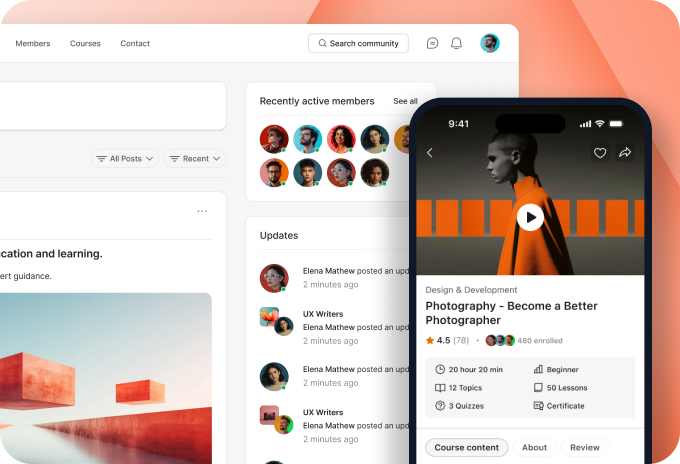













Skool and BuddyBoss are two of the best community platforms out there and choosing between them comes down to one question: how much do you want to own?
Skool earns its reputation for a reason. You can have a community live in minutes, the interface is effortless, and the gamification system is one of the best in the space.
But simplicity comes with trade-offs. And those trade-offs start to matter the moment you want to build something that’s truly yours.
Skool gives you a room inside their building. BuddyBoss gives you the keys to your own.
With BuddyBoss, you get full ownership of your platform and data, zero transaction fees, deep LMS integration, a white-label mobile app, and the entire WordPress ecosystem at your disposal. With Skool, you get speed and simplicity but at the cost of control, customisation, and a meaningful chunk of your revenue as you scale.
Both are solid platforms. The right choice depends on what you’re building and how far you want to take it.
→ Try BuddyBoss Platform for Free
Platforms At A Glance
Before we go deep, here’s the quick view. Every key feature, side by side, so you can see the differences at a glance.
| Feature | Skool (Hobby $9/mo) | Skool (Pro $99/mo) | BuddyBoss |
| Community Feed | Facebook-style feed | Same | Activity feeds, groups, forums, messaging |
| Courses | Basic modules + native video | Same | Deep LMS via LearnDash (quizzes, certs, drip, paths) |
| Gamification | Points, levels, leaderboards | Same | Native (Plus plan) — 90+ triggers, ranks, badges |
| Mobile App | Skool-branded app | Same | White-label app under YOUR brand ($79–$219/mo) |
| Live Events | Calendar + external links | Same + Skool Call + Webinars | Zoom integration + any external platform |
| Transaction Fees | 10% transaction fee | 2.9% transaction fee | 0% (only Stripe/PayPal processor fees) |
| Customisation | Fixed layout | Minor (custom URL) | Full WordPress customisation, 60,000+ plugins |
| White-Label | Everything is Skool-branded | ❌ | Your brand everywhere — web + app |
| Data Ownership | Hosted on Skool’s servers | ❌ | Your server, your database, your data |
| Email Marketing | Not included | ❌ | Via FluentCRM, Mailchimp, or any WP tool |
| Integrations | Limited (Zapier, webhooks) | Same + advanced plugins | 1,000+ via WordPress ecosystem |
| Quizzes & Assessments | ❌ | ❌ | Multiple question types via LearnDash |
| Certificates | ❌ | ❌ | Via LearnDash |
| Multiple Communities | ❌ ($9/mo or $99/mo per community) | ❌ | Unlimited groups + forums on one install |
| Support | Community forums + email | Same | 24/7 dedicated support team |
What Does Each Platform Actually Cost You?
Skool’s pricing looks simple, and that’s part of its appeal. But the real cost picture is more nuanced than it appears.
I want to be clear: Skool’s 2.9% on Pro is standard payment processing, it’s comparable to what Stripe charges. But On Skool, payments are processed through Skool Payments, Skool’s own system rather than a Stripe account you own and control directly.
This means your payout relationship is with Skool, and you are subject to their payment terms.
With BuddyBoss, you connect your own Stripe or PayPal account and pay only the standard processor fees. BuddyBoss takes nothing from your revenue.
At 100 members, the difference is manageable. At 500+, it’s tens of thousands of dollars over time.
→ See BuddyBoss Pricing | → Download Free Platform
How Skool and BuddyBoss Compare on Every Key Feature
Community & Engagement
Skool’s community feed is modelled after Facebook Groups familiar, clean, and easy for members to jump into.
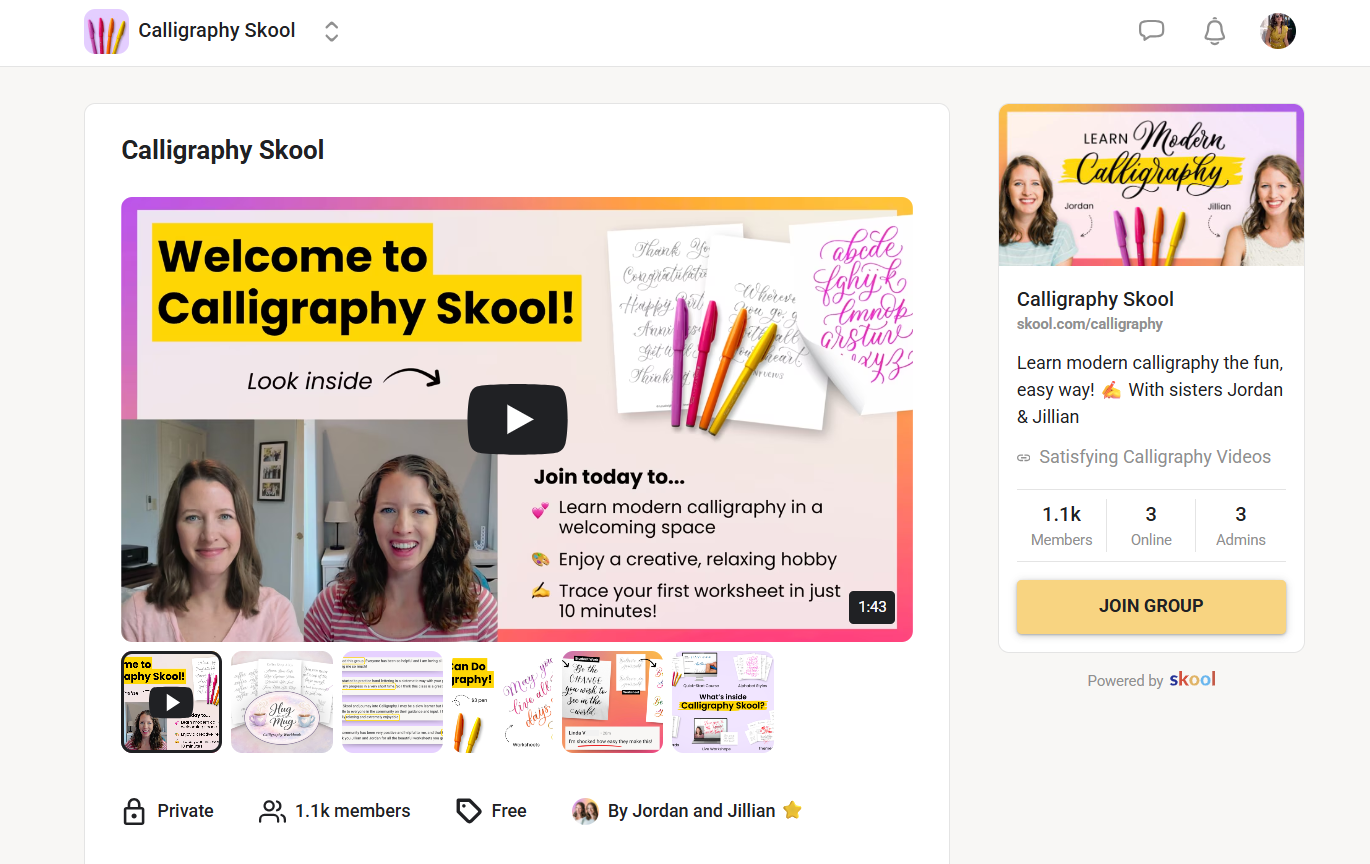
Posts, comments, likes, categories, it works well, and the fact that most people already understand the interface means you spend zero time onboarding members.
Skool’s gamification is also genuinely impressive. Points, levels, leaderboards, the ability to lock courses behind levels.
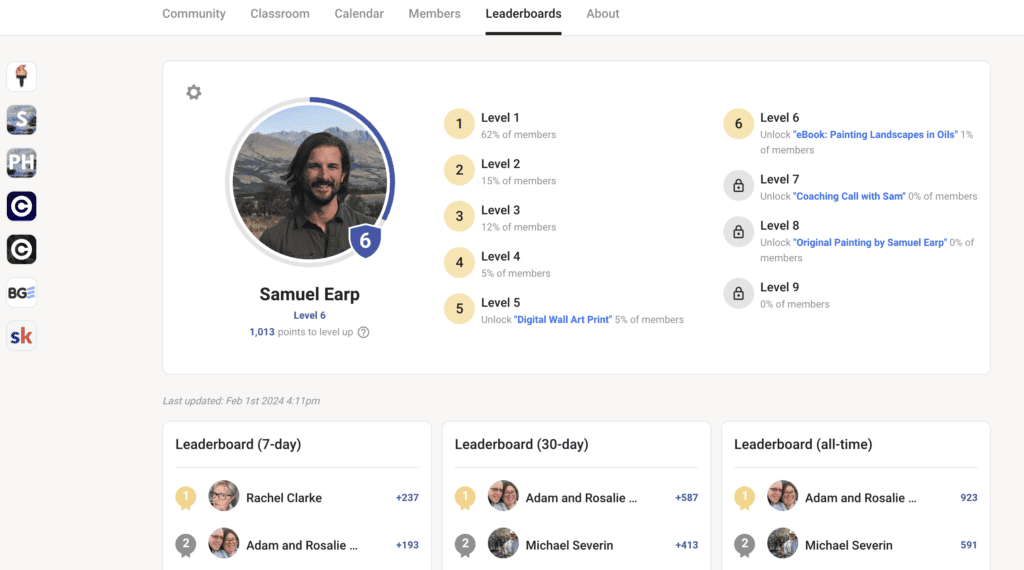
It creates a sense of progression that keeps members engaged. It’s one of the best implementations of gamification in any community platform, and it deserves credit for that.
With BuddyBoss, instead of a single feed, you get activity feeds dedicated groups (public, private, or hidden), forums for structured discussions, private messaging, member connections, and customisable profiles with profile types.
<buddyboss gamification image>
It’s a richer set of tools, and it’s designed for communities that need more structure than a single feed can provide.
With BuddyBoss Plus, you also get native gamification like points, ranks, badges, and leaderboards with over 90 configurable triggers. Skool initiated gamification in this space, and BuddyBoss has built its own strong implementation.
If gamification is make-or-break for your community, both platforms deliver here.
Where they differ: Skool gives you one community per subscription. Want a separate community for a different course or audience? That’s another $99/mo. BuddyBoss lets you create unlimited groups, forums, and structured spaces within a single installation. For creators running multiple programs, that distinction adds up fast.
Courses & LMS
This is where the gap widens significantly.
Skool’s Classroom feature lets you organise content into courses with video lessons, text, and attachments. It recently added native video hosting, which is a welcome improvement.
For straightforward course delivery — “watch this video, read this resource, move on” — it does the job.
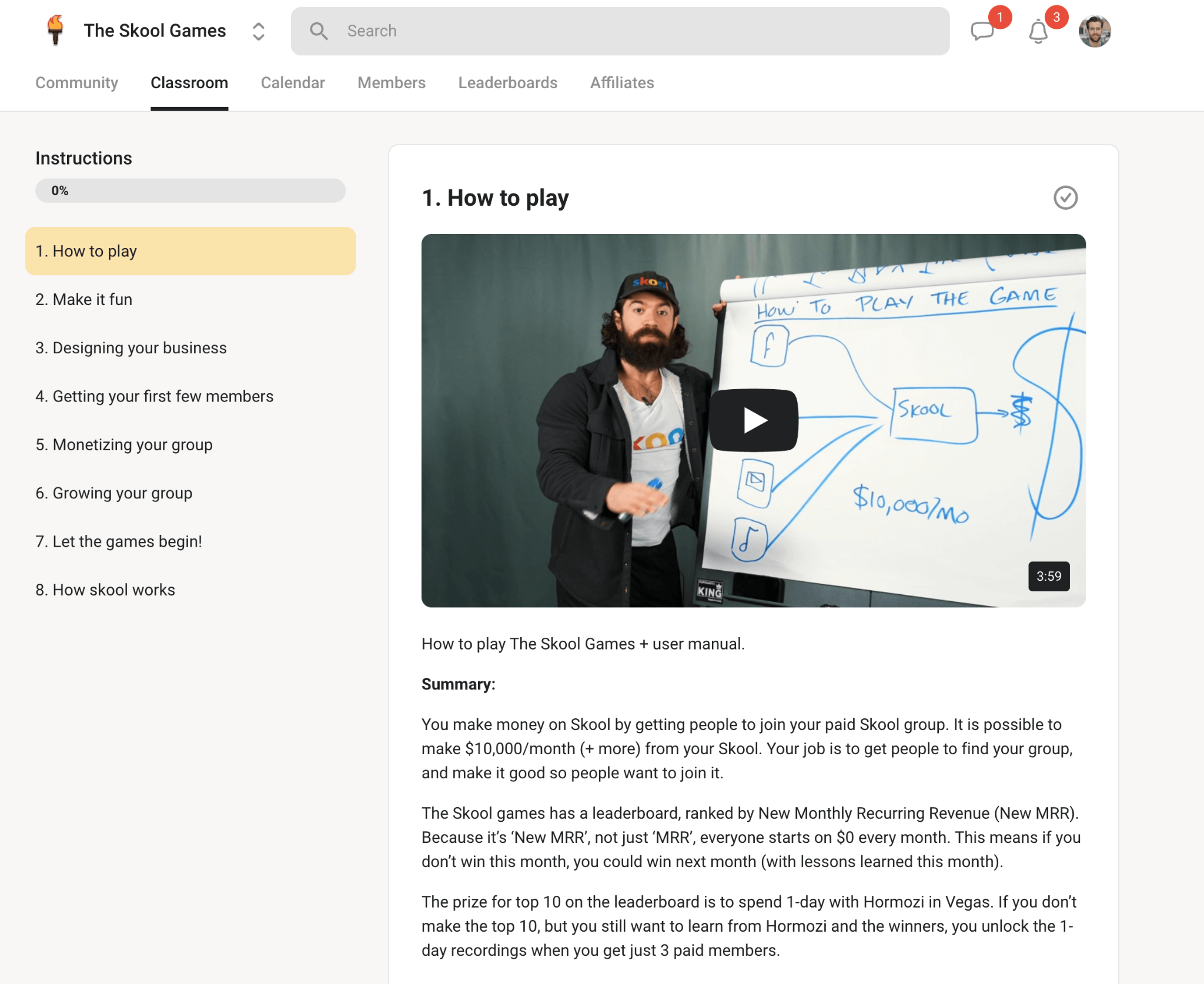
But Skool doesn’t offer quizzes, graded assessments, certificates, completion tracking, learning paths, drip content scheduling, or SCORM compliance. If you’re delivering training that requires any of these and most serious educational content does, Skool can’t support it.
BuddyBoss paired with LearnDash gives you a full learning management system. Multiple quiz question types, automated certificates, prerequisite courses, drip schedules, progress tracking, student dashboards, group-based courses, and structured learning paths.
Which means, your students don’t just consume content, they progress through a designed learning experience with measurable outcomes.
If your courses are primarily community discussions with some video content, Skool handles that well. If you’re building structured educational programs where learning outcomes matter, BuddyBoss with LearnDash is on a different level.
Mobile App
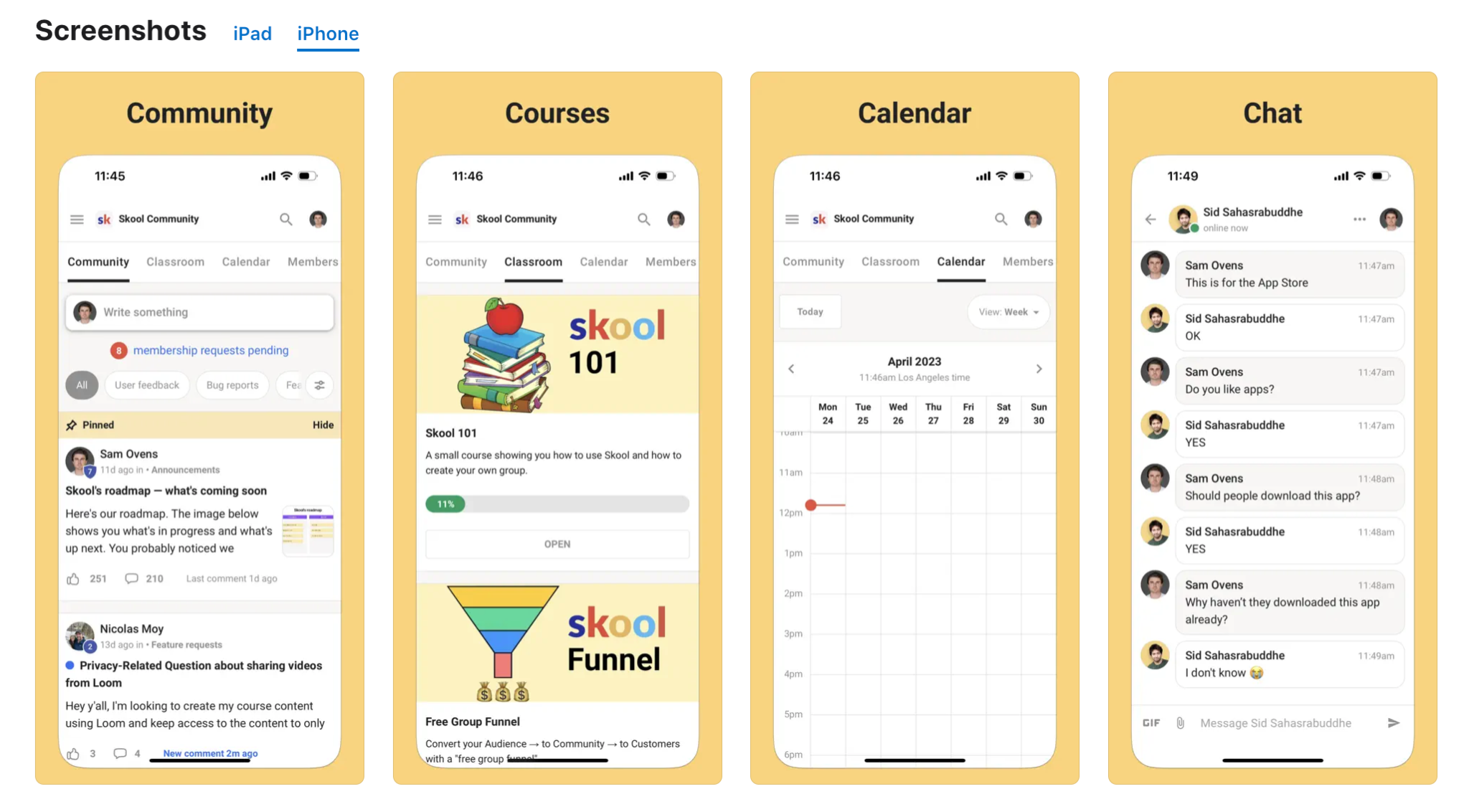
Both platforms have mobile apps, but they work very differently.
Skool offers a Skool-branded app on iOS and Android. Your community lives inside the Skool app alongside every other Skool community. Members download “Skool,” not “Your Brand.” It works, it’s functional, and it means your members can engage on mobile.
BuddyBoss also offers white-label mobile apps (starting at $79/mo for App Lite) that get published under your brand in the Apple App Store and Google Play Store.
Your icon, your name, your brand, no mention of BuddyBoss anywhere your members can see. Moreover, it is built with React Native, it syncs your community in real time with push notifications, messaging, course access, and activity feeds.
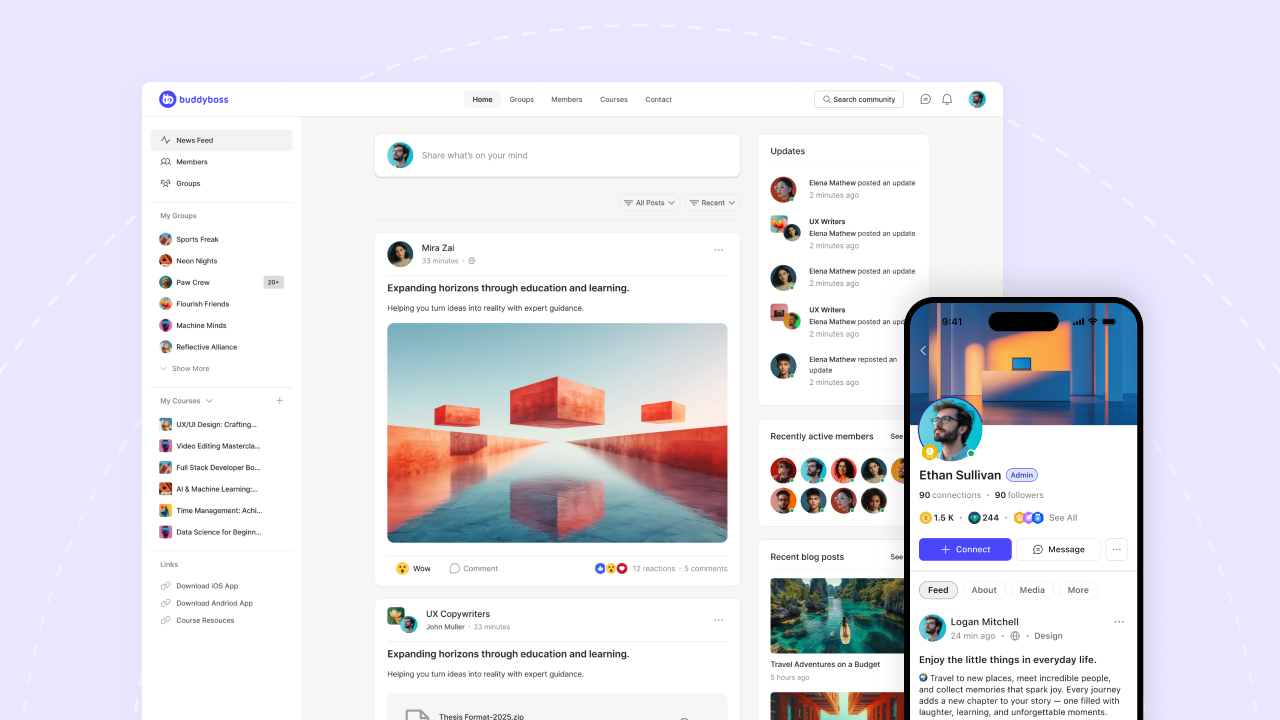
The difference comes down to brand identity. If your members see “Skool” every time they open the app, you’re building brand equity for Skool, not for yourself. With BuddyBoss, the app is yours. For creators investing in long-term brand building, this matters more than people initially think.
Customisation & Brand Control
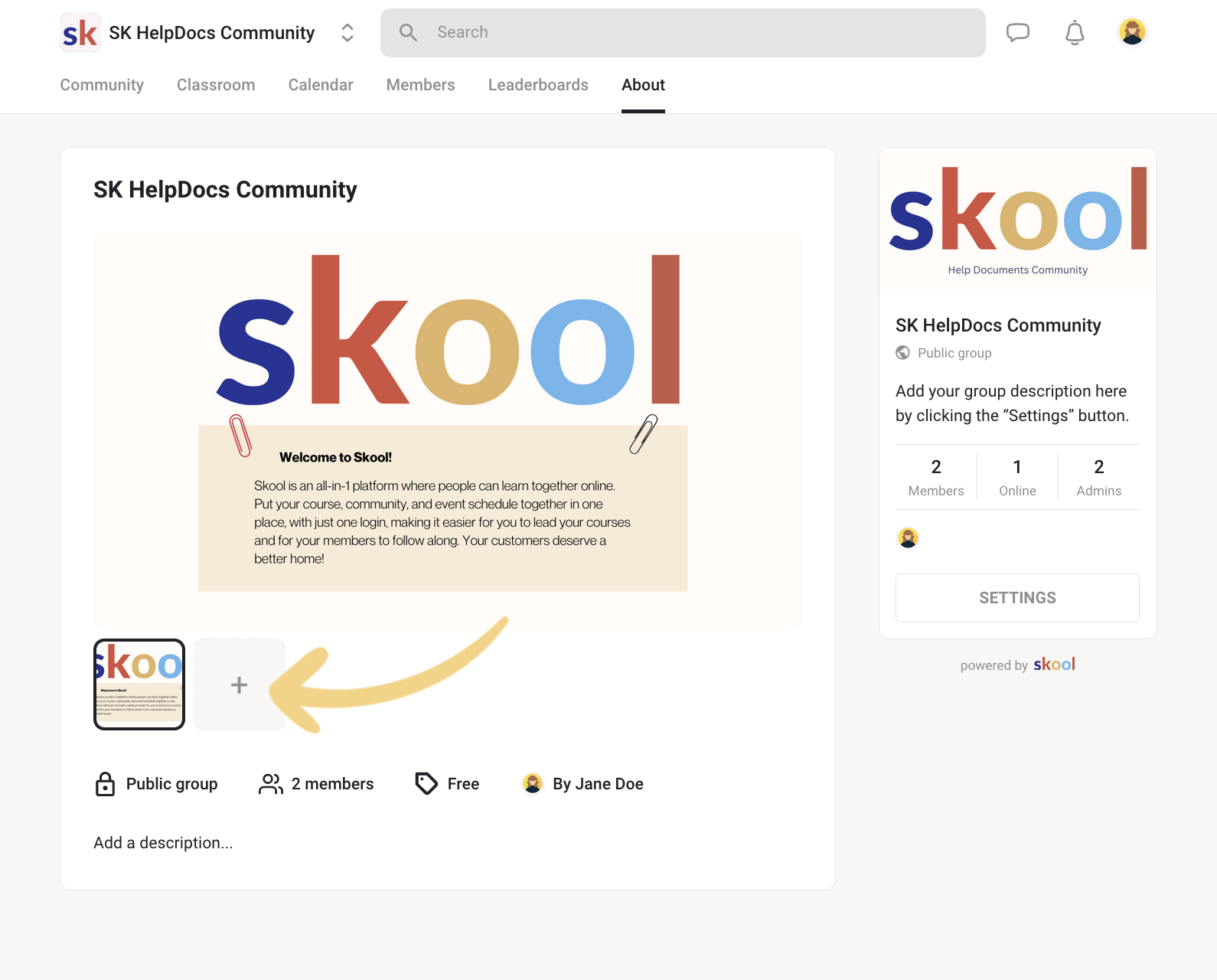
Skool’s interface is intentionally minimal and standardised. Every Skool community looks and feels similar. You can add your logo, choose some colours, and organise your content.
But the layout, the structure, and the overall experience are fixed. This is a feature for some (consistency, simplicity) and a limitation for others (your brand looks like everyone else’s).
BuddyBoss runs on WordPress, which means you have full control over every aspect of your site’s design, layout, and functionality.
Custom headers, custom pages, any colour scheme, any typography, any widget placement. With 60,000+ WordPress plugins available, you can add virtually any feature you need. Your community doesn’t look like a template, it looks like your brand.
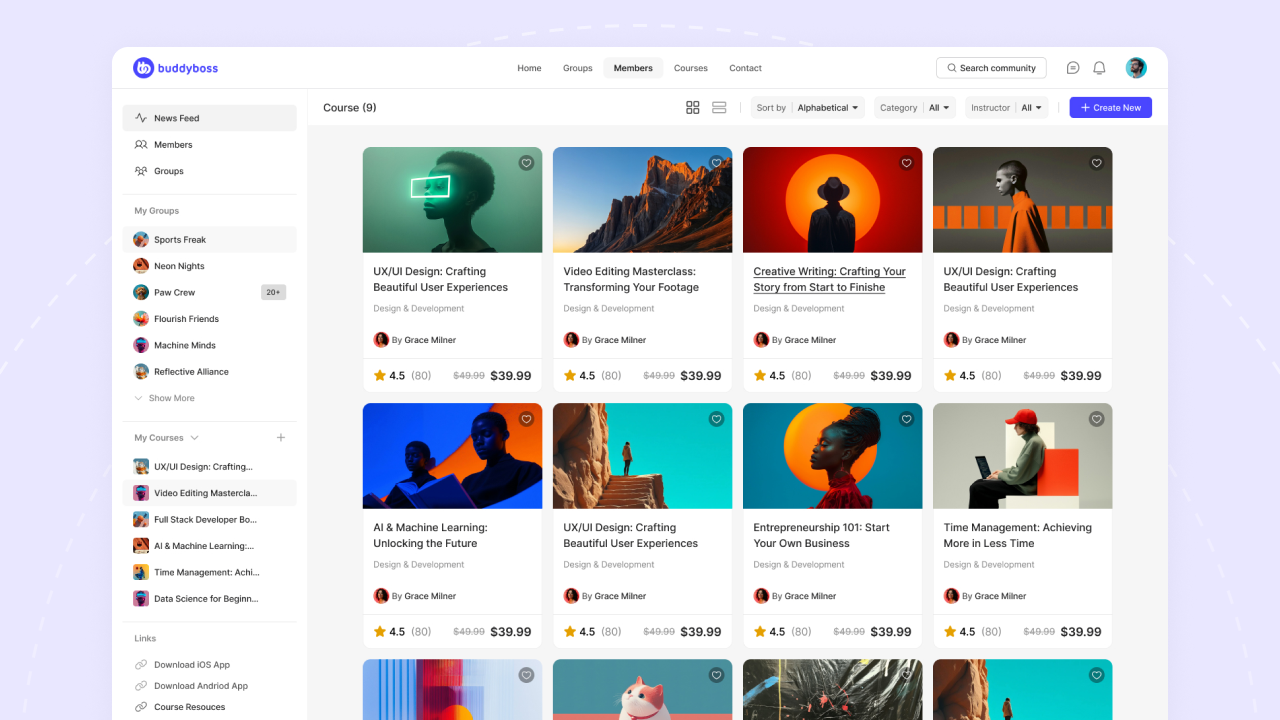
For solo creators who prioritise speed over customisation, Skool’s standardised approach works. For brands, agencies, and creators building something with a distinct identity, BuddyBoss gives you creative freedom that Skool simply doesn’t offer.
Data Ownership
With Skool, your community data lives on Skool’s servers. If Skool changes their pricing, changes their terms, or shuts down a feature you depend on, your options are limited.
If you decide to leave, exporting your community data is restricted. You’re building on rented land.
With BuddyBoss on WordPress, everything lives on your server. Your member data, your content, your course materials, your community discussions, all in a database you own and control.
You can back it up, migrate it, export it, or move hosts whenever you want. Nobody can change the terms on you because you set the terms.
This isn’t about trust, Skool is a well-run company. It’s about what happens to your business when you’re dependent on a platform you don’t control. If you’re building something you want to own for the long term, ownership isn’t optional.
Integrations & Ecosystem
Skool integrates with Zapier and webhooks, and the Pro plan adds some advanced plugins. But native integrations with CRMs, email marketing platforms, and analytics tools are limited. If you need a sophisticated tech stack, you’ll be doing a lot of work through Zapier to connect the pieces.
BuddyBoss sits inside the WordPress ecosystem, which means native integration with over 1,000 tools: WooCommerce for payments, FluentCRM or Mailchimp for email marketing, Gravity Forms for data collection, Zoom for live sessions, Elementor for page building, and thousands more.
You’re not limited to what one platform decides to integrate, you choose your own stack.
Who Should Choose Skool
Skool is a strong choice when simplicity is genuinely your top priority:
You want to launch fast and don’t need deep customisation. If your goal is “community live by this weekend,” Skool delivers. The setup is near-instant, the interface is intuitive, and your members will understand it immediately.
Your business model is a single paid community, not complex courses. If you’re running a coaching group, a mastermind, or a community where the value is in discussion and accountability rather than structured learning, Skool is designed exactly for this.
Gamification is central to your engagement strategy. Skool’s points-and-levels system is baked into the platform and works well out of the box. If keeping members engaged through game mechanics is a core part of your approach, Skool does this elegantly.
You’re a solo creator who values simplicity over ownership. If managing hosting and WordPress isn’t something you want to think about, and you’re comfortable trading control for convenience, Skool removes that friction entirely.
You’re still validating your idea. Skool’s $9/mo Hobby plan is a low-risk way to test whether your community concept has legs before committing to a more robust platform.
Who Should Choose BuddyBoss
BuddyBoss is the stronger choice when you’re building something you want to scale and own:
You’re a course creator who needs real LMS features. Quizzes, certificates, drip content, progress tracking, learning paths — if your students need structured education with measurable outcomes, BuddyBoss with LearnDash is the clear choice. Skool’s Classroom can’t match this depth.
You want zero transaction fees eating into your revenue. At any meaningful scale, Skool’s fees add up to thousands of dollars. BuddyBoss takes 0% of your revenue, you only pay your payment processor. As your community grows, this difference compounds.
You want a branded mobile app. Your brand, your app listing, your icon on members’ phones. Not the Skool app with your community tucked inside it.
You need full customisation and brand control. If your community should look and feel like your brand, not like a Skool page, BuddyBoss on WordPress gives you that freedom.
You’re building multiple programs or communities. On Skool, each separate community costs another $99/mo. On BuddyBoss, you can run unlimited groups, forums, and course spaces within a single platform.
You care about owning your platform and data. Your server, your database, your members, your content. No dependence on a third party’s pricing decisions or terms of service.
You’re an agency or building for clients. BuddyBoss’s WordPress foundation, multi-site licensing, and professional support make it a reliable platform for client work.
Comparing Skool to Other Platforms?
If you’re evaluating Skool, chances are you’re also looking at Circle, Kajabi, or Mighty Networks. Here’s where BuddyBoss fits into those comparisons:
Skool vs Circle? Circle offers more customisation than Skool but charges transaction fees on every plan (up to 4%) and locks its branded app behind expensive Circle Plus pricing. BuddyBoss gives you full customisation, zero transaction fees, and a white-label app at a fraction of Circle’s cost.
→ Read our full BuddyBoss vs Circle comparison
Skool vs Kajabi? Kajabi has excellent marketing funnels but charges $149–$399/mo with a basic community feature that was bolted on through an acquisition. BuddyBoss with WordPress tools gives you deeper LMS, richer community, and full ownership at a fraction of the price.
→ Read our full BuddyBoss vs Kajabi comparison
Skool vs Mighty Networks? Mighty Networks offers more customization than Skool and has its own AI features, but it’s another SaaS platform where you don’t own your data. BuddyBoss gives you everything Mighty offers plus the freedom of WordPress.
How to Switch from Skool to BuddyBoss
Migrating from Skool isn’t as seamless as migrating from, say, BuddyPress. Skool is a closed platform, so data export options are limited. But there’s a way to approach it:
What You Can Migrate
Community content and member data will need to be exported manually or recreated. Course content (videos, text, resources) can be re-uploaded to BuddyBoss + LearnDash. Member email addresses can be exported to re-invite members to your new platform.
Recommended Approach
- Set up BuddyBoss in parallel. Don’t shut down Skool until your new platform is ready.
- Recreate your course structure in LearnDash. This is also an opportunity to improve and restructure your courses.
- Announce the move to your community. Be transparent — tell members you’re moving to a platform with more features and a better experience. Frame it as an upgrade.
- Invite members over gradually. Use email to invite existing members. Offer early access or a bonus for members who make the switch quickly.
- Consider the Done For You service. BuddyBoss’s team can handle the entire platform setup for you, so you focus on the migration communication, not the technical build.
→ Explore Done For You Service | → Download Free BuddyBoss Platform
Frequently Asked Questions
Is BuddyBoss harder to set up than Skool?
Skool is faster to set up, that’s its superpower. BuddyBoss takes more initial configuration because it gives you more control. That said, ReadyLaunch (free) gets you to a polished community in minutes, and the Done For You service means you don’t have to set up anything yourself. The setup difference is a one-time investment. The platform differences are permanent.
Can I have multiple communities on BuddyBoss?
Yes. Unlimited groups, forums, and course spaces within a single BuddyBoss installation. On Skool, each separate community requires its own subscription ($9 or $99/mo per community).
What happens to my content if I leave Skool?
Skool is a closed platform with limited data export options. Your content lives on their servers. With BuddyBoss on WordPress, everything lives on your server in a database you fully control. You can export, migrate, or back up at any time.
Can BuddyBoss match Skool’s simplicity?
For the member experience, yes, especially with ReadyLaunch. For admin setup, BuddyBoss involves more initial configuration because you’re getting more control. Think of it this way: Skool is like renting a fully furnished apartment. BuddyBoss is like owning a house you can renovate however you want. The apartment is easier to move into. The house is yours.
Final Verdict
Here’s the honest take.
Skool is genuinely brilliant for what it’s built for; fast setup, effortless engagement, and a community live in minutes. If that’s all you need, it delivers.
But if you’re building something bigger like courses with real depth, a brand that’s truly yours, revenue you don’t share, BuddyBoss is the clearer choice. You get more control, more ownership, and more room to grow.
Both platforms are good. Only one of them is yours.
Start with the free BuddyBoss Platform. See the difference for yourself.
→ Download BuddyBoss Platform — It’s Free
→ Need Help? Explore Done For You Service
BuddyBoss is the #1 course and community platform for WordPress, trusted by over 50,000 customers worldwide. See how others are using it →
