













Podia was founded in 2014 by Spencer Fry, a serial entrepreneur who had already built and exited two earlier companies: TypeFrag, an early voice-chat service for gamers, and Carbonmade, one of the first online portfolio platforms. The idea for Podia came out of a problem Fry kept running into with early customers. One of the platform’s earliest and most vocal users, writer and podcaster Justin Jackson, wanted to sell a course and a book without maintaining two separate storefronts and two separate payment systems. That need, one place to sell everything a creator makes, became Podia’s founding premise, and it’s still the core of the product today.
Podia is an all-in-one platform for selling courses, memberships, and digital downloads from a single storefront. It’s built for creators who want to sell more than one type of product without stitching together separate tools for each.
What Podia Actually Does
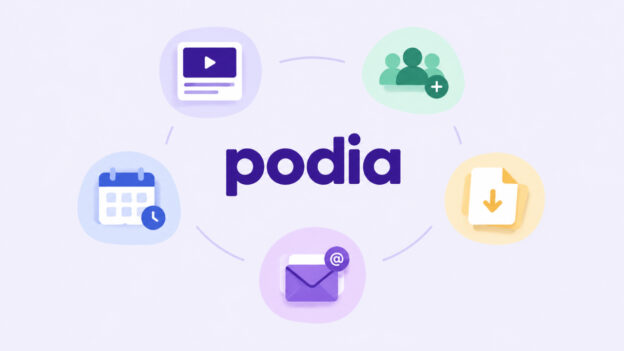
Podia’s core pitch is consolidation. Instead of a course platform, a membership tool, and a digital-download cart running as three separate subscriptions, Podia handles all three from one dashboard.
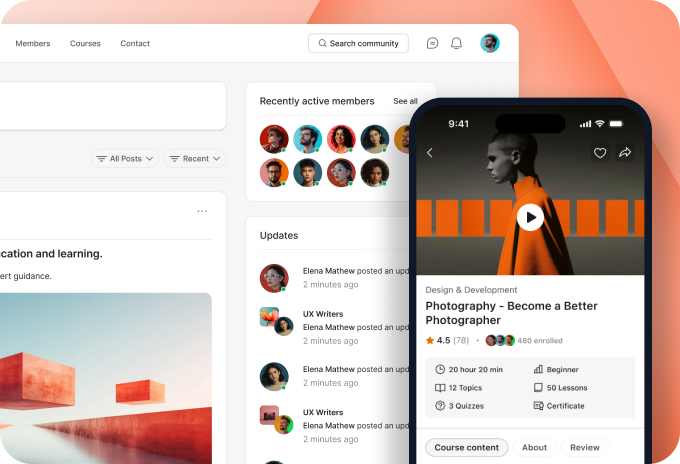
Courses. Video lessons, downloadable materials, quizzes, and drip scheduling, sold as one-time purchases or bundled into a membership.
Memberships. Recurring access to a content library, community posts, or a mix of both, billed monthly or annually.
Digital downloads. Templates, ebooks, presets, and other files delivered automatically after purchase, no separate fulfillment tool needed.
Email marketing. Built into the platform rather than requiring a third-party integration, with subscriber caps that scale by plan (100, 500, or 1,000 contacts depending on tier, with a paid add-on above that).
Coaching bookings. A built-in calendar for scheduling 1:1 sessions, useful for creators who pair courses with personal coaching.
Podia Pricing
Podia runs three plans, all with standard Stripe or PayPal processing (2.9% + $0.30) on top:
- Mover: $49/month ($42/month billed annually), with a 5% transaction fee on sales
- Shaker: $99/month ($84/month billed annually), 0% transaction fee
- Earthquaker: $179/month ($150/month billed annually), 0% transaction fee
The gap between Mover and Shaker matters more than the $50 price difference suggests. At $6,000 a month in sales, Mover’s 5% fee costs $300, more than six times the $42 gap between the two plans. Most creators doing meaningful volume are better off on Shaker even though it costs more upfront.
Who Podia Is Good For
Podia suits creators selling a genuine mix of products, a course, a handful of templates, and a small membership, who want one login and one dashboard rather than separate tools for each. The email marketing and coaching-booking features being built in, rather than bolted on, is a real convenience for solo creators who don’t want to manage multiple subscriptions.
Where Podia Falls Short
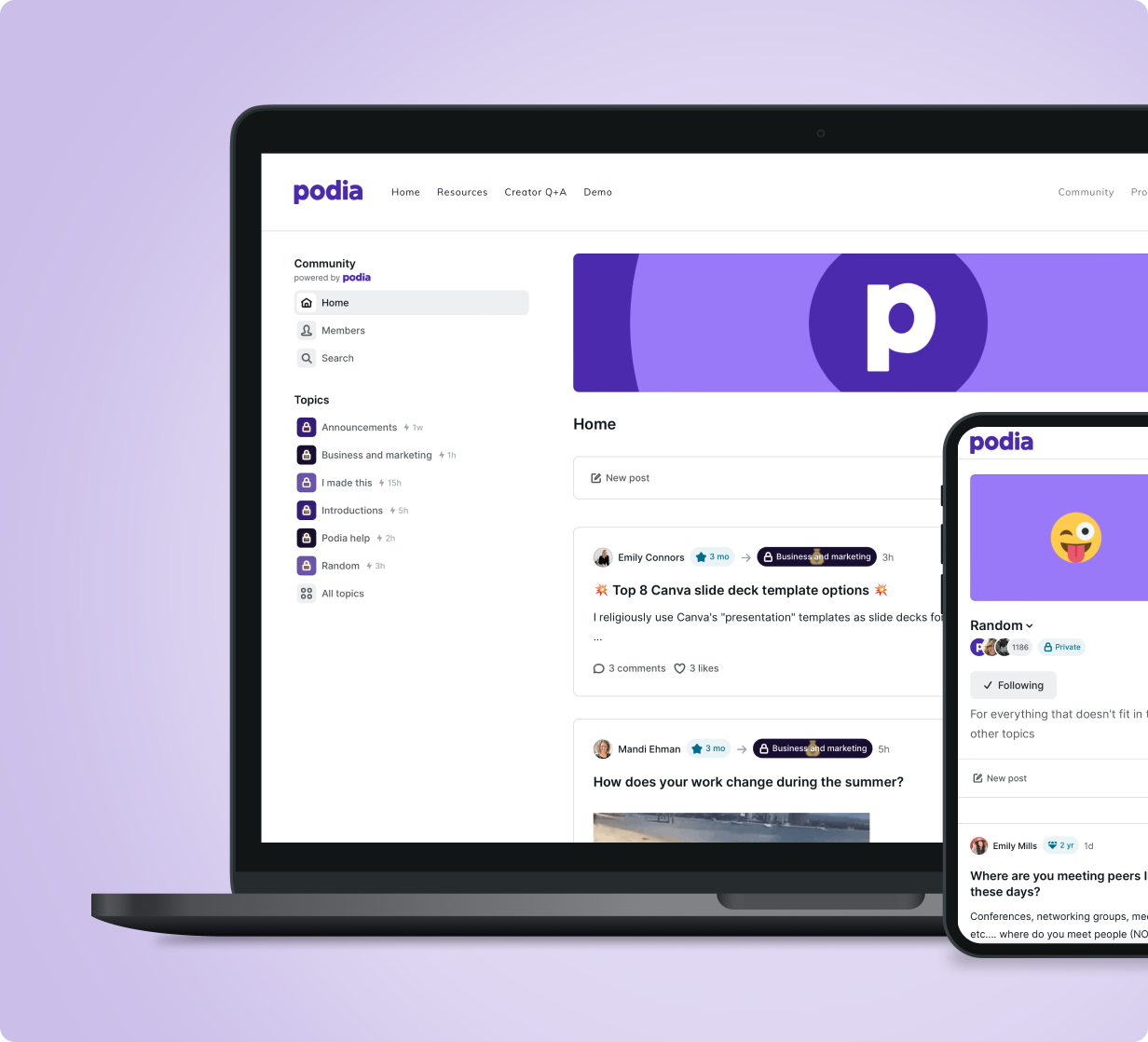
Community features are thin. Podia has a basic community/post feed, not real-time chat, no discussion forums, and nothing approaching the depth of a dedicated community platform. If community is central to your offer rather than a light add-on, this is the main gap.
You don’t own the platform. Like any hosted SaaS tool, your content, your member data, and your pricing structure all live inside Podia’s system. If Podia changes its terms, its fees, or shuts down, you’re migrating on their timeline, not yours.
Email caps mean added cost as you grow. The built-in email marketing is a genuine convenience at small list sizes, but the subscriber caps mean your costs step up as your audience grows, on top of the plan price itself.
Podia vs Self-Hosted Alternatives
For creators who want the same all-in-one convenience, courses, memberships, digital products, but without the recurring SaaS fee or the platform-ownership trade-off, a self-hosted option like BuddyBoss runs on WordPress you control, with plans starting at $99/year and 0% platform fees on the Launch and Scale tiers. The trade-off runs the other way: more setup involved upfront, in exchange for owning the infrastructure long-term.
Frequently Asked Questions
When was Podia founded?
2014, by Spencer Fry, who had previously built and exited TypeFrag and Carbonmade.
Is Podia good for beginners?
Yes. The interface is straightforward and the all-in-one structure means you’re not learning multiple tools at once. The 30-day free trial gives enough time to build a first product before committing.
Does Podia take a cut of sales?
On the Mover plan, yes, 5% per transaction. On Shaker and Earthquaker, Podia takes 0%, though standard card processing fees still apply on every plan.
Can you build a community on Podia?
A basic one. Podia includes a simple post feed for members, but it doesn’t have real-time chat, forums, or the kind of social features a dedicated community platform offers. For creators where community is the main product, this is usually the limiting factor.
