












If you have ever taken an online course, completed a compliance training at work, or enrolled in a certification program, chances are you have used a learning management system without even realizing it.
A learning management system (LMS) is the technology that powers how millions of people learn online today.
From universities and corporations to independent course creators and coaches, an LMS provides the infrastructure to create, deliver, manage, and track educational content, all in one place.
And the demand for these platforms is only accelerating. Grand View Research estimates the global LMS market at roughly $28.5 billion in 2025, projected to reach $70 billion by 2030 at close to 20% annual growth, though estimates vary by research firm depending on what’s included in the count. Whether you are building an online course business, training employees, or creating a membership community, understanding what an LMS is and how it works is no longer optional.
In this guide, I will break down everything you need to know: what an LMS does, its core features, the different types available, and how to choose the right one for your goals.
What Is an LMS?
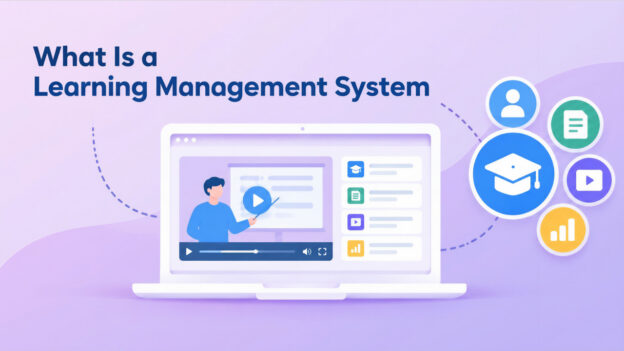
At its core, an LMS is a software platform that lets you create, organize, deliver, and track learning content. You can think of it as the operating system for education. It gives instructors a way to build courses and gives learners a structured place to consume them, complete assessments, and track their progress.
The acronym breaks down simply:
Learning – The content itself: courses, lessons, quizzes, videos, documents, and any other educational material.
Management – The tools to organize that content, enroll learners, assign roles, set deadlines, and track completion.
System – The technology platform that ties everything together and makes it accessible from any device.
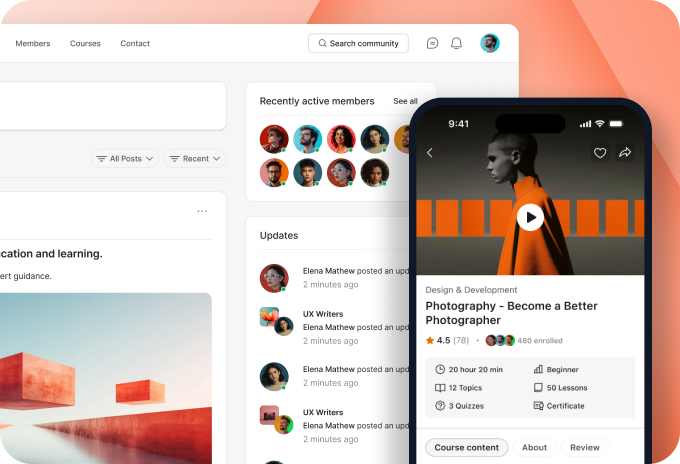
A modern LMS goes far beyond just hosting video lessons. Today’s platforms support interactive quizzes, discussion forums, certificates, gamification, social learning features, mobile apps, and detailed analytics, creating a complete ecosystem for online education.
How Does a Learning Management System Work?
While every LMS has its own interface and feature set, most follow the same basic workflow:
- Create content: An instructor or admin builds courses using the platform’s course builder. This typically includes uploading video lessons, adding text-based content, creating quizzes, and organizing everything into modules or learning paths.
- Enroll learners: Students or employees are added to the platform, either manually, through self-enrollment, or via integrations with payment gateways and membership plugins. Learners get access to the courses assigned to them.
- Deliver the learning experience: Learners log in, access their dashboard, work through lessons at their own pace (or on a set schedule), complete assessments, participate in discussions, and earn certificates upon completion.
- Track and improve: The LMS tracks everything: who enrolled, how far they got, what scores they achieved, and where they dropped off. This data helps instructors refine their content and improve learner outcomes over time.
This workflow applies whether you are running a solo online course business, managing corporate training for thousands of employees, or building a community-driven learning platform.
Key Features to Look for in an LMS
Not every learning management system is built the same. The features that matter most depend on your use case, but here are the capabilities that separate a solid LMS from a basic one:
Course Builder
A good LMS should make course creation intuitive, not require a developer. Look for drag-and-drop builders that support multiple content types: video, text, audio, PDFs, SCORM packages, and interactive elements like quizzes and assignments.
Progress Tracking and Reporting
Detailed analytics are essential. You should be able to see completion rates, quiz scores, time spent on lessons, and identify where learners are dropping off. For corporate use, compliance tracking and audit-ready reports are often non-negotiable.
Certificates and Credentials
The ability to automatically issue certificates of completion adds credibility to your courses. Some platforms also support digital badges and integration with credential verification services.
Community and Social Learning
Learning does not happen in isolation. The most effective platforms include discussion forums, group spaces, activity feeds, direct messaging, and peer-to-peer interaction. Courses with an active community layer are consistently associated with higher completion rates than self-paced courses without one, since stuck learners have somewhere to ask and wavering learners see others still going.
Mobile Access
Learners increasingly expect to access courses from their phones, not just a desktop browser. Some platforms offer mobile-responsive design, while others provide dedicated native apps with offline access for a more polished learner experience.
Integrations
Your LMS should work with the tools you already use. Look for integrations with payment gateways (Stripe, PayPal), email marketing platforms, CRM tools, membership plugins, video conferencing (Zoom), and automation tools like Zapier.
Gamification
Points, badges, leaderboards, and progress milestones keep learners motivated. Gamification is particularly effective in community-driven learning environments where peer visibility encourages participation.
Types of Learning Management Systems
Understanding the different types of LMS platforms helps you narrow down the right fit. Here are the main categories:
| Type | Pros | Cons |
| Cloud/SaaS | Quick setup, no hosting to manage, automatic updates | Monthly fees, limited customization, vendor lock-in, you do not own your data |
| Self-hosted (WordPress) | Full ownership, unlimited customization, one-time licensing, thousands of plugin integrations | Requires hosting and initial setup (though managed hosting simplifies this significantly) |
| Open Source | Free to use, highly customizable, community-driven development | May require developer expertise for advanced customization |
| Enterprise | Built for scale, advanced compliance, dedicated support teams | Expensive, often rigid, long implementation timelines |
For independent creators and membership site owners, the self-hosted WordPress route often makes the most sense. It gives you full ownership of your platform, your content, and your learner data, without the recurring SaaS fees that cut into your margins as you scale.
Who Uses a Learning Management System?
The use cases for an LMS span across industries and roles. Here is who benefits most:
Course creators and coaches who want to package their expertise into structured courses and sell them online.
Membership site owners who combine exclusive content with community access and ongoing education as part of a subscription model.
Businesses and HR teams that need to onboard employees, deliver compliance training, and upskill their workforce at scale.
Educational institutions from K-12 schools to universities managing coursework, assessments, and student communication.
Nonprofits and associations offering member training, certification programs, and professional development.
Customer education teams that use training programs to reduce support tickets, improve product adoption, and increase customer lifetime value.
Adoption is broad across the board, and an LMS is essentially the default in higher education today. Regardless of industry, the common thread is clear: organizations need a centralized, scalable way to deliver and track learning.
Benefits of Using an LMS
Investing in a learning management system is not just about going digital. It is about making education more effective, more accessible, and more profitable. Here are the key benefits:
Scalability Without Added Cost
Once you build a course, it can be delivered to 10 learners or 10,000 without significantly increasing your costs. Unlike in-person training, which requires venues, travel, and instructors for every session, an LMS lets you scale your educational impact while keeping overhead low.
Flexible, Self-Paced Learning
Learners can access content anytime, from any device. This flexibility is a major driver of engagement. In a 2021 survey conducted after the shift to remote learning, 73% of US students said they wanted to keep taking at least some of their courses fully online. Online enrollment has fluctuated since then, but the underlying preference for flexibility hasn’t gone away. An LMS meets learners where they are, on their schedule.
Monetization Opportunities
For creators and membership site owners, an LMS is a direct revenue engine. You can sell one-time course access, recurring subscriptions, certification programs, or bundle courses with community membership. A self-hosted LMS on WordPress lets you keep the vast majority of your revenue, compared to a marketplace like Udemy, which keeps up to 63% of a sale when it comes through its own marketplace and 37% even when a creator drives the sale themselves.
Better Learner Engagement
Features like gamification, social learning, discussion forums, and progress tracking keep learners motivated. As noted above, structured community features are consistently linked to stronger completion rates than self-paced courses without them.
Data-Driven Decisions
An LMS gives you visibility into what is working and what is not. You can track completion rates, quiz performance, engagement patterns, and learner feedback to continuously improve your content and delivery.
How to Choose the Right LMS
With hundreds of options on the market, choosing a learning management system can feel overwhelming. Here is a practical framework to guide your decision:
Define Your Use Case
Are you selling courses to the public? Training employees? Building a learning community? Your primary use case will determine which features are must-haves versus nice-to-haves.
Ownership vs. Convenience
SaaS platforms are convenient but come with trade-offs: monthly fees that grow as you scale, limited customization, and vendor lock-in. Self-hosted solutions on WordPress give you full control over your platform, your data, and your brand identity. For creators building a long-term business, ownership often wins.
Community Integration
Courses without community often struggle with low completion rates and learner isolation. Look for an LMS that includes or integrates with community features: discussion forums, social groups, activity feeds, direct messaging, and member profiles. This is especially important if you are building a membership site where ongoing engagement drives retention.
Mobile Experience
A mobile-responsive design is the minimum. A dedicated, white-labeled mobile app is the gold standard. Having your brand on learners’ home screens creates a premium experience and significantly boosts engagement.
Total Cost of Ownership
Do not just look at the sticker price. Factor in transaction fees, per-user costs, hosting, premium feature add-ons, and what happens if you want to migrate. A platform that looks affordable at $49/month can become expensive at scale if it charges per active learner or takes a percentage of sales.
Why WordPress Is the Smartest LMS Foundation
WordPress powers a large share of the web, and for good reason. When paired with the right LMS setup and a community platform, it becomes one of the most flexible and scalable foundations for delivering online education.
Here is why thousands of creators and businesses choose to build their learning management system on WordPress:
Full ownership. Your content, your learner data, your platform. No vendor can change the rules or shut you down.
Unlimited customization. With tens of thousands of plugins and full design control, you can build exactly the experience your learners need.
No per-user fees. Scale to thousands of learners without your costs scaling alongside them.
Integrated community. BuddyBoss adds social networking features directly into your learning environment, combining courses, community, and membership into a single, branded experience.
White-label mobile apps. Offer your learners a branded native app on iOS and Android, putting your platform on their home screen.
BuddyBoss now includes memberships and courses natively, so there’s no separate LMS plugin required just to get started, lessons, quizzes, and assignments are built in. If you already run LearnDash or Tutor LMS, either continues to work exactly as before, and BuddyBoss never takes a cut of sales made through them. Either path gets you a self-hosted platform that rivals, and often surpasses, SaaS solutions costing hundreds of dollars a month, without the recurring per-user fees or vendor lock-in. For a fuller breakdown of the trade-offs, see our guide to LMS pricing compared.
Getting Started with Your LMS
Now that you understand what a learning management system is, how it works, and what to look for, the next step is to choose the right platform and start building.
If community and completion are as important to you as content delivery, it’s worth reading about what makes a cohort-based course work and how community engagement shapes whether learners actually finish what they start. For a practical walkthrough of building the whole thing on WordPress, see our guide to creating and selling online courses on WordPress.
