













Substack’s pitch is genuinely appealing: free to start, 10% only when you actually get paid. For a new newsletter with zero audience, that’s a fair trade, Substack’s recommendation network does real work getting you in front of readers you couldn’t otherwise reach.
The problem is that the same platform that helped you start can quietly work against you once you’ve actually built something. Here’s what that looks like in practice, and how to tell when it’s time to build somewhere you own.
Quick answer: if your paid subscription revenue is above roughly $500 a month, the math has likely already flipped against staying on Substack alone. But the real trigger isn’t the fee, it’s whether you’re ready to build something beyond an email list: a community, a course, a tiered membership. That’s the point where an owned platform stops being optional.
The Fee Math, and Where It Actually Crosses Over
Substack takes 10% of paid subscription revenue, plus Stripe processing on top (roughly 2.9% + $0.30 per transaction). On a typical monthly subscription, that works out to an effective rate of 13% to 19%, not the flat 10% the headline number suggests.
At real revenue, that adds up fast:
- $5,000/month in subscription revenue: roughly $500–650/month to Substack, $6,000–7,800/year
- $10,000/month in subscription revenue: roughly $12,000/year
The commonly cited crossover point is $400 to $600 a month in reader revenue. Below that, Substack’s zero-upfront model is genuinely hard to beat. Above it, a flat-fee alternative usually costs less, and the gap only widens as you grow, since Substack’s cut scales with your success while a flat monthly fee doesn’t.
The Part That Has Nothing to Do With Fees
The more important issue isn’t the percentage, it’s what you actually own.
Substack lets readers “follow” a publication without subscribing by email. It’s a real, officially documented feature: a follower sees your Notes and activity in their feed, but they never receive your posts by email and you never see their address. If you’ve built an audience partly through Substack’s own discovery network, a meaningful share of it may only ever be “followers,” reachable through the platform’s feed, not through anything you actually control.
The export situation reflects the same asymmetry. You can export your subscriber list as a CSV, email addresses included. What you can’t take with you: the recommendation network that helped readers find you, your app-based followers, and your paid billing relationships, which stay tied to Substack’s own Stripe connection.
And occasionally, the platform itself is the risk. Newsletter writer Lucy Werner lost her entire publication after deleting a podcast episode triggered a platform error; her newsletter disappeared instantly, and she had to rebuild from scratch with minimal support from Substack itself. That’s an extreme case, but it’s a real, documented one, not a hypothetical.
What Substack Still Does Well
None of this means Substack is a bad place to start. If you have no audience yet, its recommendation network provides real discovery a brand-new site cannot replicate, and the zero-upfront-cost model means you’re never paying for infrastructure you’re not yet using. Its writing and publishing experience is genuinely well-built, and for a writer whose entire business is the newsletter itself, that simplicity is a feature, not a limitation.
The tension shows up specifically once you’ve outgrown what a newsletter alone can do.
Signs It’s Actually Time to Move
You want to build a real community, not just a comment section. Substack’s Chat feature is a simplified, subscriber-only space, functional, but not built for the kind of ongoing discussion, groups, or member-to-member connection a real community needs.
You want to sell more than a subscription. Substack supports monthly, yearly, and founding-member tiers, and that’s essentially the whole monetization menu. Courses, structured programs, and tiered membership levels beyond simple pricing aren’t part of what it’s built to do.
You’re past the fee crossover point and staying anyway costs you real money every month, not because Substack got worse, but because your business grew past the point where a percentage-of-revenue model makes sense.
You want the parts of your audience that “follow” instead of subscribe to actually belong to you. An owned platform doesn’t have a category of reader you can’t reach directly.
What Moving Actually Looks Like
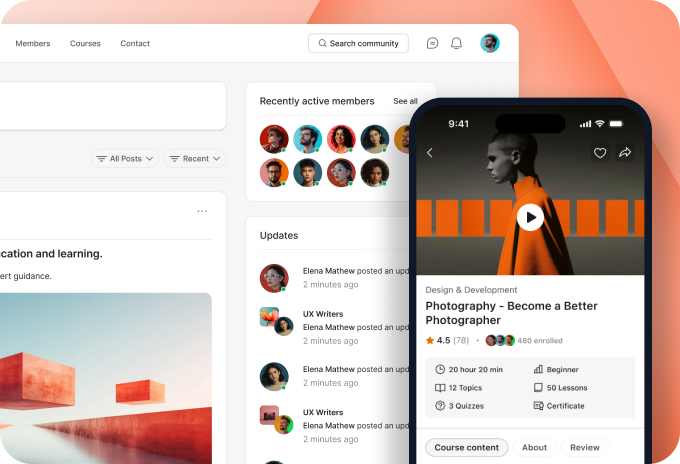
For most creators, this isn’t an all-or-nothing switch. Substack can stay a genuine discovery channel, new readers finding you through its network, while the actual business, the paid community, the course, the deeper member relationship, lives somewhere you control. WordPress-based options like BuddyBoss are built for exactly that second half: native community, courses, and membership tiers in one system, with your member list and content on infrastructure you own outright, not a platform that could reclassify your content or change its terms without your say. Setting this up on a WordPress site you already have is more straightforward than it sounds, our guide to adding a community to a WordPress site covers the exact steps. If you’re building specifically around expertise and coaching, our guide to building an online community for coaches walks through that path in more detail.
The newsletter doesn’t have to disappear. It just stops being the whole business.
Frequently Asked Questions
When should I leave Substack?
There’s no fixed date, but two signals matter most: your paid subscription revenue has passed roughly $500/month, where flat-fee alternatives usually cost less, and you want to build something a newsletter format can’t support, a real community, a course, tiered membership.
Can I keep Substack and build elsewhere at the same time?
Yes, and many creators do exactly this. Substack functions well as a discovery and distribution channel while the deeper paid product, community, courses, structured membership, runs on a platform you own.
What can I actually export if I leave Substack?
Your subscriber list, including email addresses, exports as a CSV. What doesn’t transfer: your recommendation network, app-only followers, and your paid billing relationships, which stay tied to Substack’s own Stripe connection.
Does Substack take a cut of everything I earn?
Only paid subscription revenue. Free newsletters cost nothing and Substack takes no cut of them. The 10% fee applies only once you start charging readers.
Ready to build the community and course layer your newsletter doesn’t cover? See current plans and pricing.
